
Content note: includes childbirth documentation, hidden until you choose to view
Bachelor of Design graduation project · Product Design · 2017
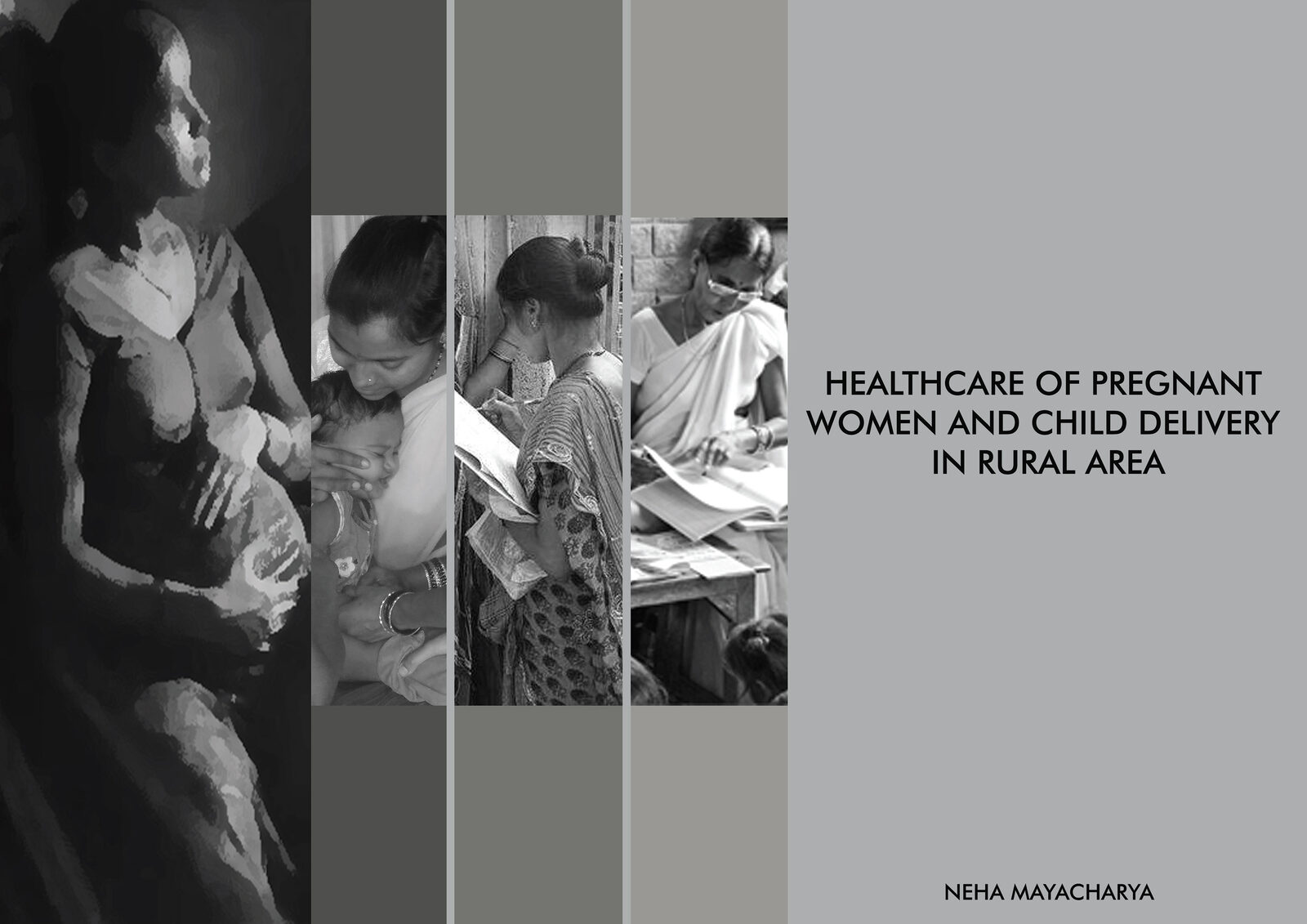
An emergency delivery aid for the smallest clinic in rural India
Field research across Nashik district led me to design an emergency delivery aid for Sub Centres, supporting the squatting posture rural women already live in, so birth can work with gravity instead of against it.
Product Designer · Independent graduation project
Secondary research, interviews, field observation of live deliveries, clinician validation and ergonomics

Best Graduation Project award
Final jury, Bachelor of Design, 2017

ROLE
Product Designer
Independent graduation project

CONTEXT
B.Des, Product Design
Graduation project, 2017 · Best Graduation Project award

FIELD
Nashik district, India
Sub Centres, PHCs and the Civil Hospital

RESEARCH
20 women · 5 clinicians
Interviews, plus live deliveries observed
The brief
An aid for the smallest workplace in Indian healthcare
AIM
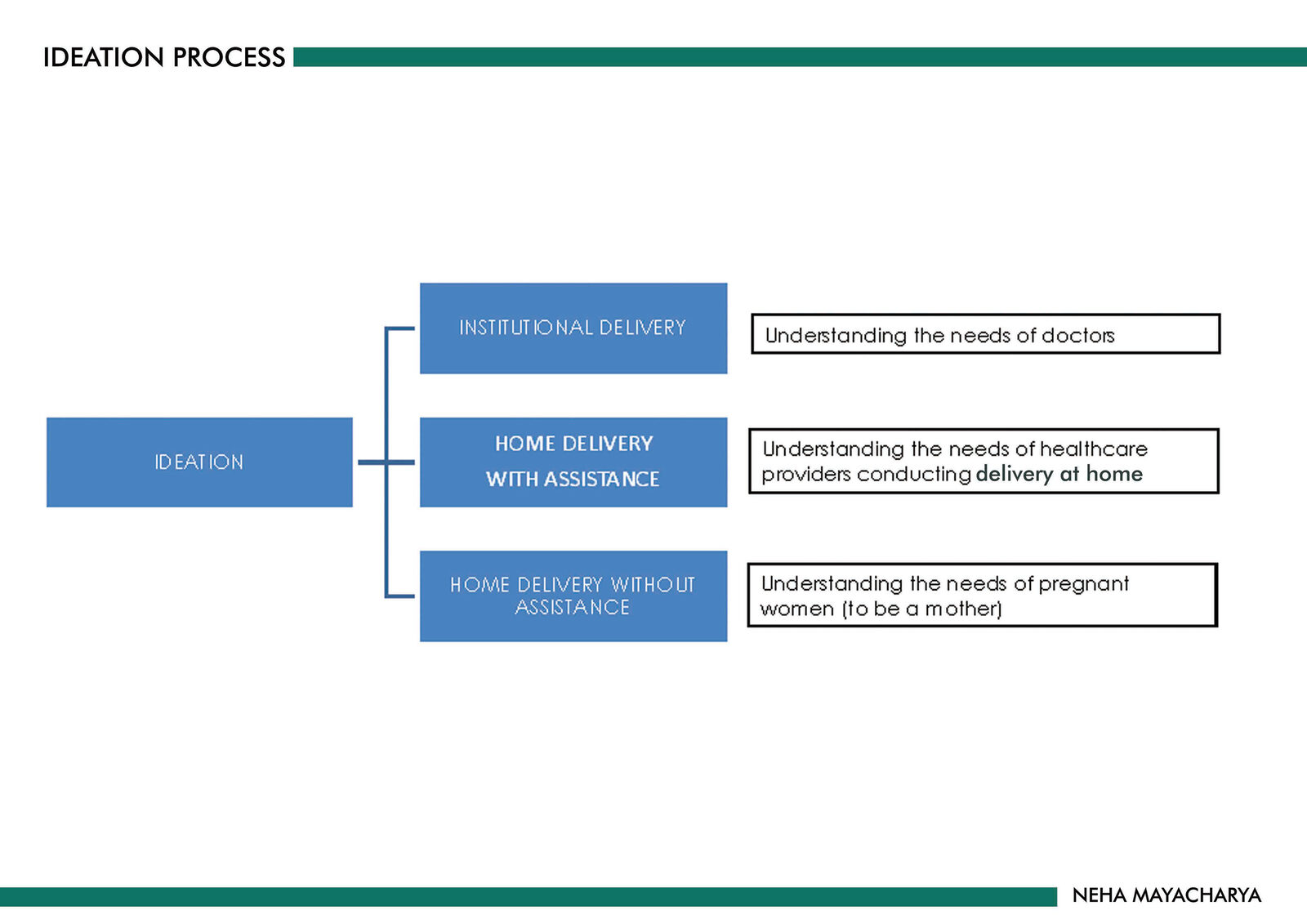
Design an emergency delivery aid for the Sub Centre that supports the squatting posture for women in normal delivery.
The Sub Centre is the most peripheral contact point between a rural community and the primary healthcare system, a single room staffed by one male and one female multipurpose health worker. The aid had to serve that room, and a home delivery assisted by its staff.
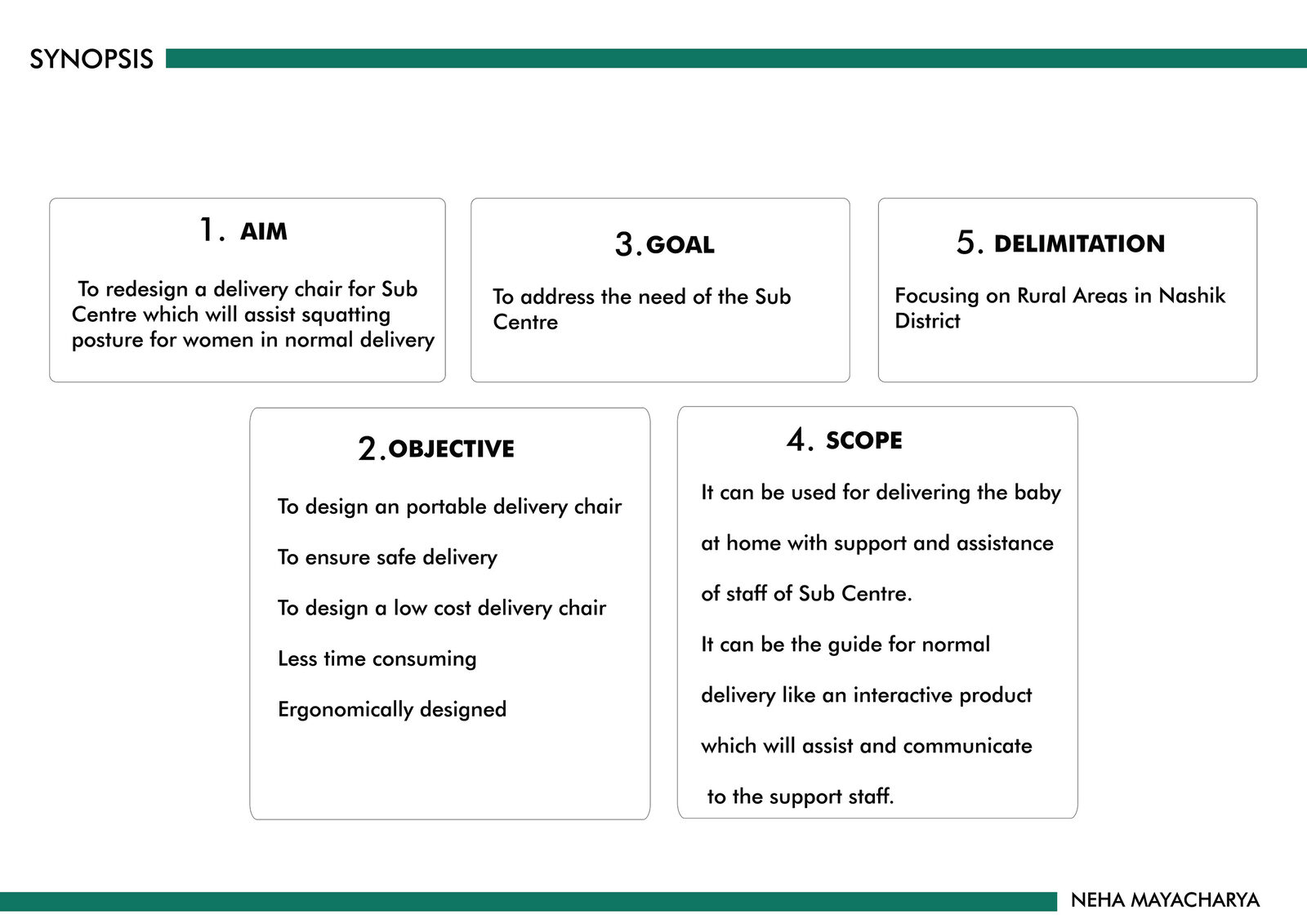
OBJECTIVES
PortableSafe deliveryLow costLess time-consumingErgonomically designedGoal
Address the real needs of the Sub Centre and the staff who work in it.
Scope
Usable for delivering at home with the support of Sub Centre staff, and a guide to normal delivery that communicates with the support staff.
Delimitation
Rural areas of Nashik district, Maharashtra.
The problem
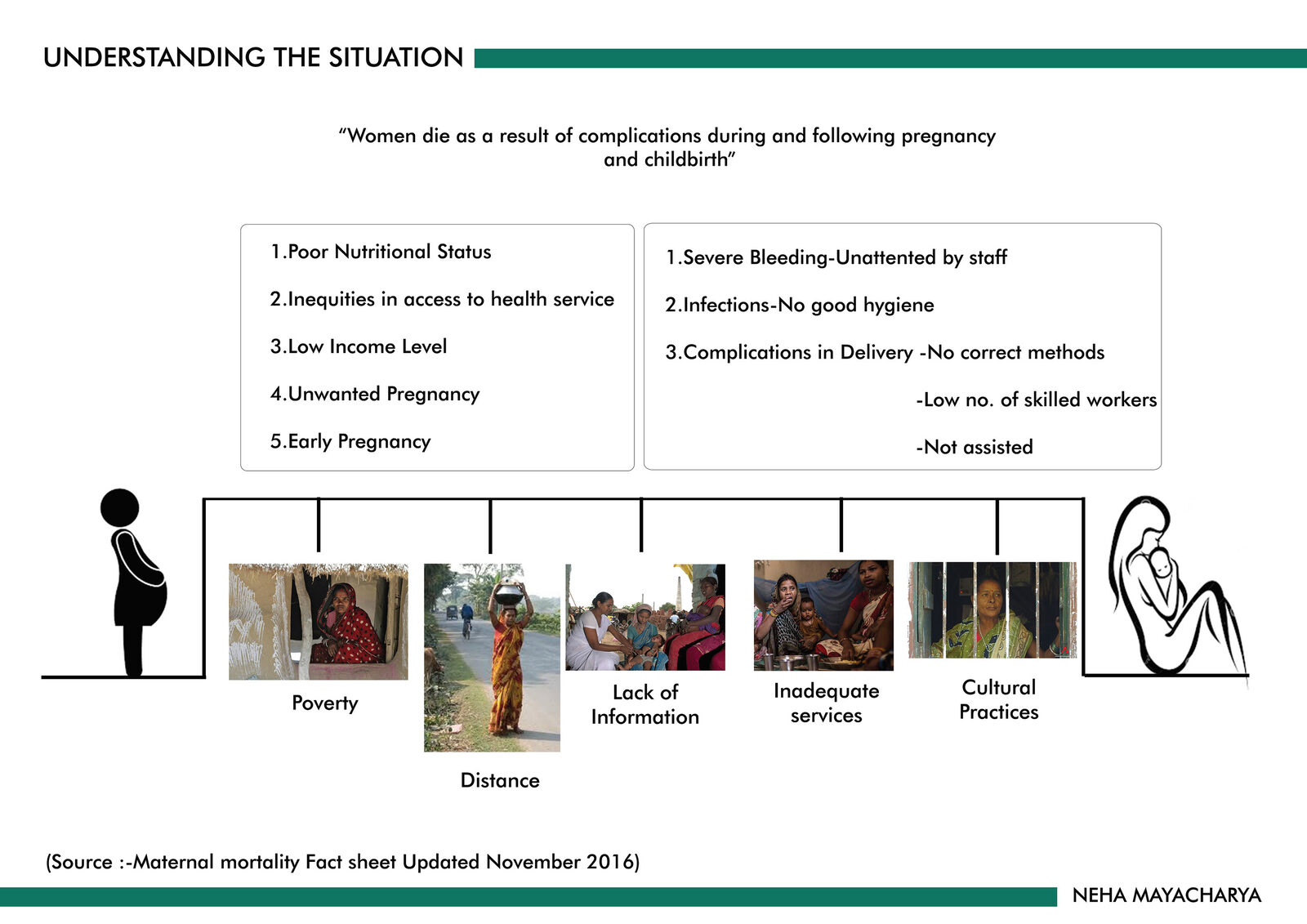
Most maternal deaths are preventable, and they happen furthest from care
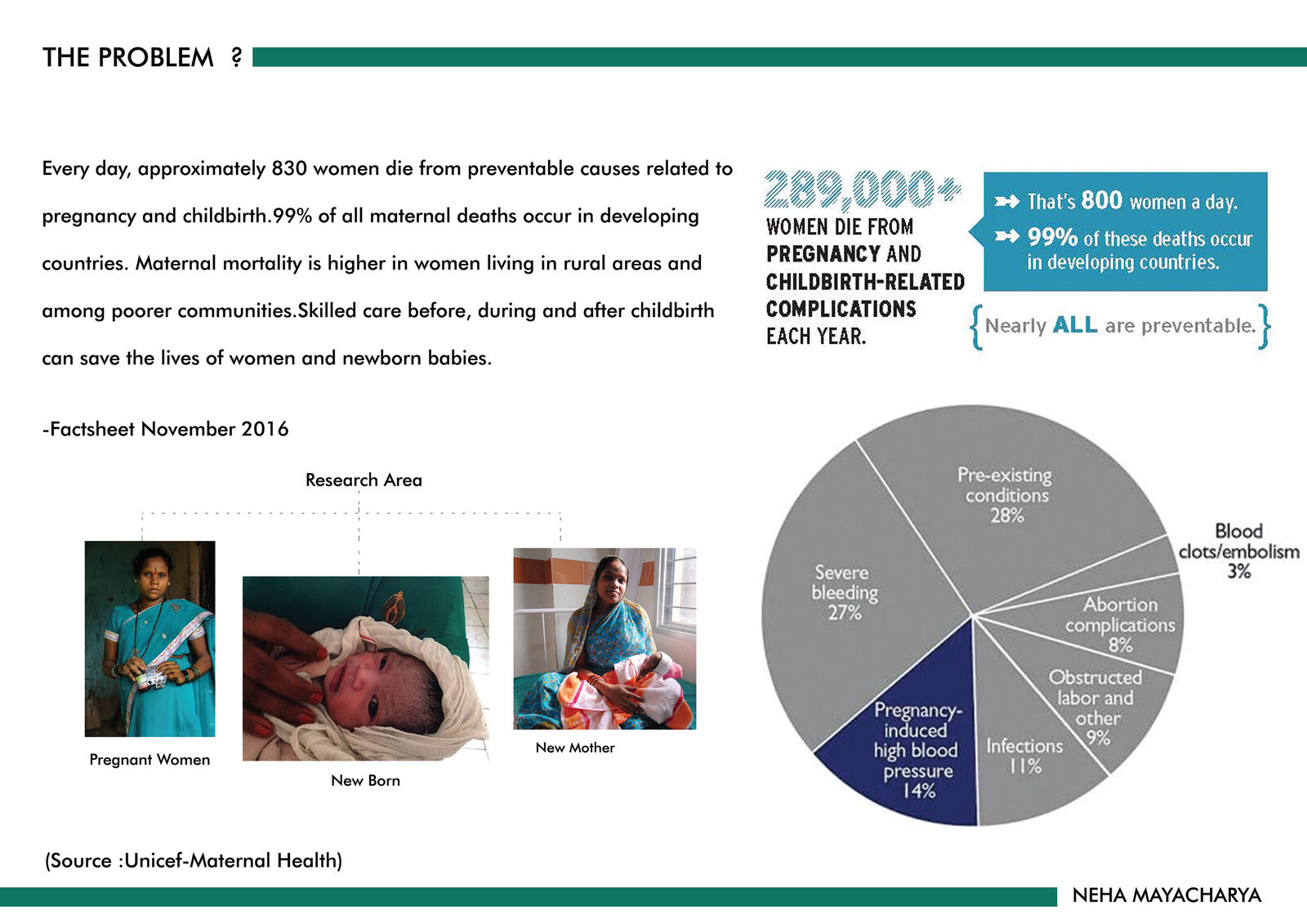
Skilled care before, during and after childbirth can save the lives of women and newborns. Maternal mortality is highest among women in rural areas and poorer communities.
~830
women die every day from preventable causes related to pregnancy and childbirth
WHO maternal mortality factsheet, November 2016
99%
of all maternal deaths occur in developing countries
UNICEF, Maternal Health
27%
of maternal deaths are caused by severe bleeding, second only to pre-existing conditions (28%)
UNICEF, Maternal Health
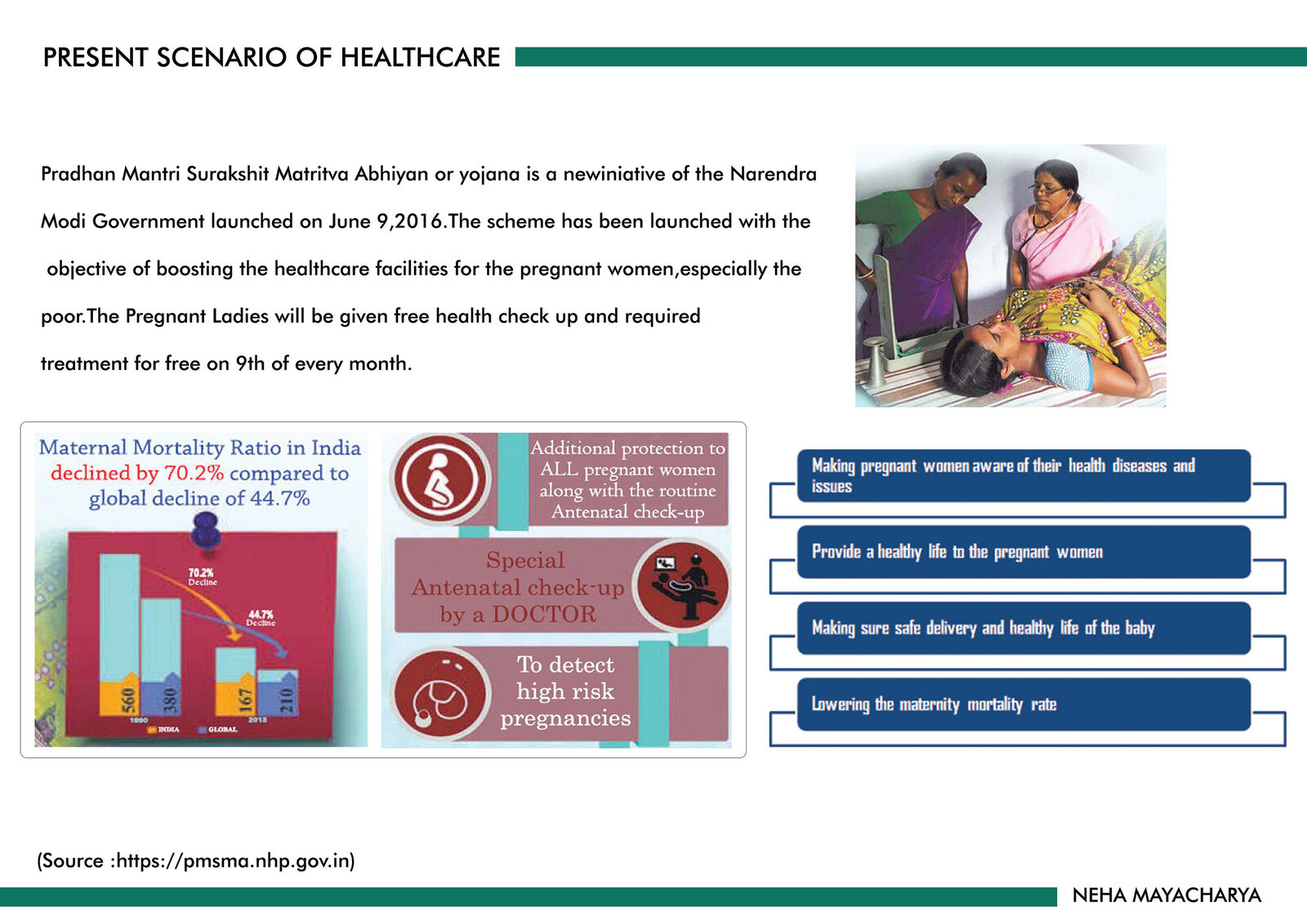
70.2%
decline in India’s maternal mortality ratio, against a 44.7% global decline
Pradhan Mantri Surakshit Matritva Abhiyan
Healthcare delivery in India
Following the system down to the Sub Centre
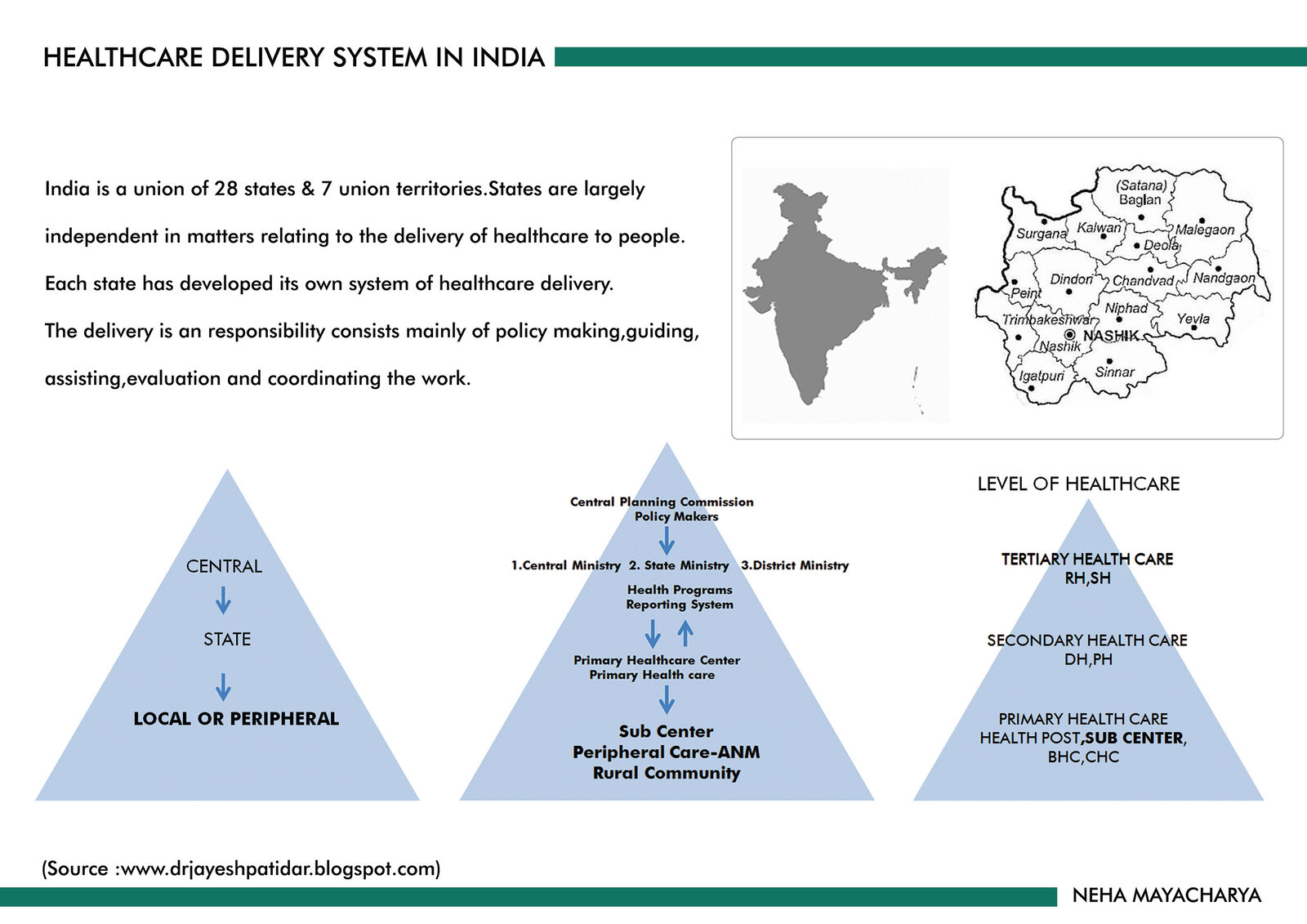
Healthcare runs from central to state to local, and from tertiary hospitals down to primary care. At the very bottom sits the Sub Centre, where a rural woman first meets the health system.
Tertiary care
Regional and specialist hospitals
Secondary care
District and peripheral hospitals
Primary care
Health posts, Sub Centres, block and community health centres
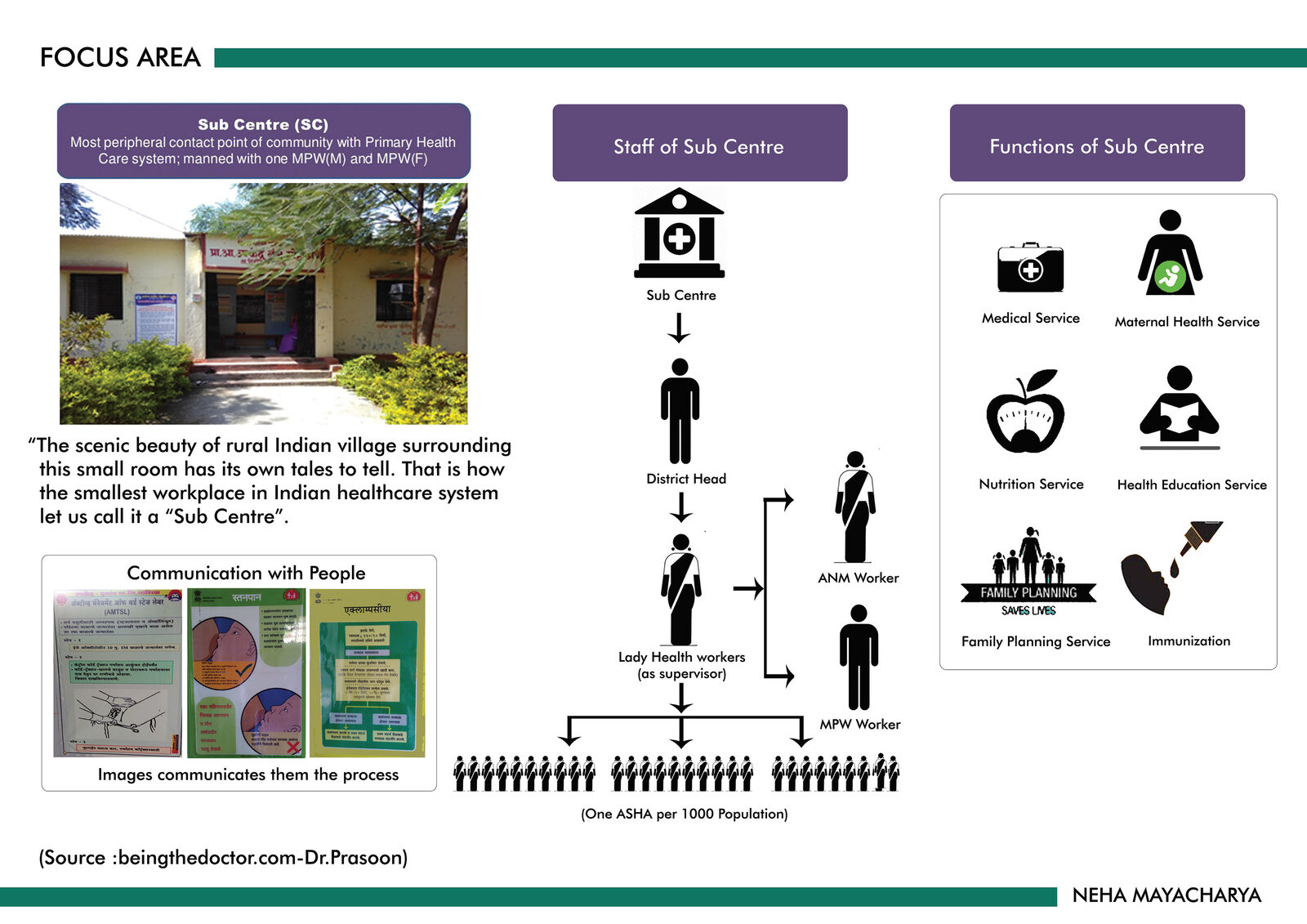
ANM
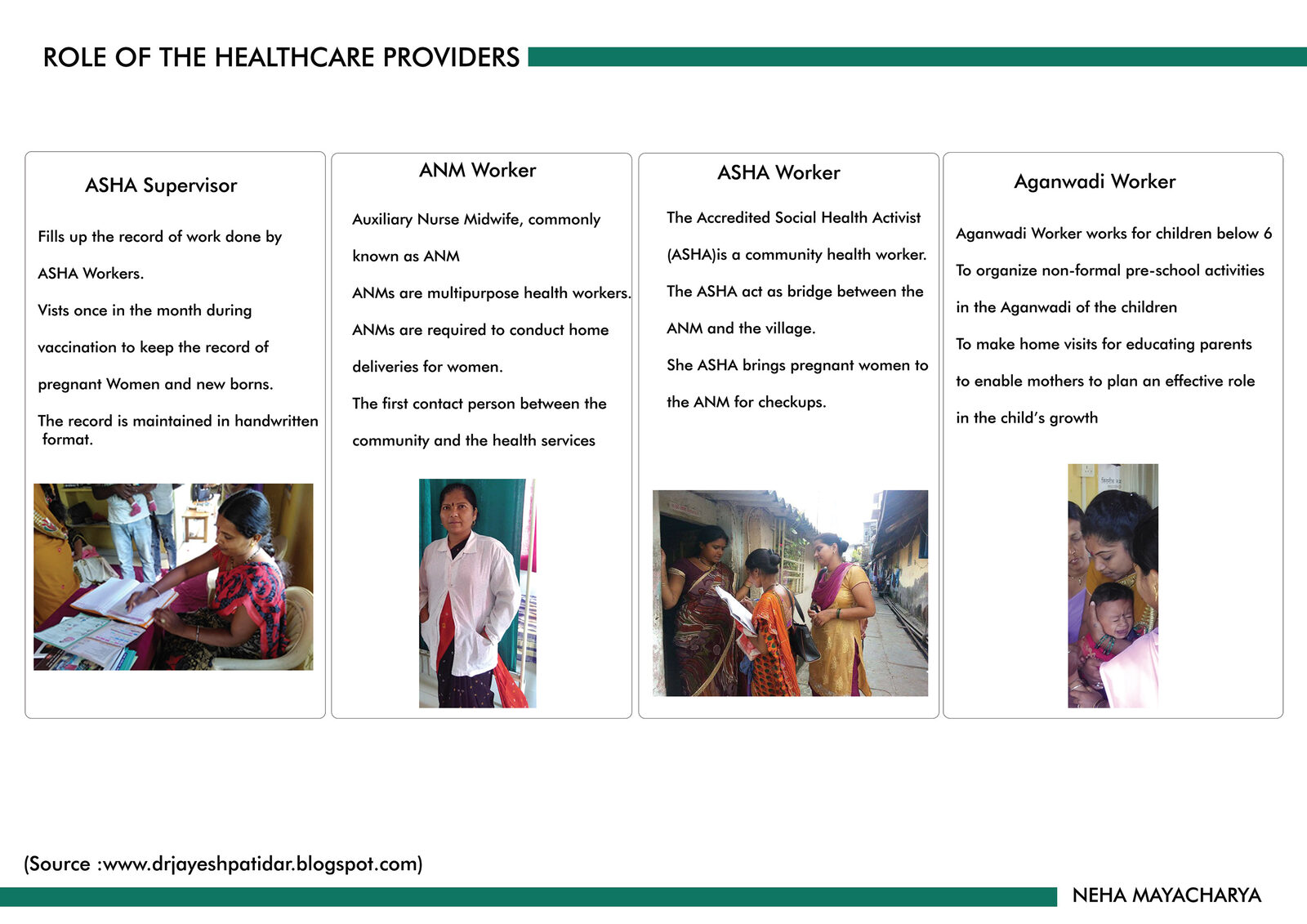
Auxiliary Nurse Midwife. Multipurpose health worker who conducts home deliveries and is the first contact between community and health services.
ASHA
Accredited Social Health Activist. The bridge between the ANM and the village, bringing pregnant women in for check-ups. One per 1,000 people.
ASHA Supervisor
Visits monthly during vaccination and keeps the records of pregnant women and newborns, by hand.
Aganwadi worker
Works with children under 6, and visits homes to help mothers plan for their child’s growth.
Key users
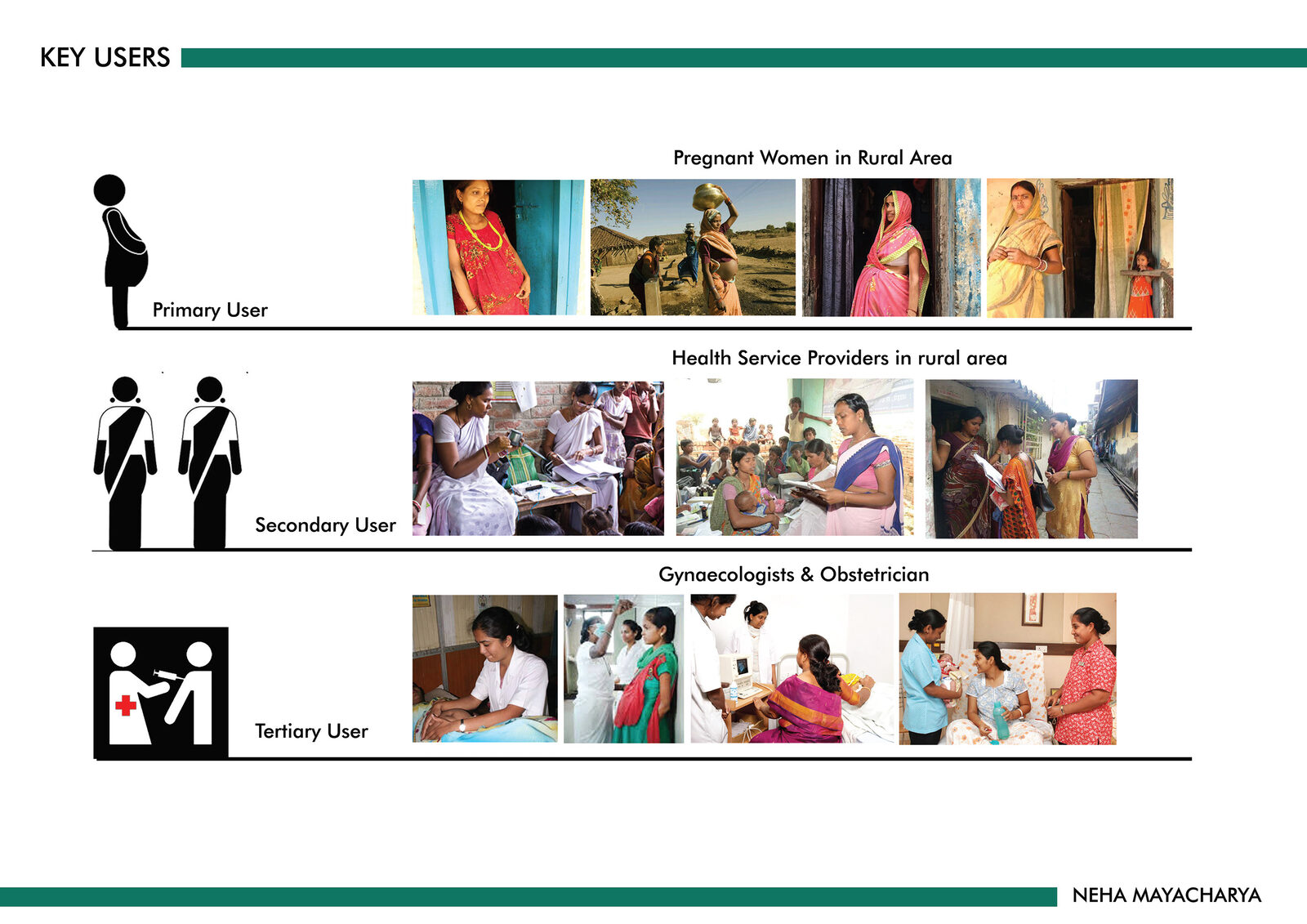
Designing for the woman, and the people around her
Primary user
Pregnant women in rural areas.
Secondary user
Health service providers in rural areas: ANM, ASHA and Sub Centre staff.
Tertiary user
Gynaecologists and obstetricians.
Field research
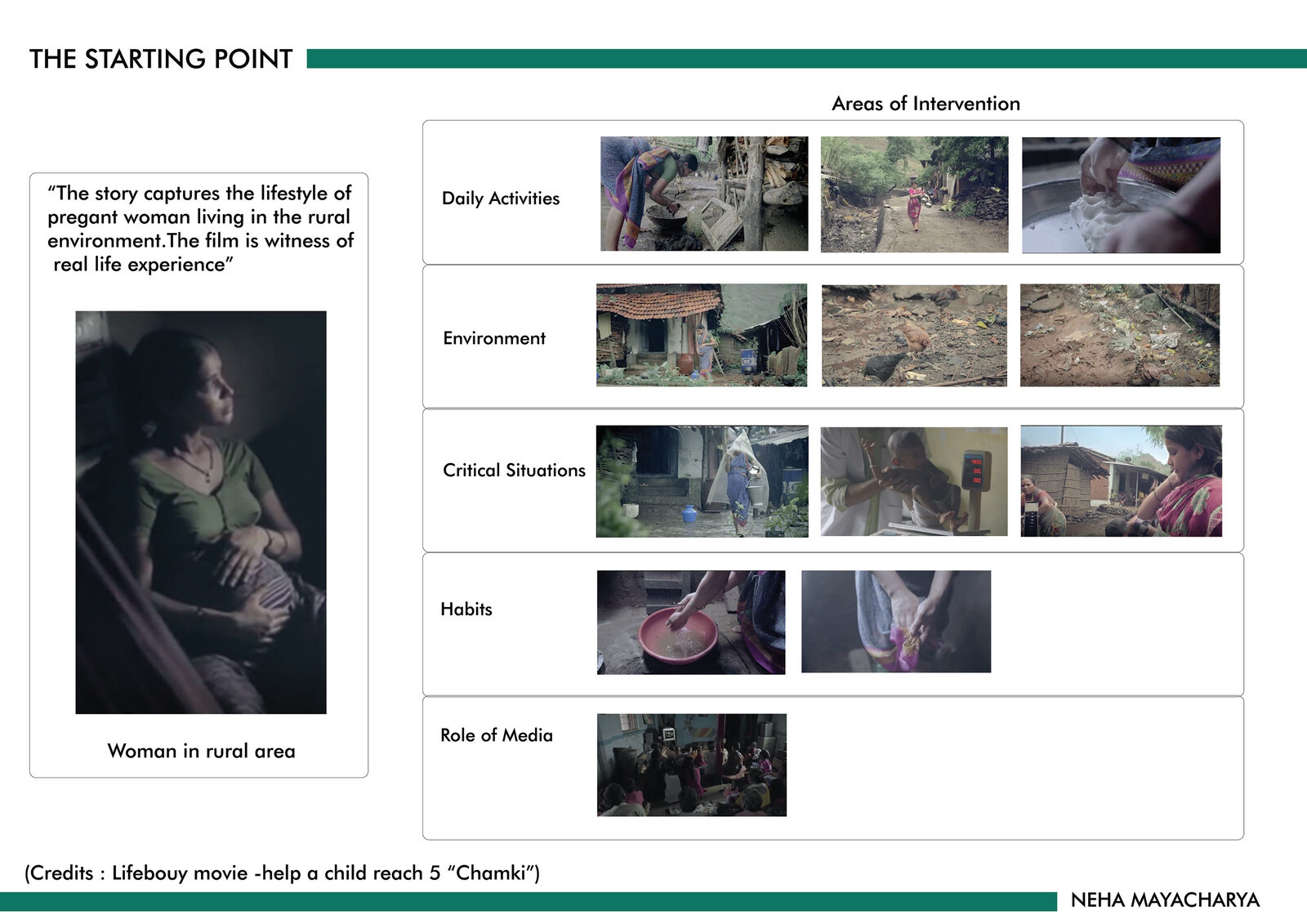
Twenty women in Mohadi village, Dindori
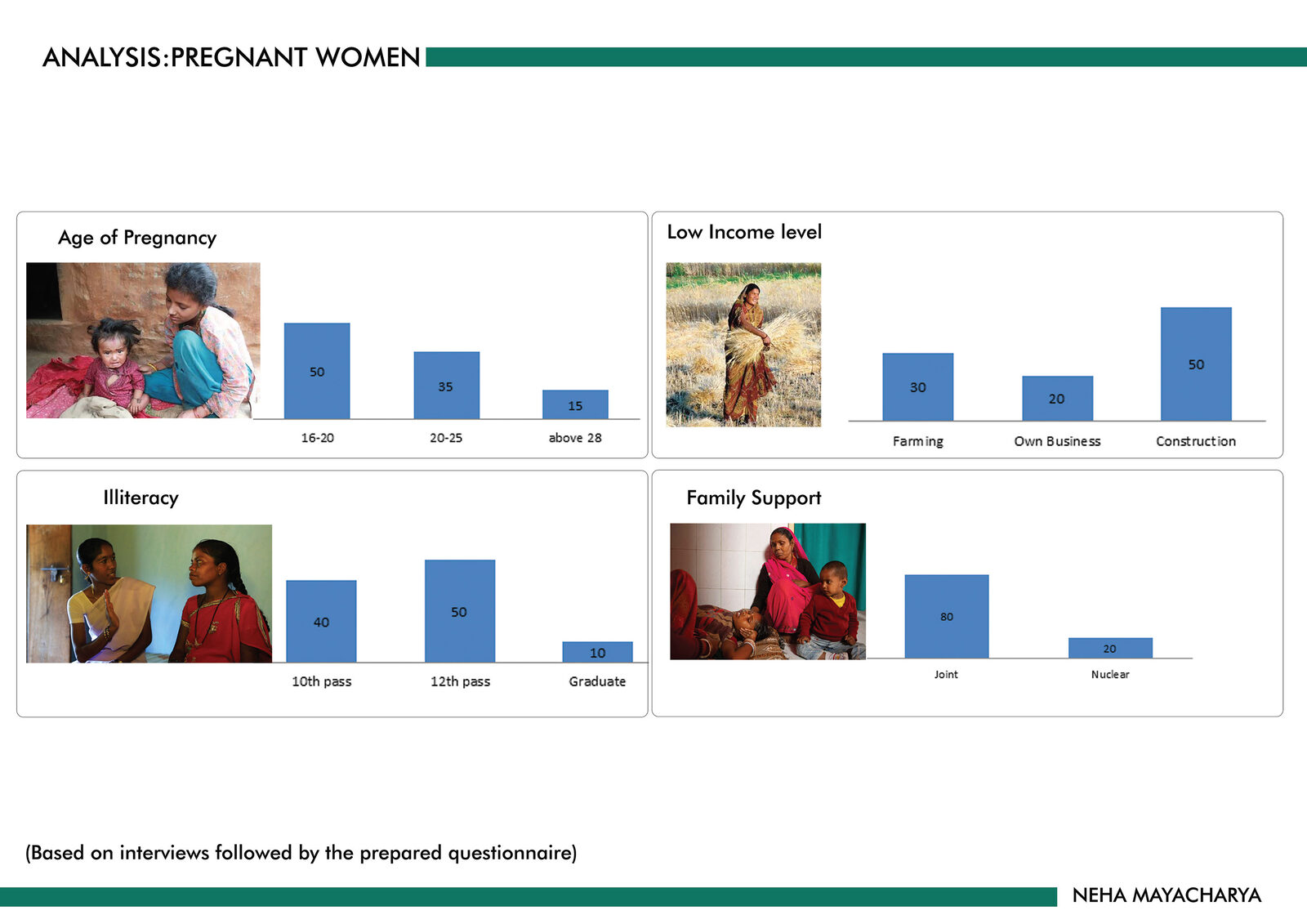
I interviewed pregnant women with a prepared questionnaire, covering age, income, education, family, media use, nutrition and where they delivered.
50%
were pregnant between the ages of 16 and 20
Age of pregnancy
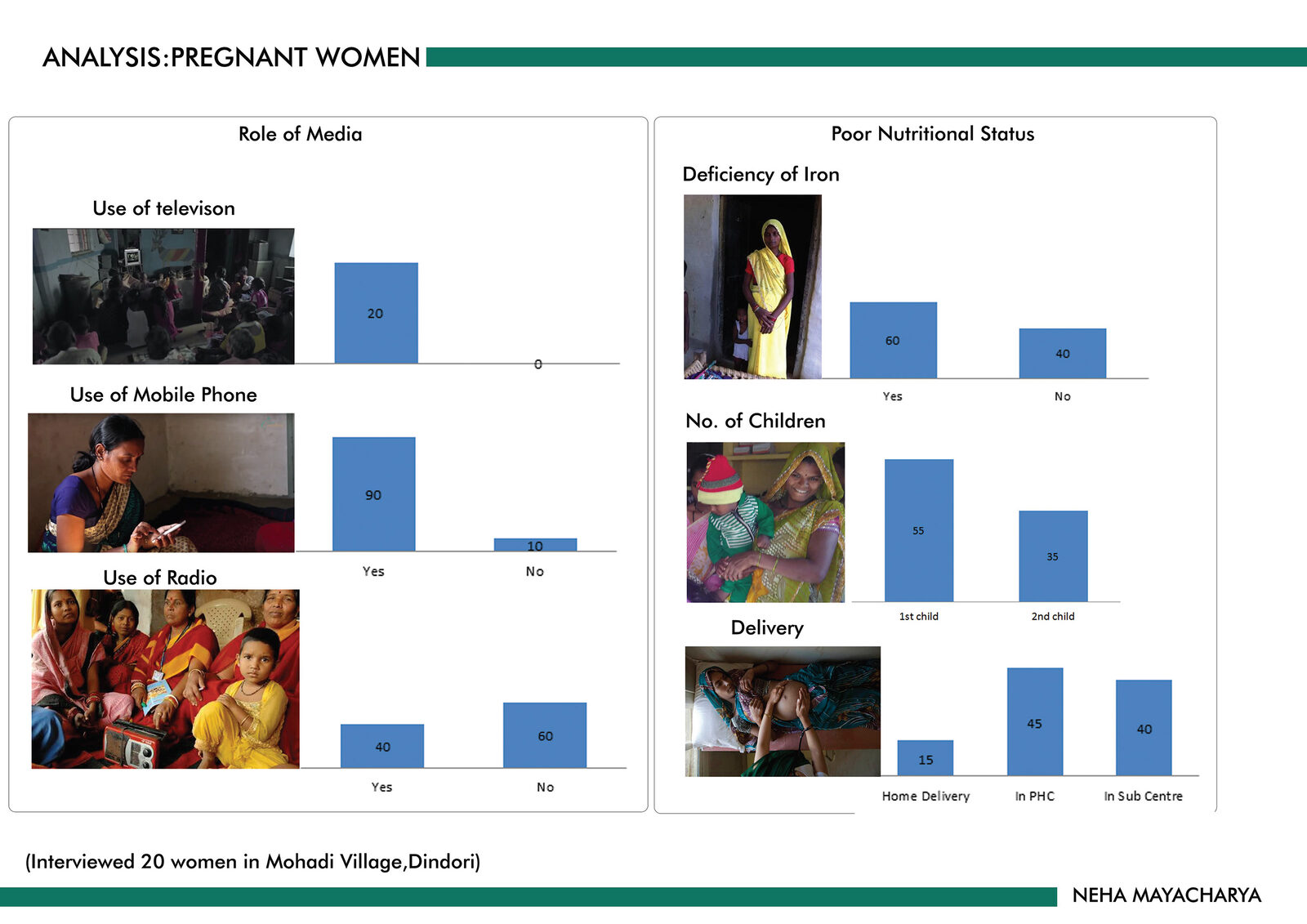
60%
showed iron deficiency
Nutritional status
80%
live in joint families
Family support
90%
use a mobile phone, the strongest media channel
Role of media
40%
delivered in a Sub Centre (45% in a PHC, 15% at home)
Place of delivery
Observing birth
Watching how delivery actually happens
I studied squatting and lithotomy deliveries through live delivery documentation by Arogya Vidya (Dr. Shyam Ashtekar), then observed live deliveries myself at the Civil Hospital, Nashik.

Sensitive content in this section
These images document childbirth. Each one stays blurred behind a screen until you choose to view it. The sketches and findings beside them describe what I learned without the photographs.
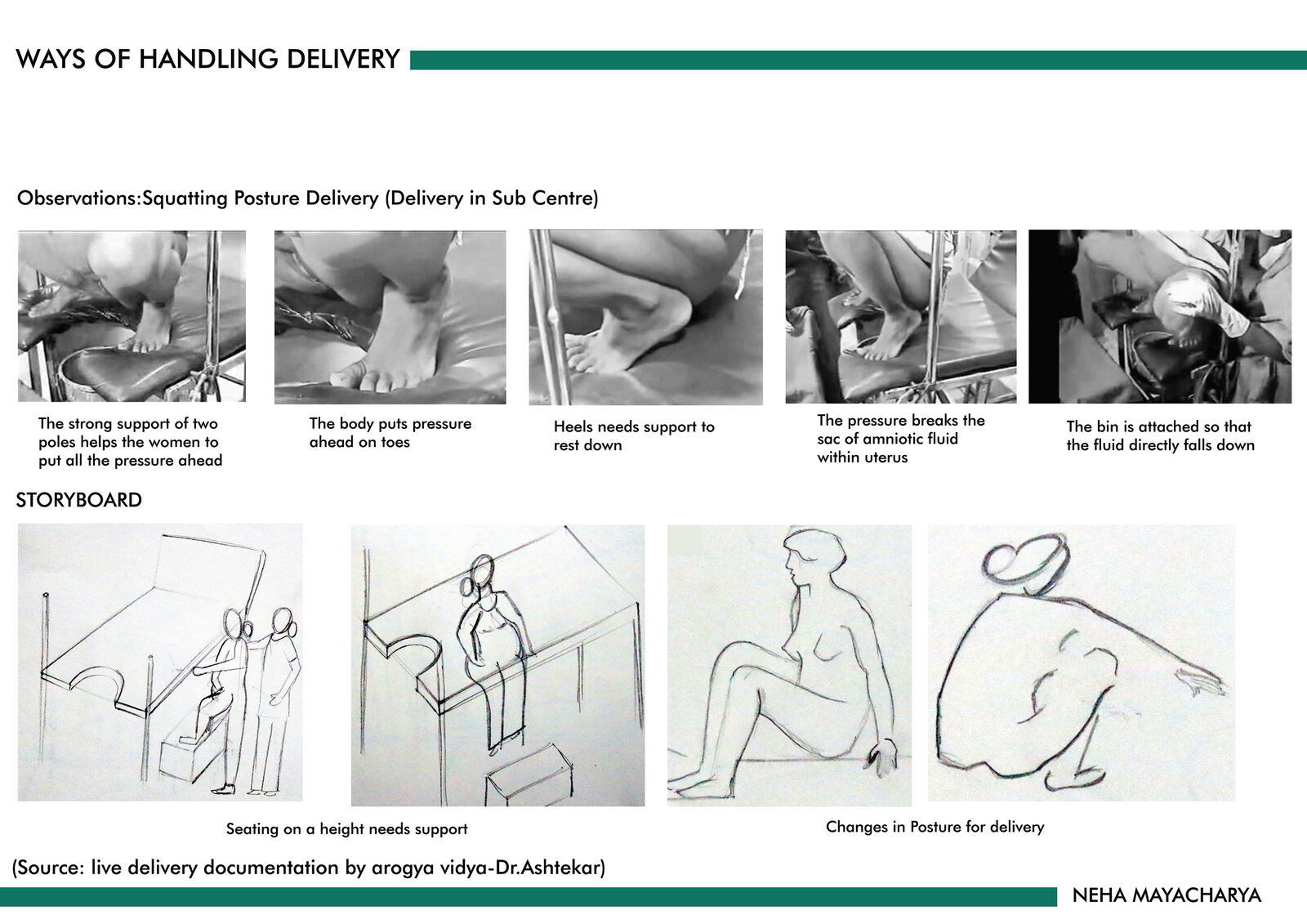
SQUATTING POSTURE · DELIVERY IN A SUB CENTRE

Sensitive content
This image may include live childbirth documentation or medical visuals that some people may find disturbing.
Sensitive content
This image may include live childbirth documentation or medical visuals that some people may find disturbing.
Two poles take the push
Strong support from two poles helps the woman put all the pressure ahead.
Heels need somewhere to rest
The body presses forward onto the toes, so the heels need support to rest down.
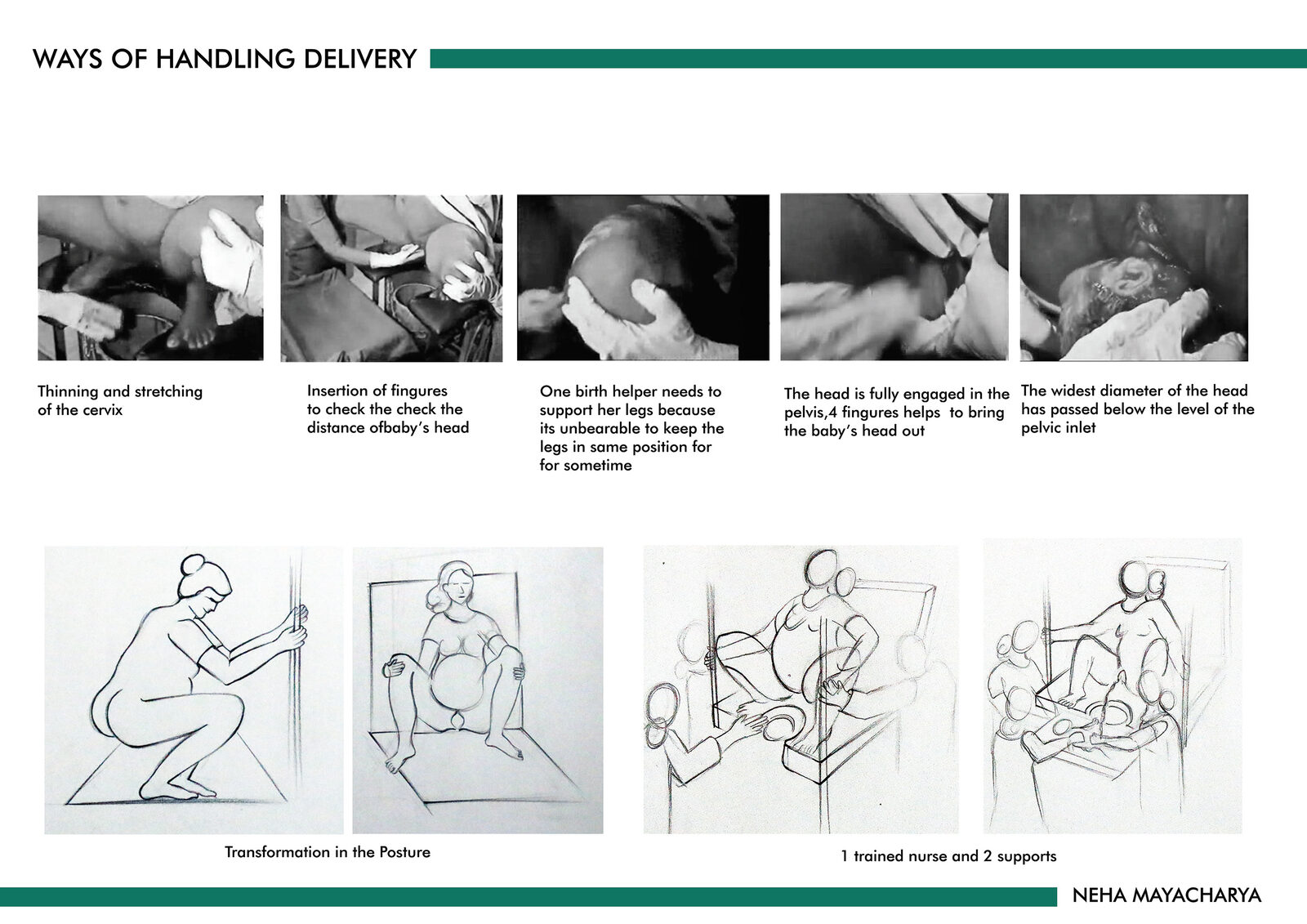
Holding a pose is unbearable
One birth helper has to support her legs, because keeping them in one position for long is unbearable.
Three people around her
A trained nurse and two supports, one of them ready with everything the baby needs.
AFTER BIRTH, AND LITHOTOMY POSTURE · HOME DELIVERY WITH ASSISTANCE
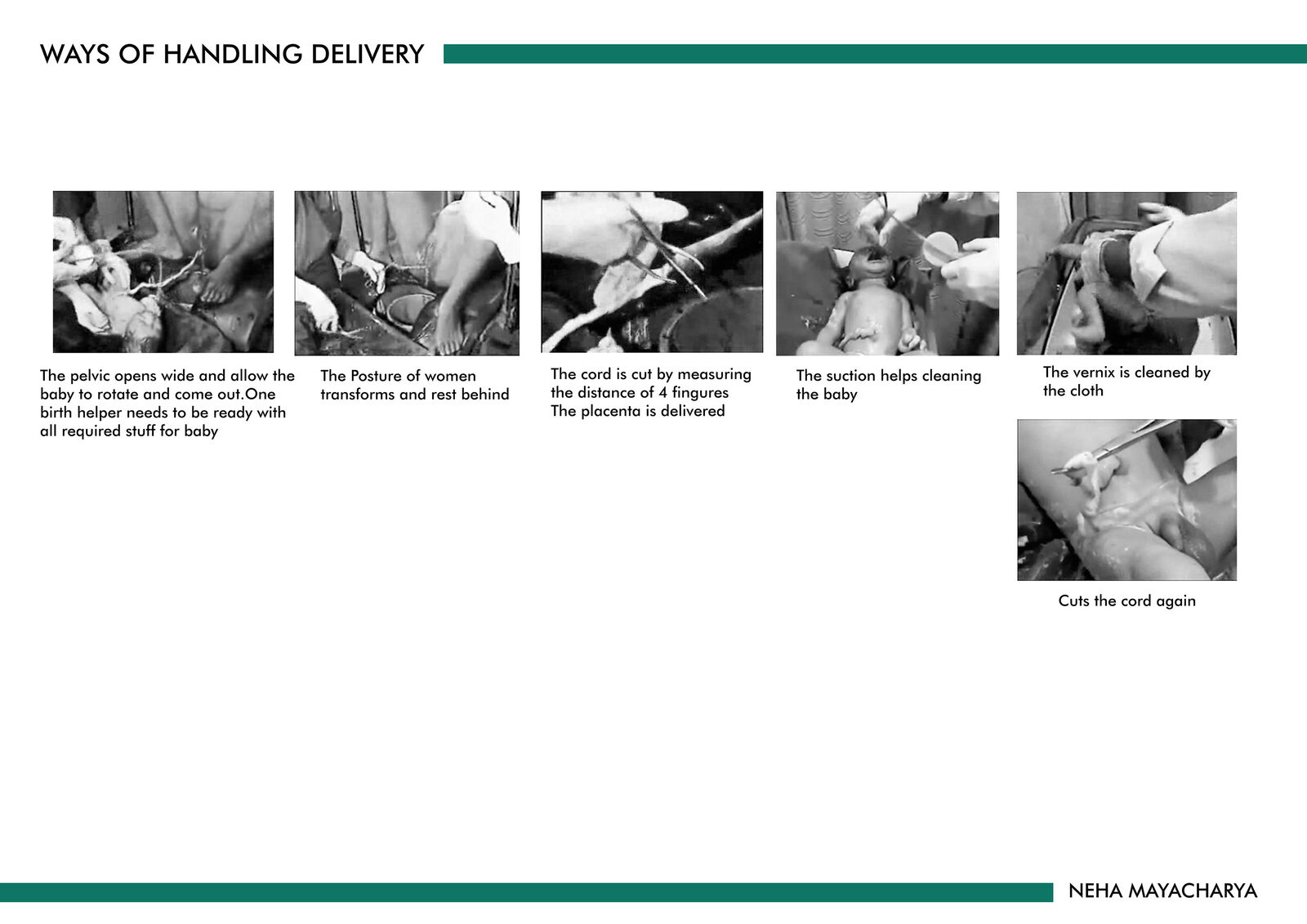
Sensitive content
This image may include live childbirth documentation or medical visuals that some people may find disturbing.
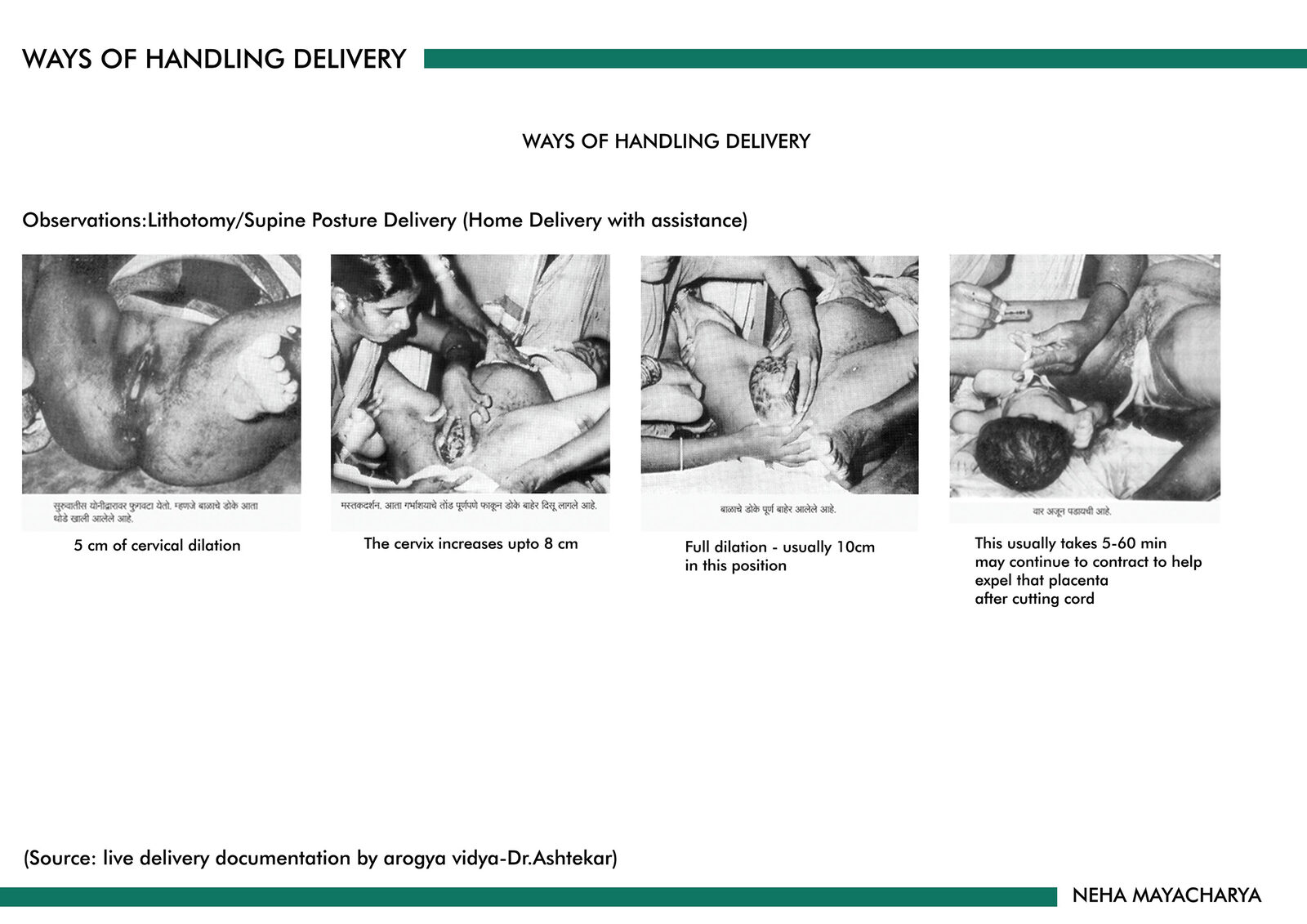
Sensitive content
This image may include live childbirth documentation or medical visuals that some people may find disturbing.
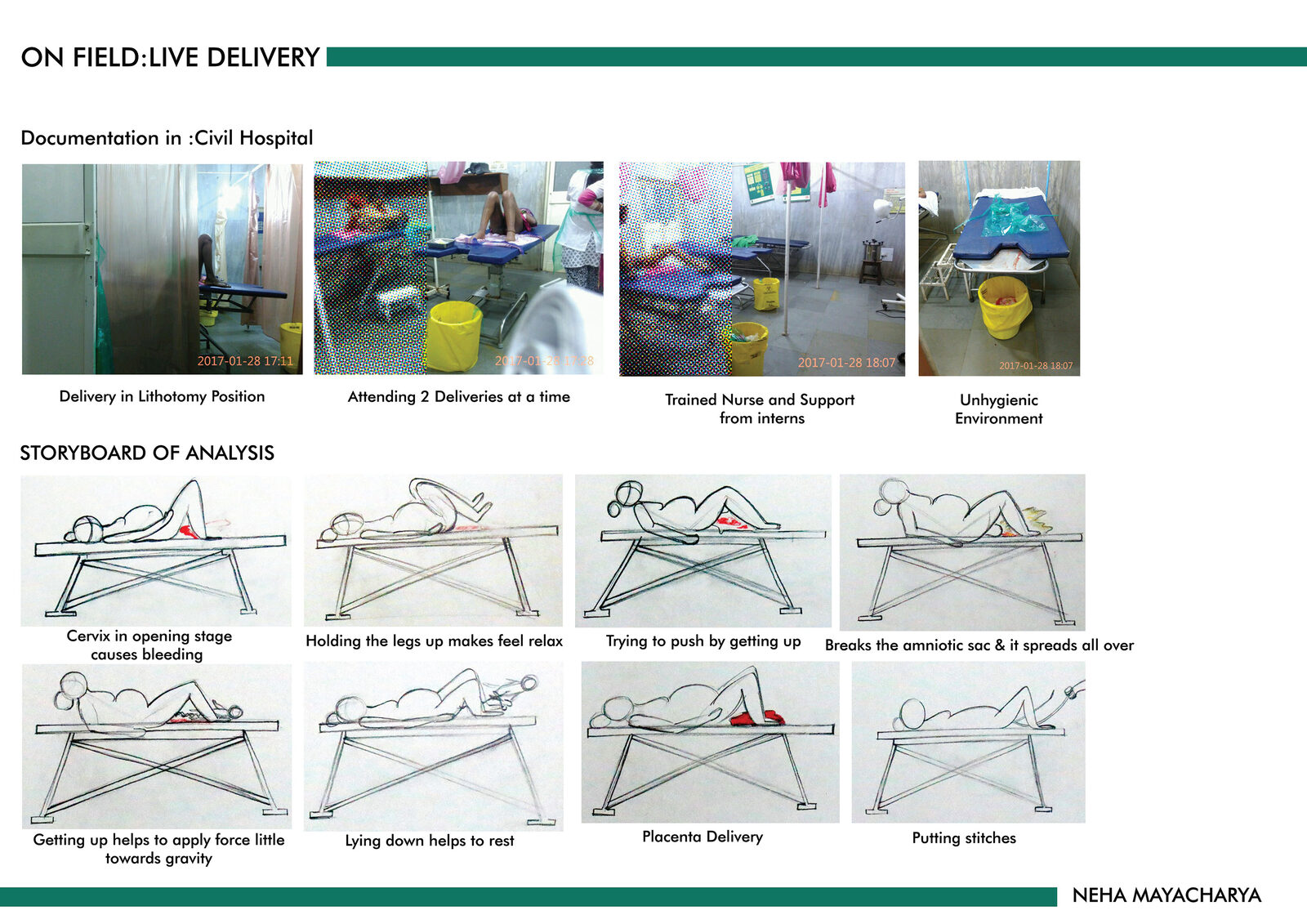
ON FIELD · LIVE DELIVERY AT THE CIVIL HOSPITAL, NASHIK
Sensitive content
This image may include live childbirth documentation or medical visuals that some people may find disturbing.
Lying flat by default
Deliveries were conducted in the lithotomy position.
Two births at once
Staff attended two deliveries at the same time.
Nurses lean on interns
One trained nurse, supported by interns.
Hygiene breaks down
Fluid spreads across the table; the environment was unhygienic.
The insight
A posture rural women already live in
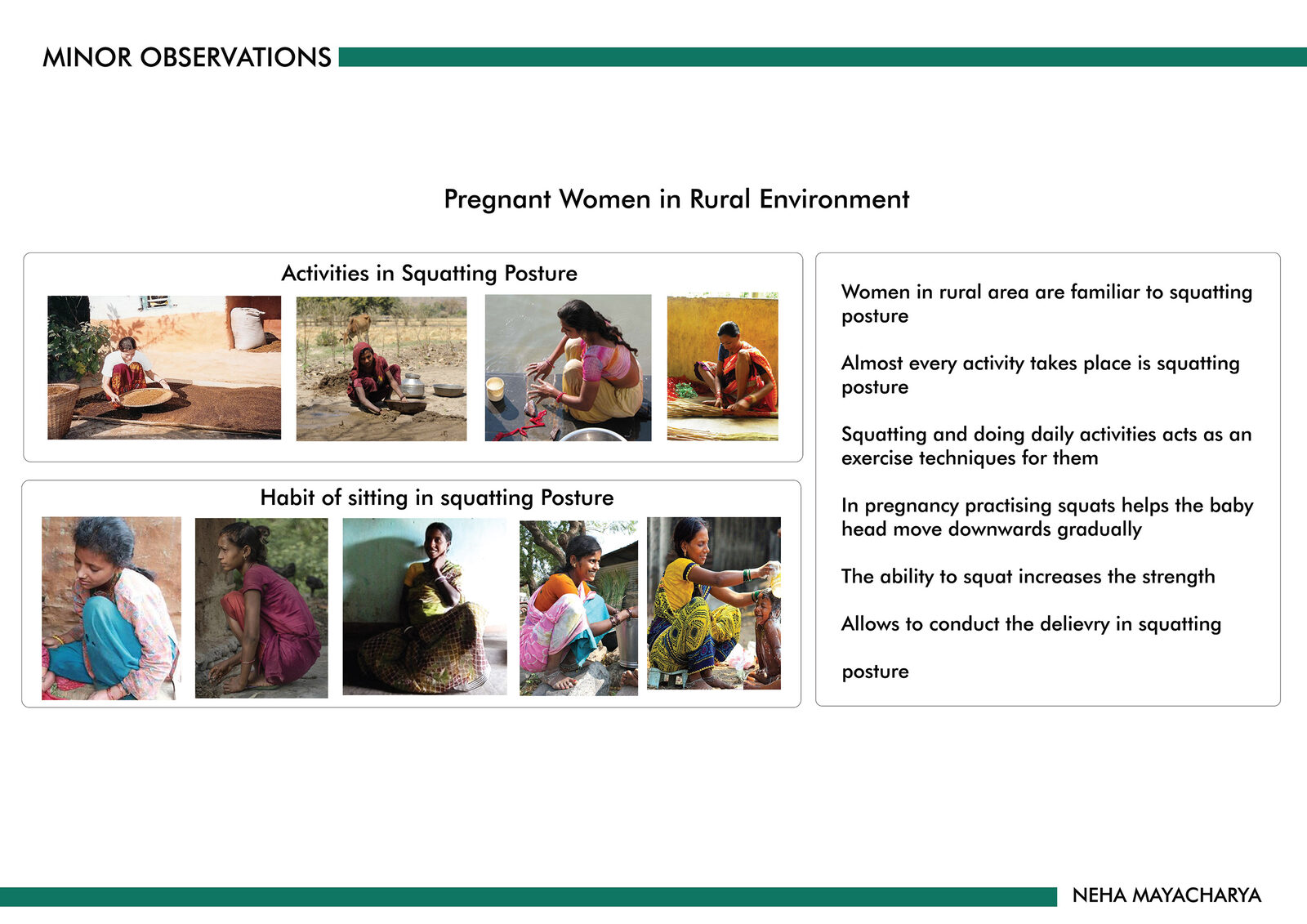
Familiar
Women in rural areas are used to the squatting posture.
Everyday
Almost every daily activity happens in a squat, and it works as exercise.
Helps the baby descend
In pregnancy, practising squats helps the baby’s head move downward gradually.
Builds strength
The ability to squat increases strength, making a squatting delivery possible.
Validating the need
Comparing birth positions, then asking clinicians
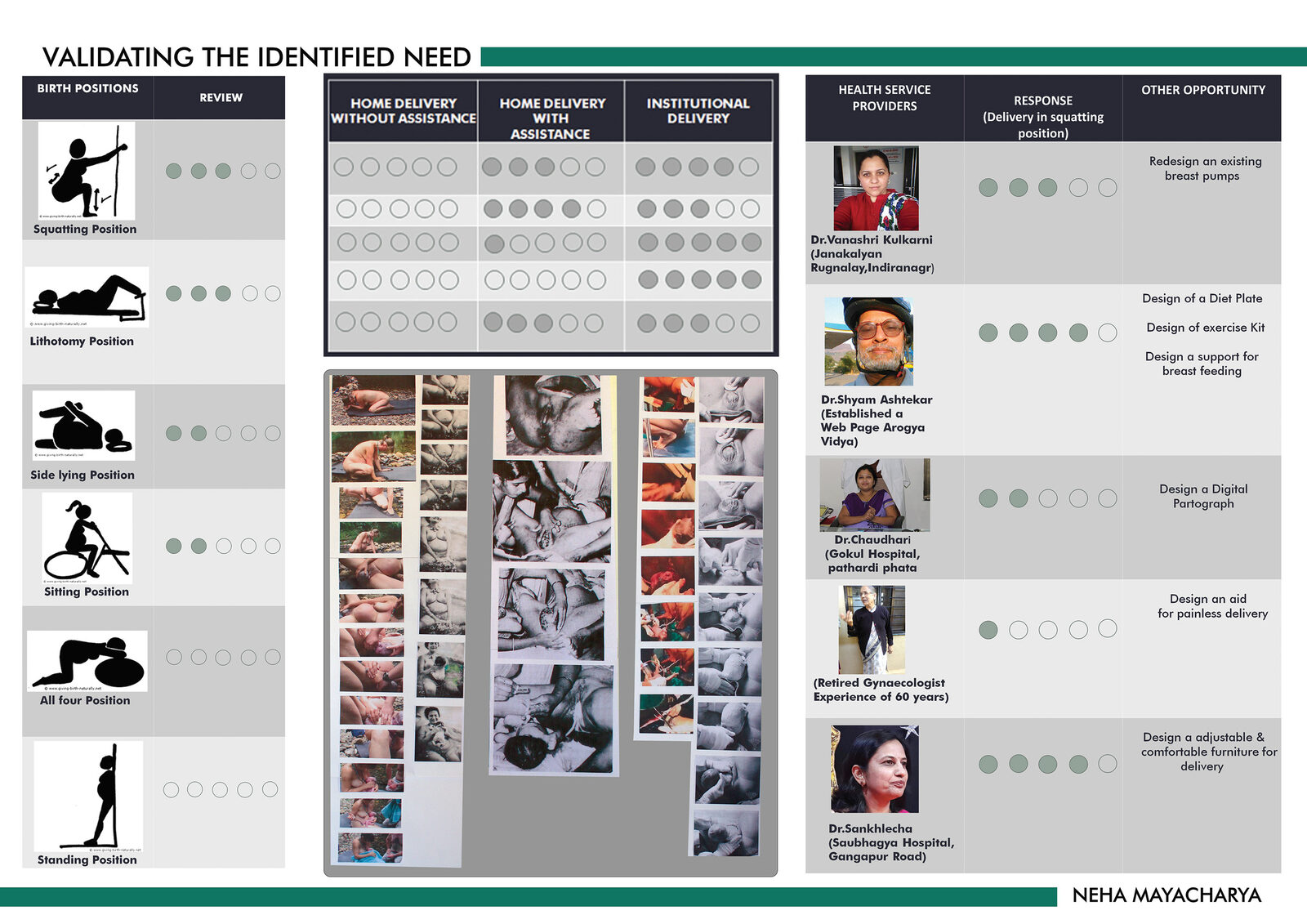
I compared six birth positions, then took the squatting position to five clinicians in Nashik. Most rated it favourably, and each pointed to further design opportunities.
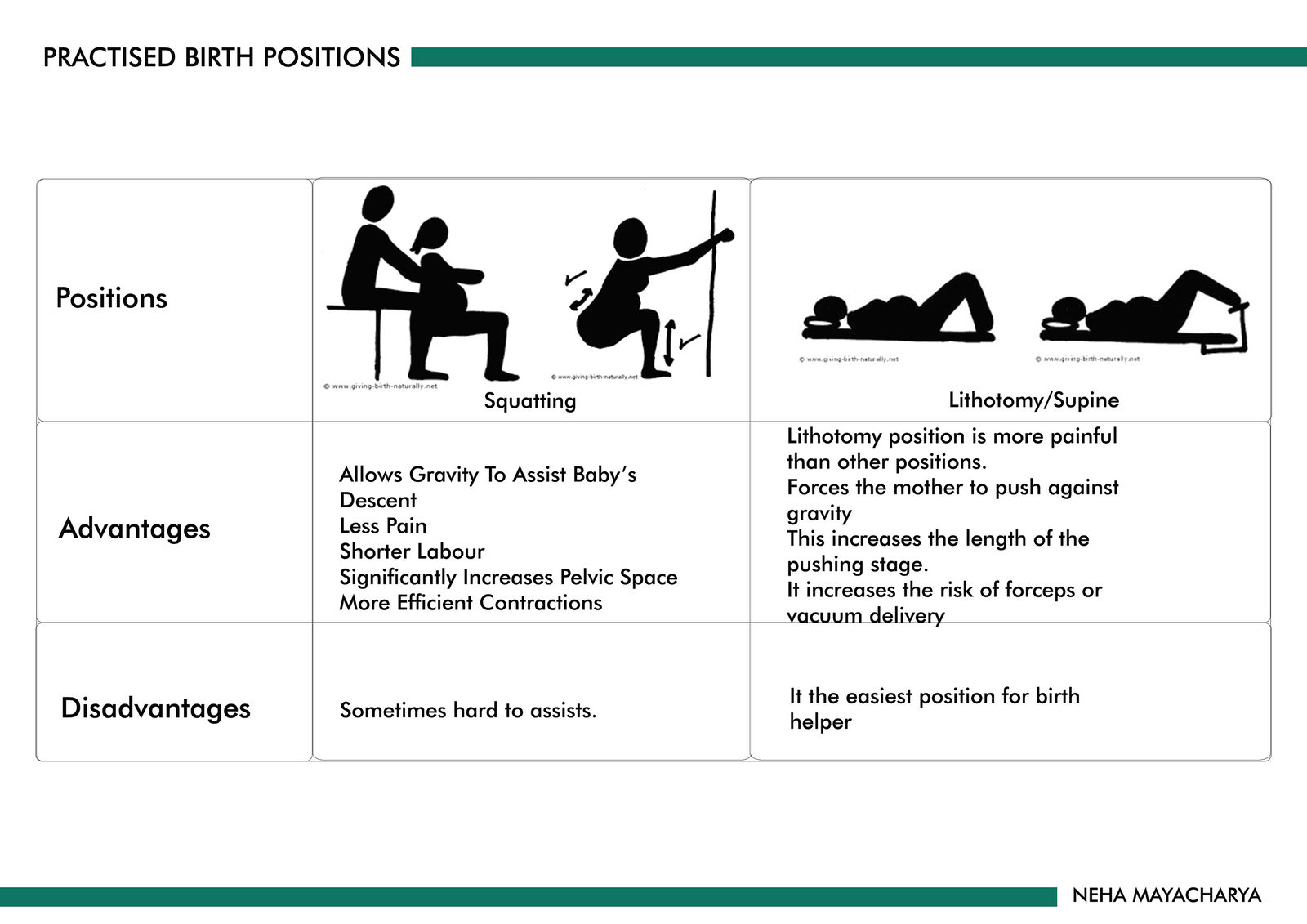
Squatting
Lithotomy / supine
Benefits
Gravity assists the baby’s descent, less pain, shorter labour, significantly more pelvic space and more efficient contractions.
The easiest position for the birth helper.
Drawbacks
Sometimes hard to assist.
More painful, forces the mother to push against gravity, lengthens the pushing stage and raises the risk of forceps or vacuum delivery.
Sensitive content
This image may include live childbirth documentation or medical visuals that some people may find disturbing.
CLINICIANS CONSULTED
Dr. Vanashri Kulkarni (Janakalyan Rugnalay, Indiranagar) · Dr. Shyam Ashtekar (Arogya Vidya) · Dr. Chaudhari (Gokul Hospital, Pathardi Phata) · a retired gynaecologist with 60 years of experience · Dr. Sankhlecha (Saubhagya Hospital, Gangapur Road)
Opportunities they raised: an adjustable, comfortable delivery furniture, an aid for painless delivery, a digital partograph, a diet plate, an exercise kit and support for breastfeeding.
Medical groundwork
Learning the body before designing for it
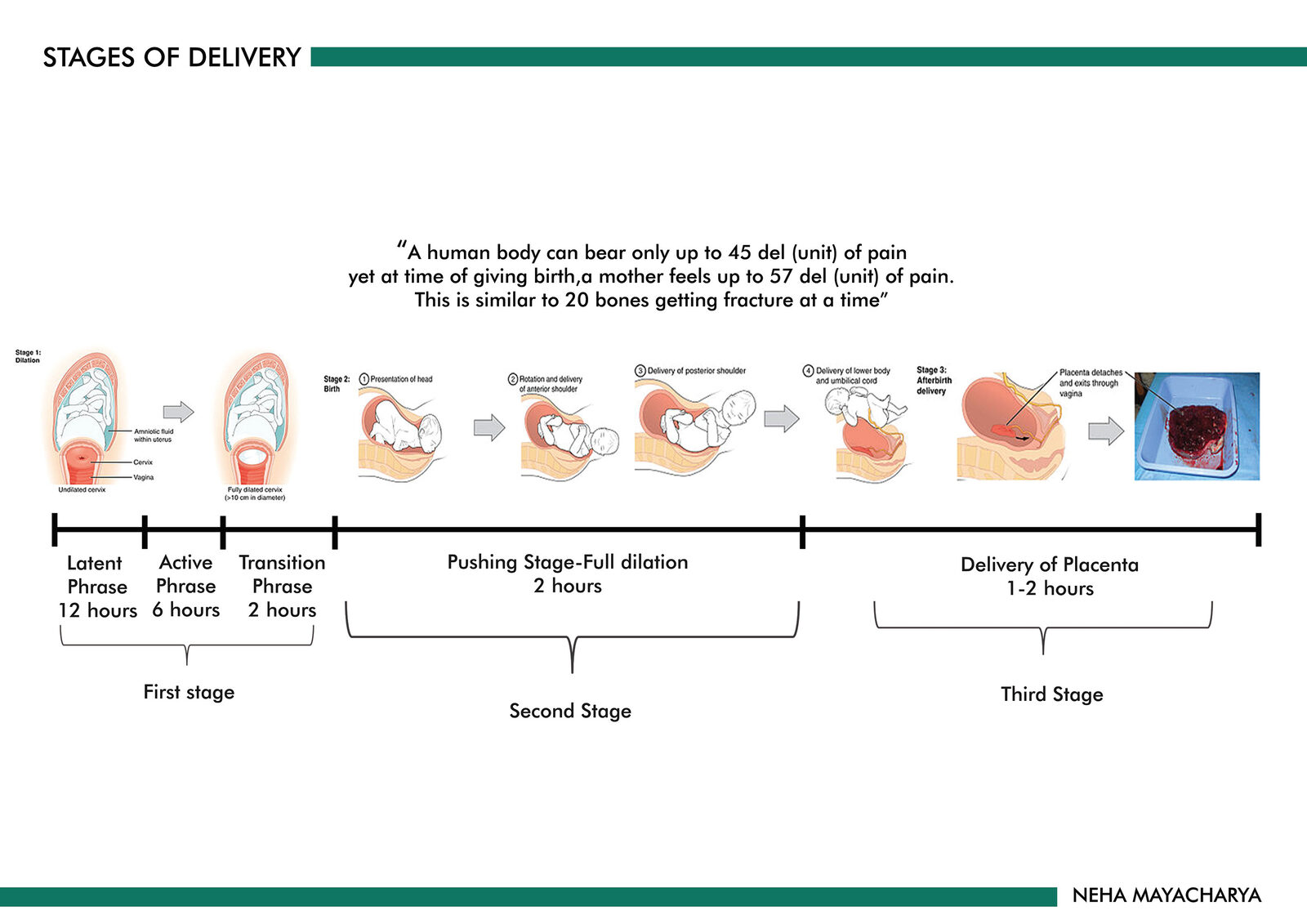
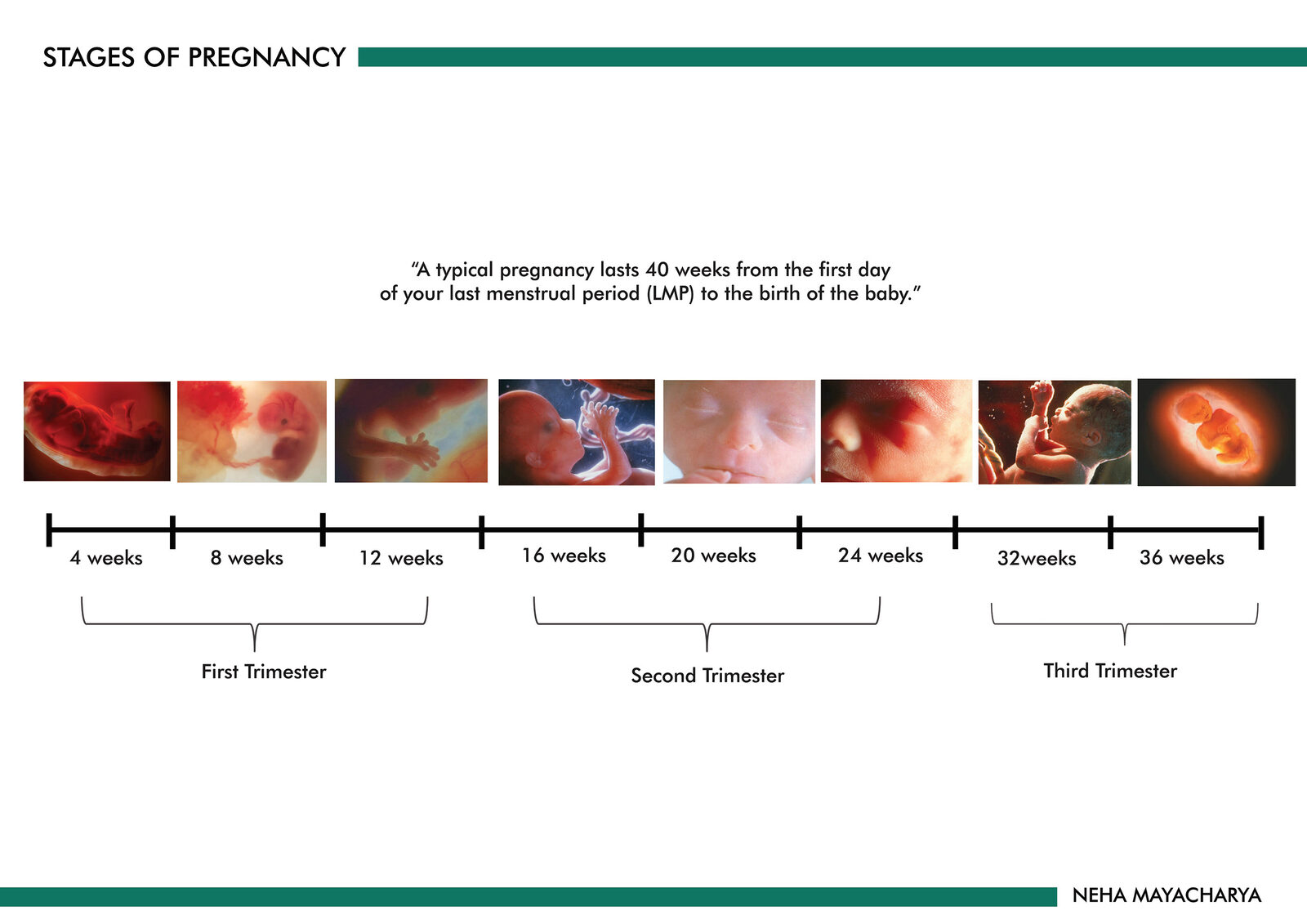
To design for birth I first had to understand it: the terms, how pregnancy changes the body, the stages of labour and the ways a baby can be delivered.
~20 h
First stage: dilation
Latent phase around 12 hours, active phase around 6, transition around 2.
~2 h
Second stage: pushing
From full dilation to birth, around 2 hours. This is where posture matters most.
1–2 h
Third stage: placenta
Delivery of the placenta, 1 to 2 hours.
Sensitive content
This image may include live childbirth documentation or medical visuals that some people may find disturbing.
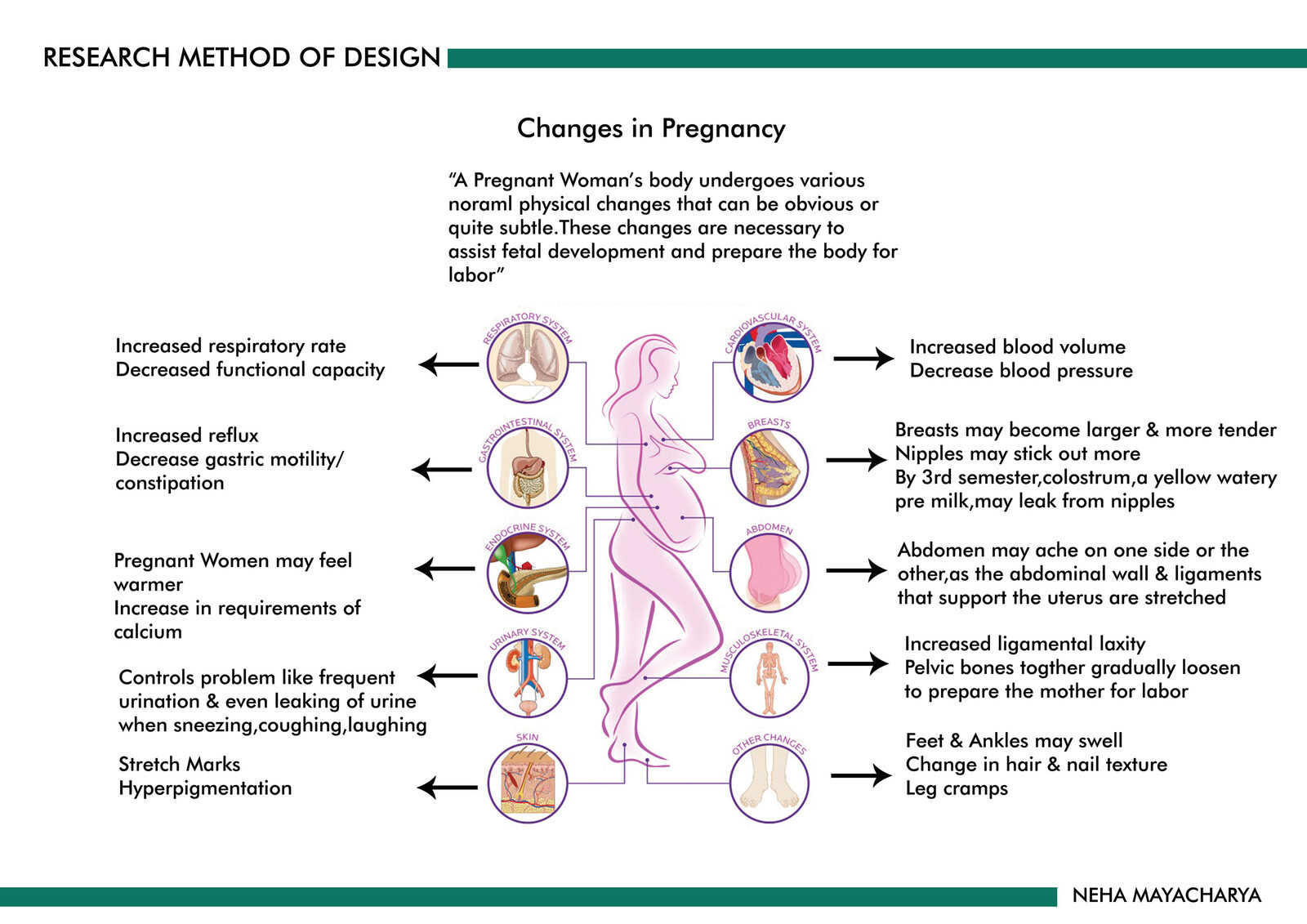
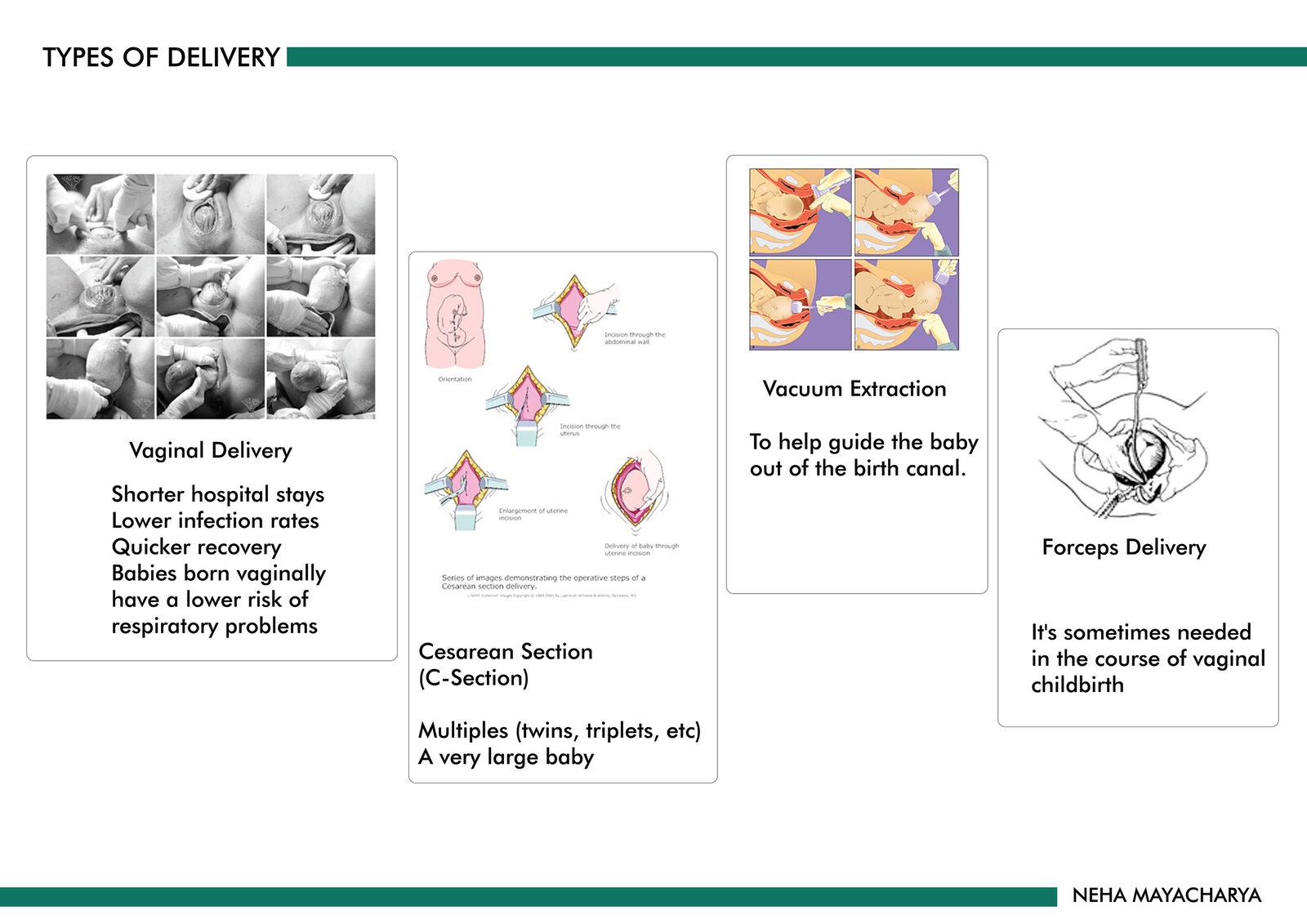
Sensitive content
This image may include live childbirth documentation or medical visuals that some people may find disturbing.
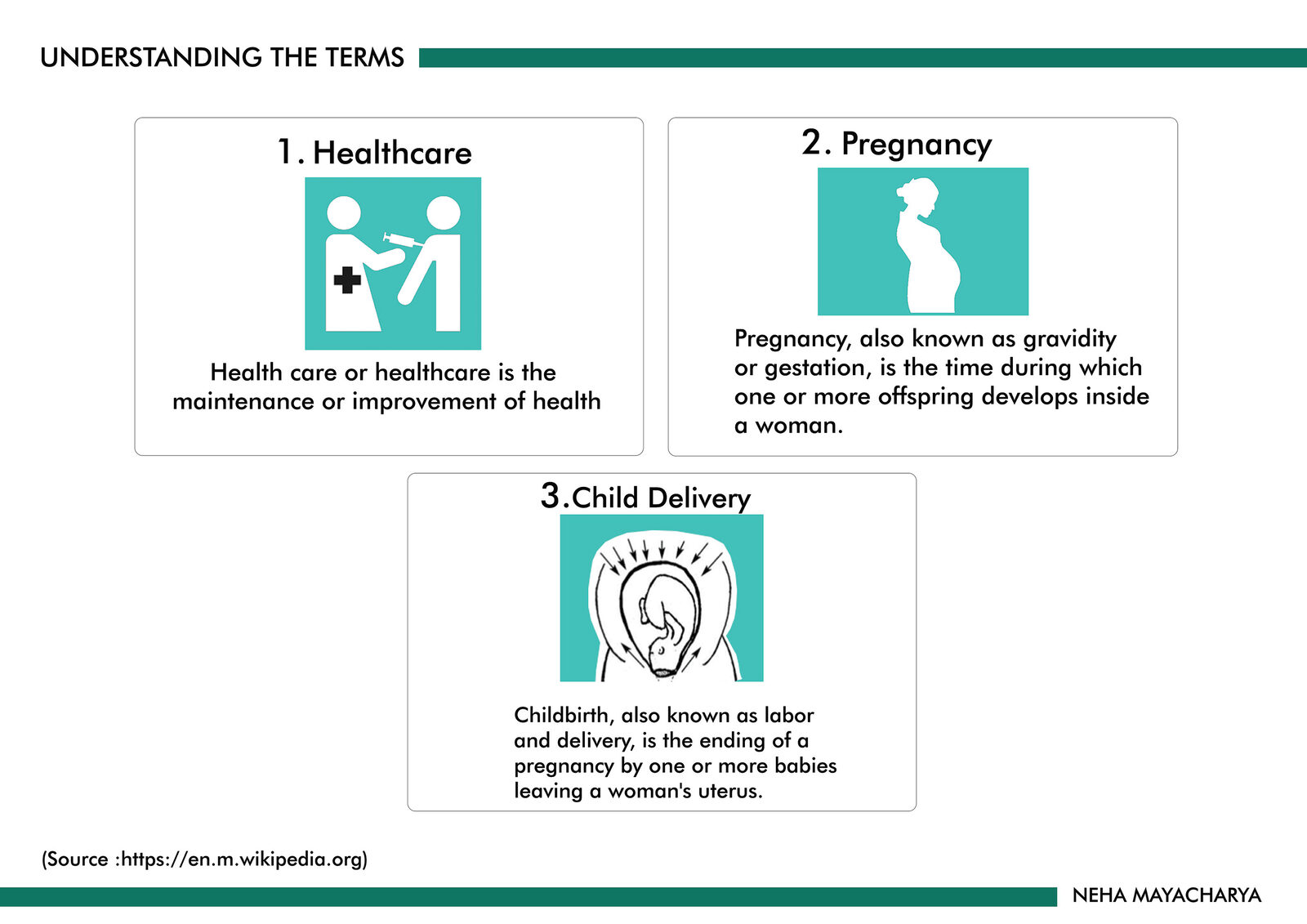
Why squatting works
A new understanding of an old position
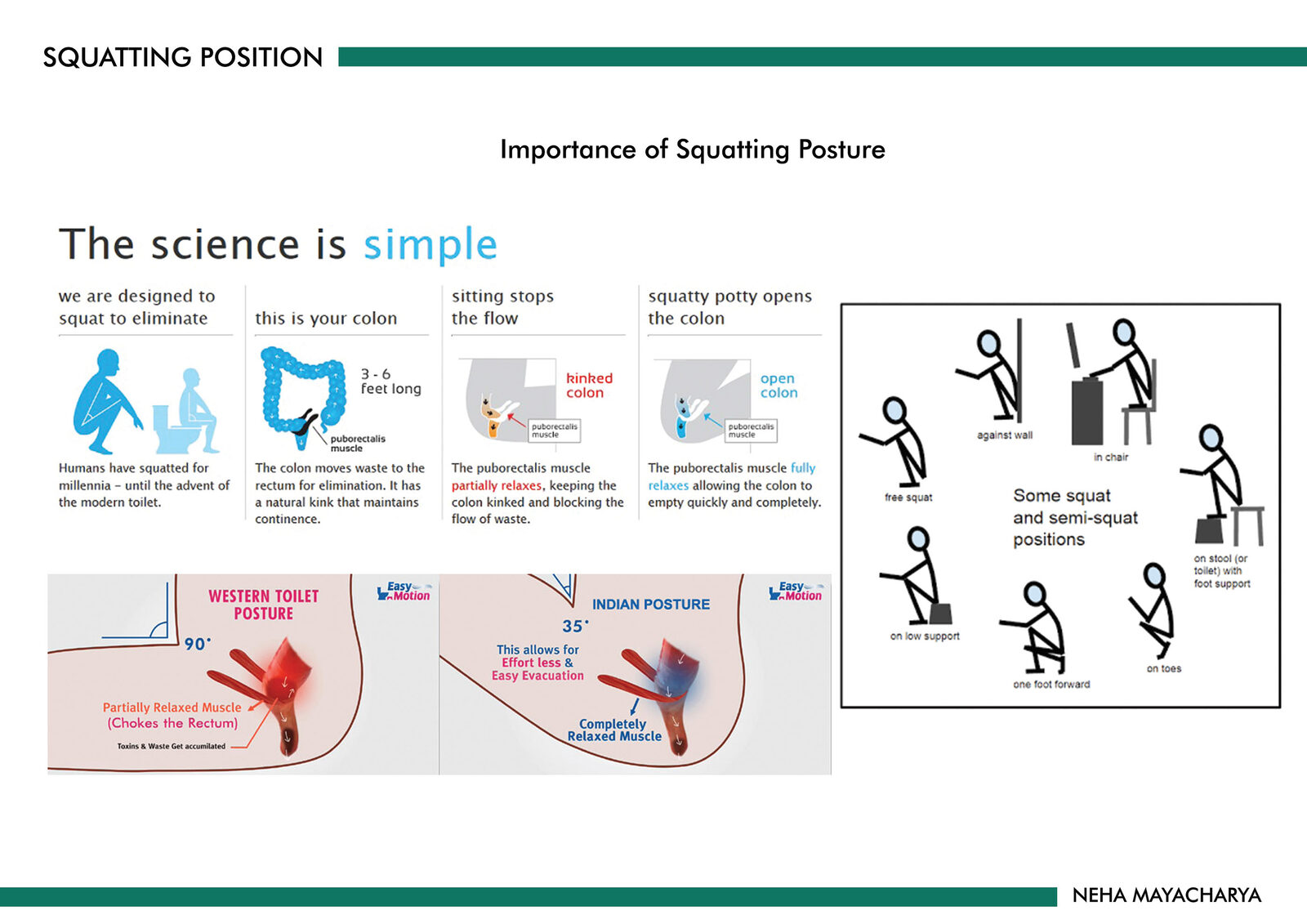
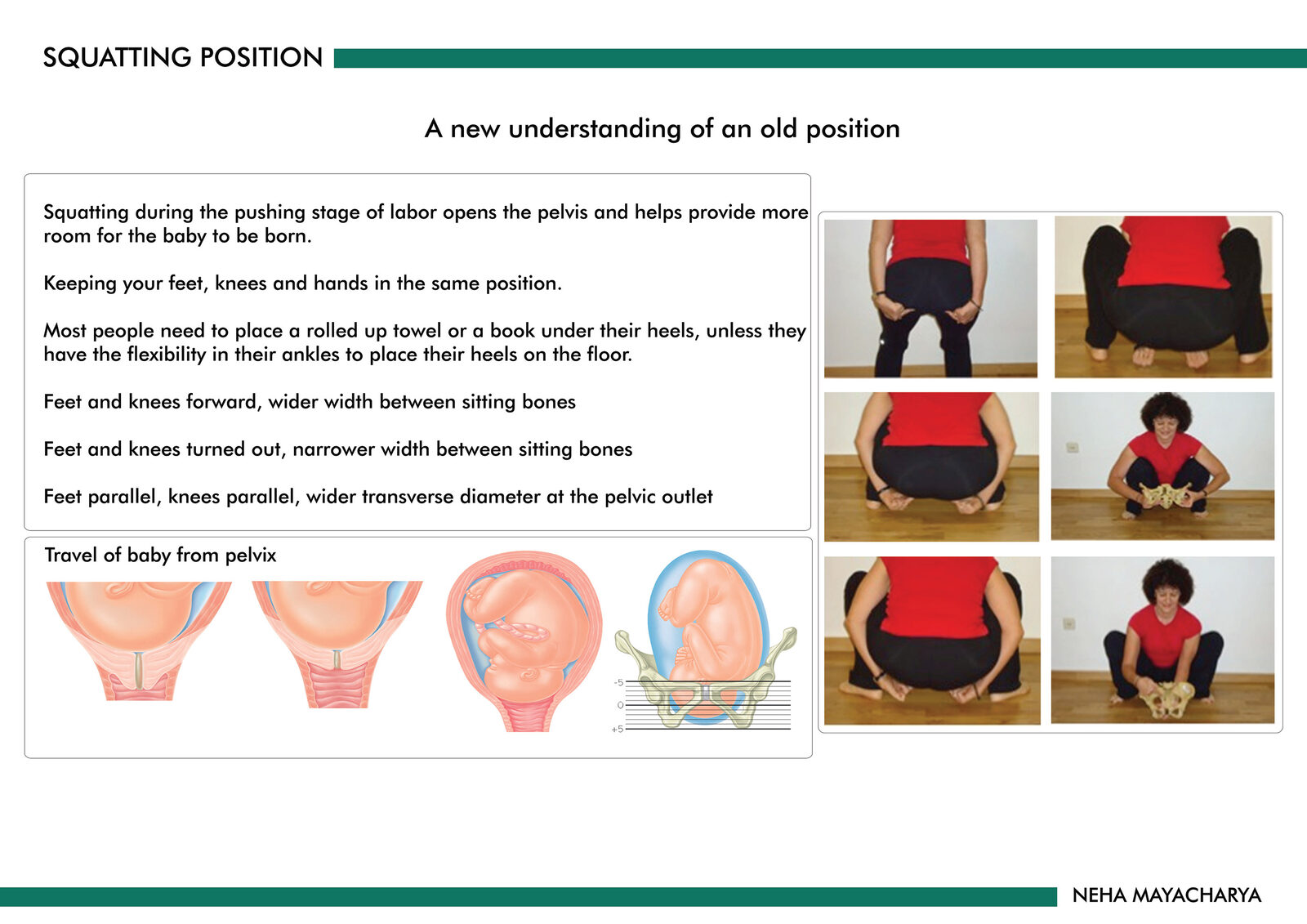
Squatting during the pushing stage opens the pelvis and gives the baby more room to be born, with gravity helping rather than resisting.
Up to 15%
larger pelvic outlet when squatting, compared with lying down
About 1 to 2 cm wider, from the positions research board
Angles
feet and knee placement changes the pelvis
Feet and knees forward widens the space between the sitting bones; turned out narrows it.
Heels
most people need something under their heels
Without ankle flexibility, a rolled towel or a book under the heels makes the squat possible.
Existing products
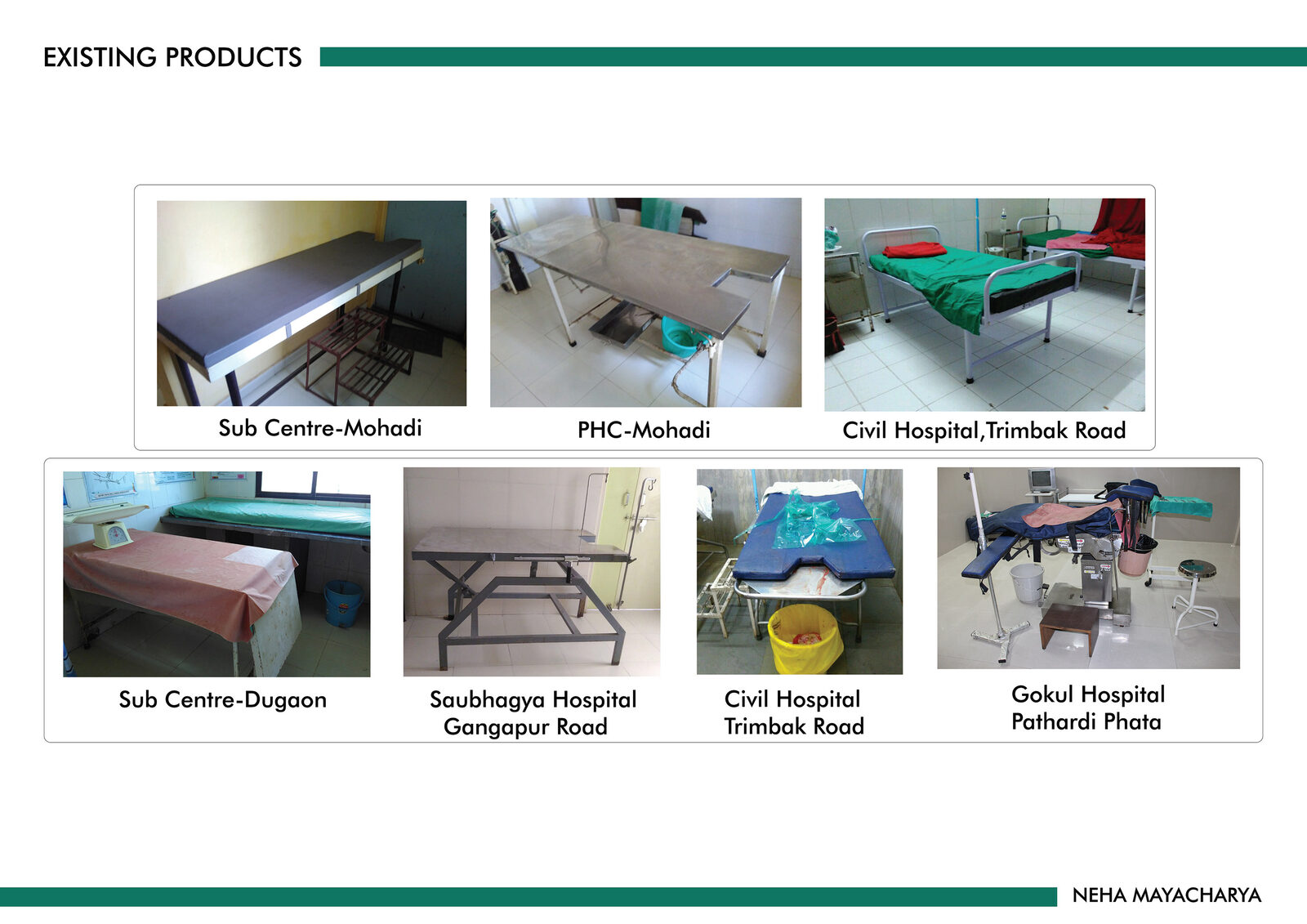
Every table I found was built for lying down
I documented delivery furniture at Sub Centres in Mohadi and Dugaon, the PHC in Mohadi, the Civil Hospital, and Saubhagya and Gokul hospitals. None supported an upright birth.
Lithotomy only
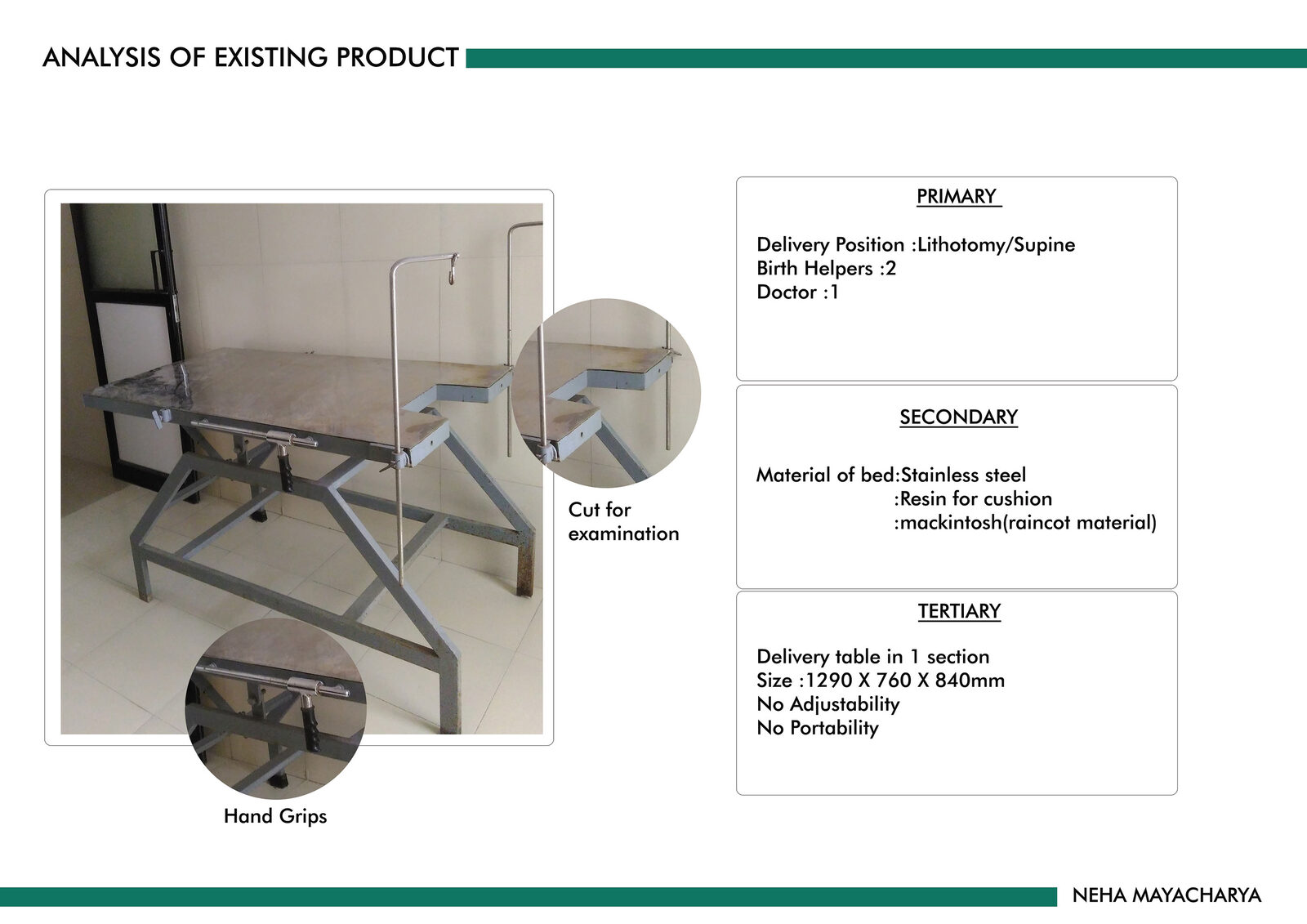
Built for a supine delivery, with 2 birth helpers and 1 doctor around it.
Steel, resin and raincoat cloth
A stainless steel bed, resin cushion and a mackintosh cover.
Fixed and heavy
One section, 1290 × 760 × 840 mm, with no adjustability and no portability.
From research to requirements
What the aid has to do
Each requirement traces back to something I observed in the field or heard from clinicians.
01
Something to push against
Handles or poles placed so she can drive all the pressure forward, as the two poles did in the Sub Centre.
02
Support for the heels
A surface for the heels to rest down while her weight shifts onto her toes.
03
Let the posture shift
From squatting during labour to resting back after birth, without moving her off the aid.
04
Room for three people
Access for a trained nurse and two supports, including space for the baby’s things.
05
Hygiene by design
Catch fluid directly below, so it does not spread across the surface.
06
Fit the Sub Centre
Portable, low cost and quick to set up, so it also works for an assisted home delivery.
Design brief
An aid for normal delivery in the squatting position
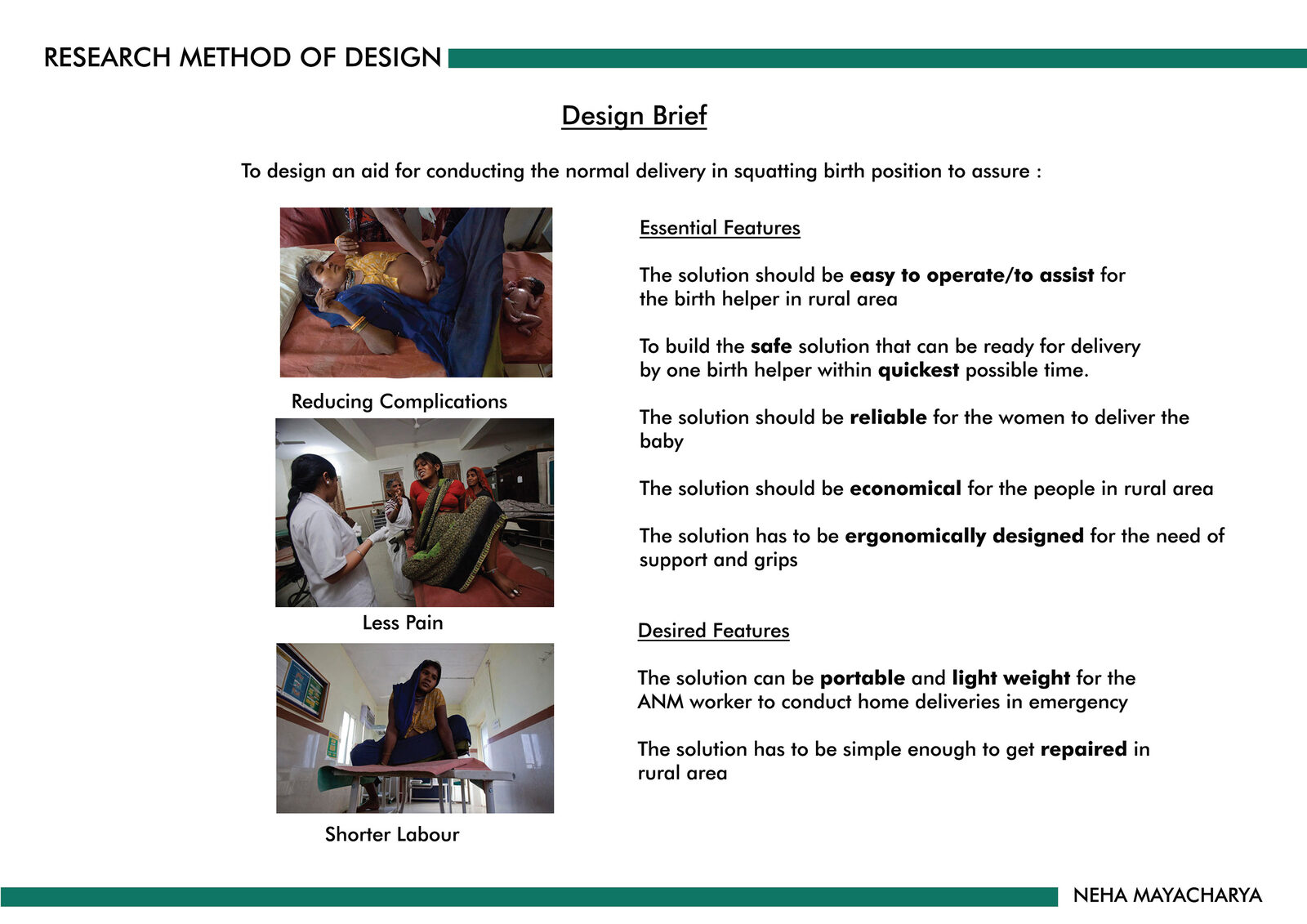
The aim: fewer complications, less pain and a shorter labour.
ESSENTIAL FEATURES
01
Easy to assist
Easy for a rural birth helper to operate and assist with.
02
Safe and quick to set up
Ready for delivery by one birth helper in the quickest possible time.
03
Reliable
Something a woman can depend on to deliver her baby.
04
Economical
Affordable for people in rural areas.
05
Ergonomic
Designed around her need for support and grips.
DESIRED FEATURES
Portable and lightweight
So an ANM worker can carry it to emergency home deliveries.
Simple to repair
Simple enough to be fixed in a rural area.
Sensitive content
This image may include live childbirth documentation or medical visuals that some people may find disturbing.
Visual research
Image boards for posture and for place
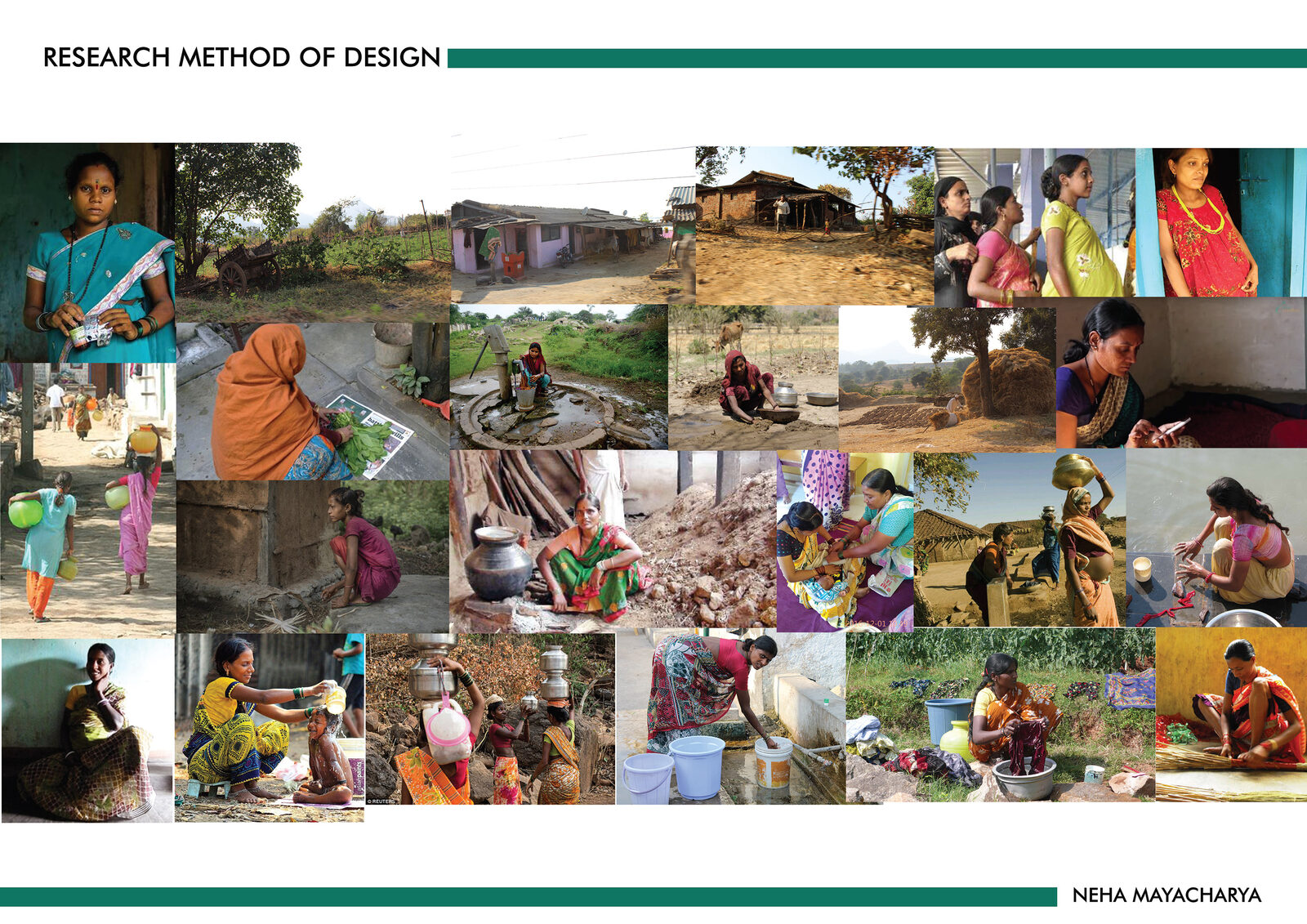
One board gathered how squatting birth has been supported across cultures and products; the other captured the rural life the aid would live in.
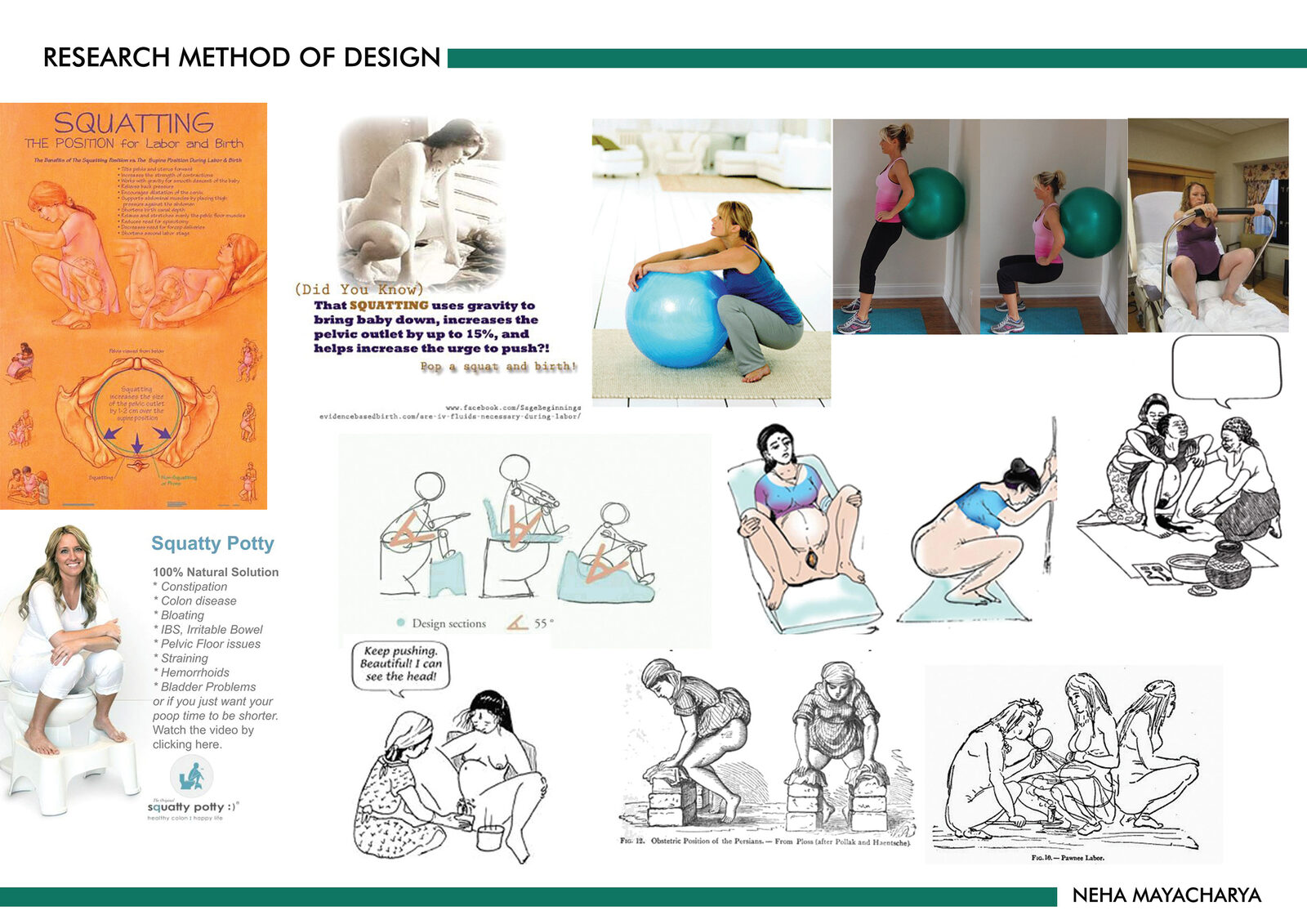
Sensitive content
This image may include live childbirth documentation or medical visuals that some people may find disturbing.
From posture to form
Drawing the body first, then the aid around it
Before sketching furniture, I drew the squatting body: its hip, knee, back and heel angles, and every point where it needed something to lean on or hold.
POSTURE STUDY
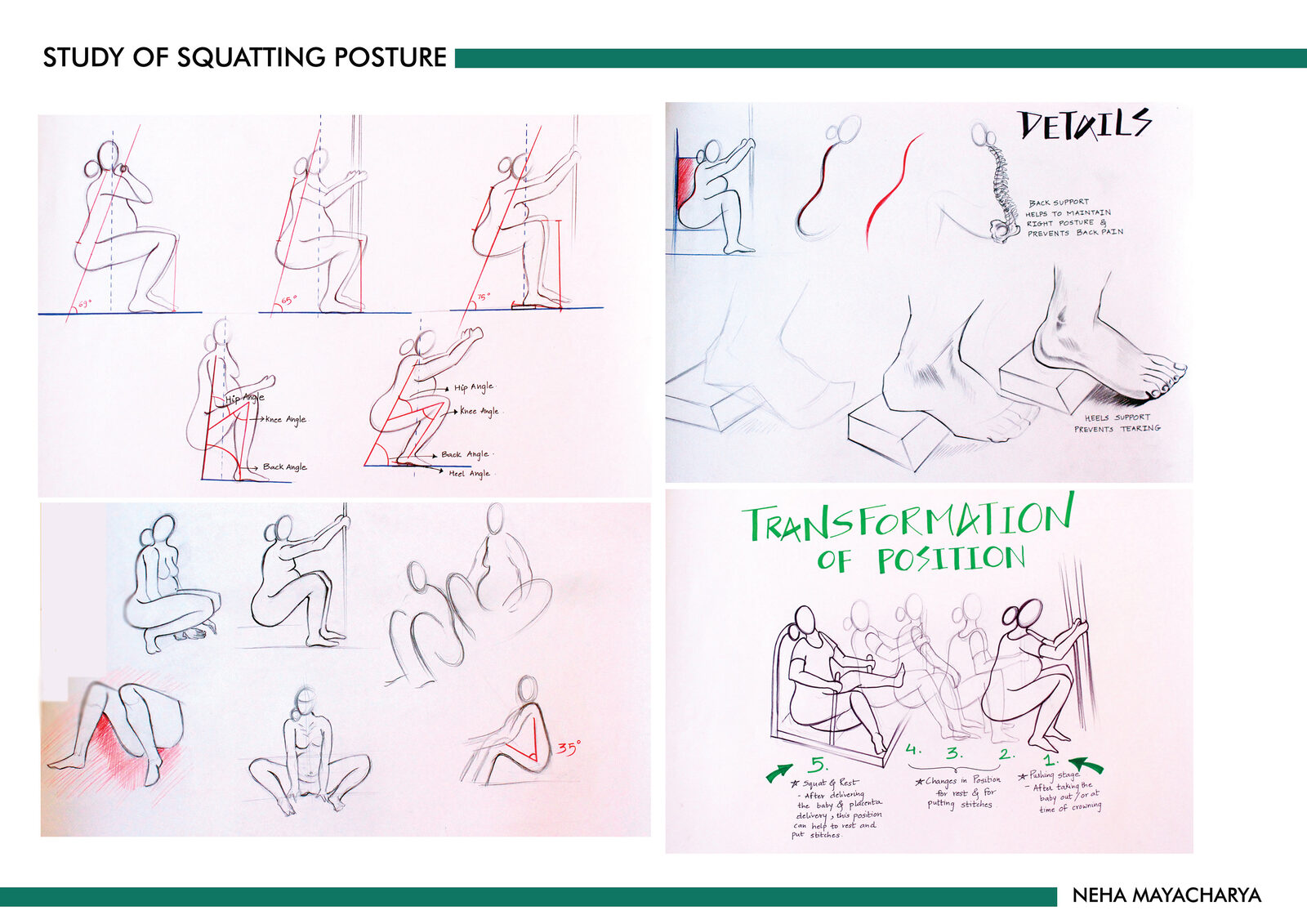
Back support
Helps her hold the right posture and prevents back pain.
Heel support
A raised block under the heels helps prevent tearing.
Five positions, one seat
Pushing and crowning, shifts for rest and stitches, then squat and rest after the placenta.
Angles to design to
I measured back angles between roughly 65° and 75° across supported squats.
SUPPORT STUDY
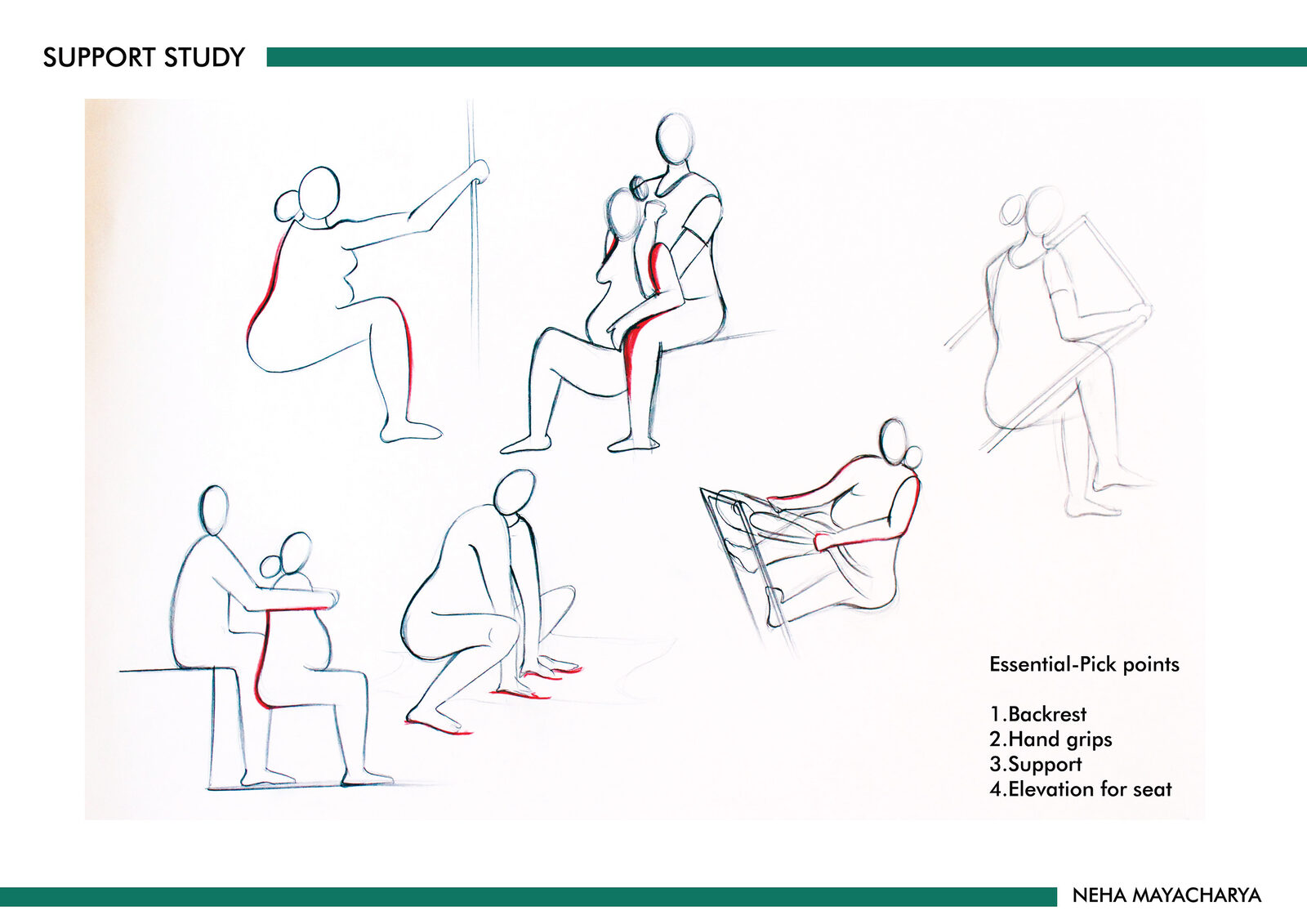
ESSENTIAL PICK POINTS
1. Backrest
2. Hand grips
3. Support
4. Elevation for the seat
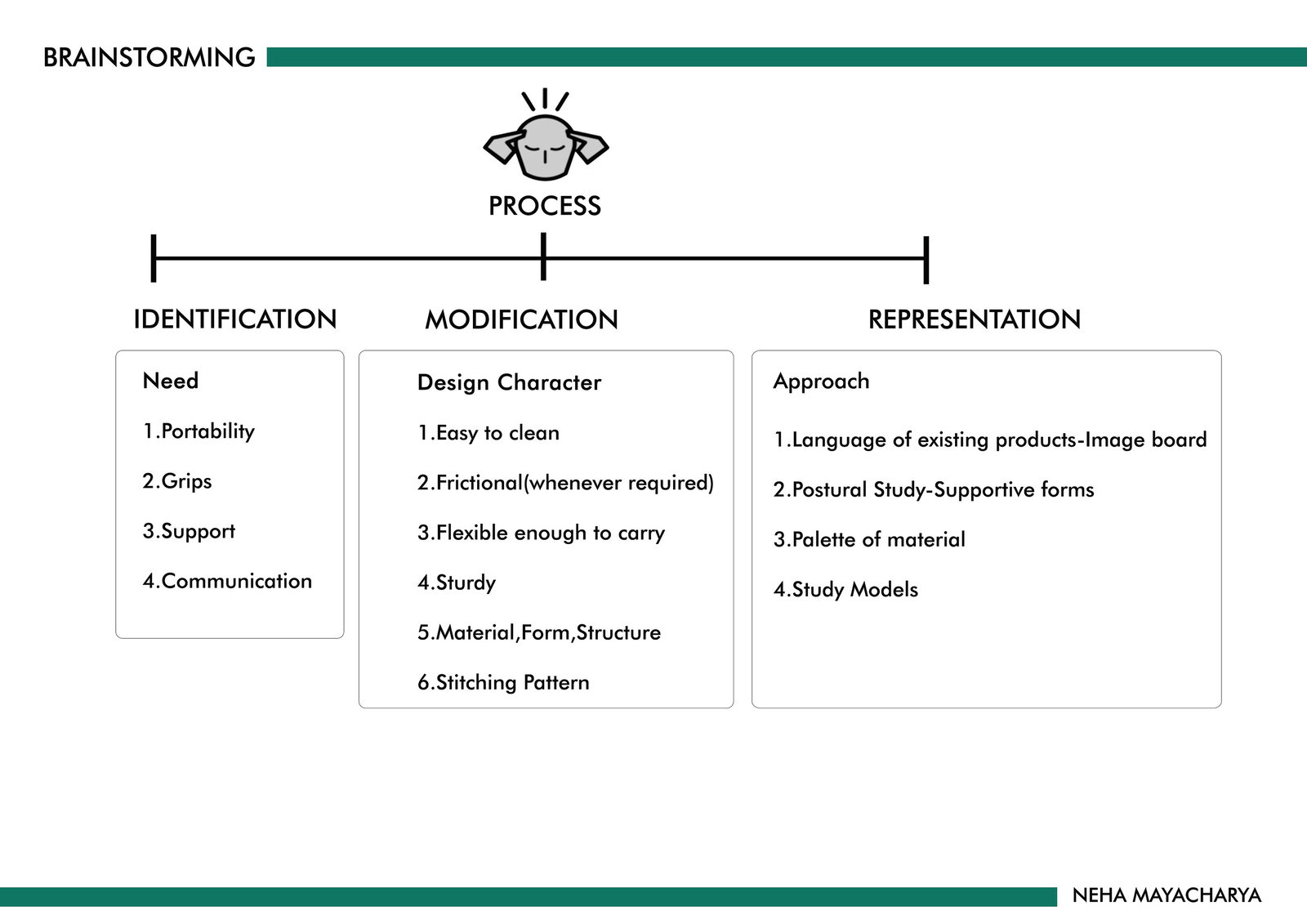
BRAINSTORMING
IDENTIFICATION · NEED
1. Portability
2. Grips
3. Support
4. Communication
MODIFICATION · DESIGN CHARACTER
1. Easy to clean
2. Frictional where needed
3. Light enough to carry
4. Sturdy
5. Material, form and structure
6. Stitching pattern
REPRESENTATION · APPROACH
1. Image board of existing product language
2. Postural study for supportive forms
3. Material palette
4. Study models
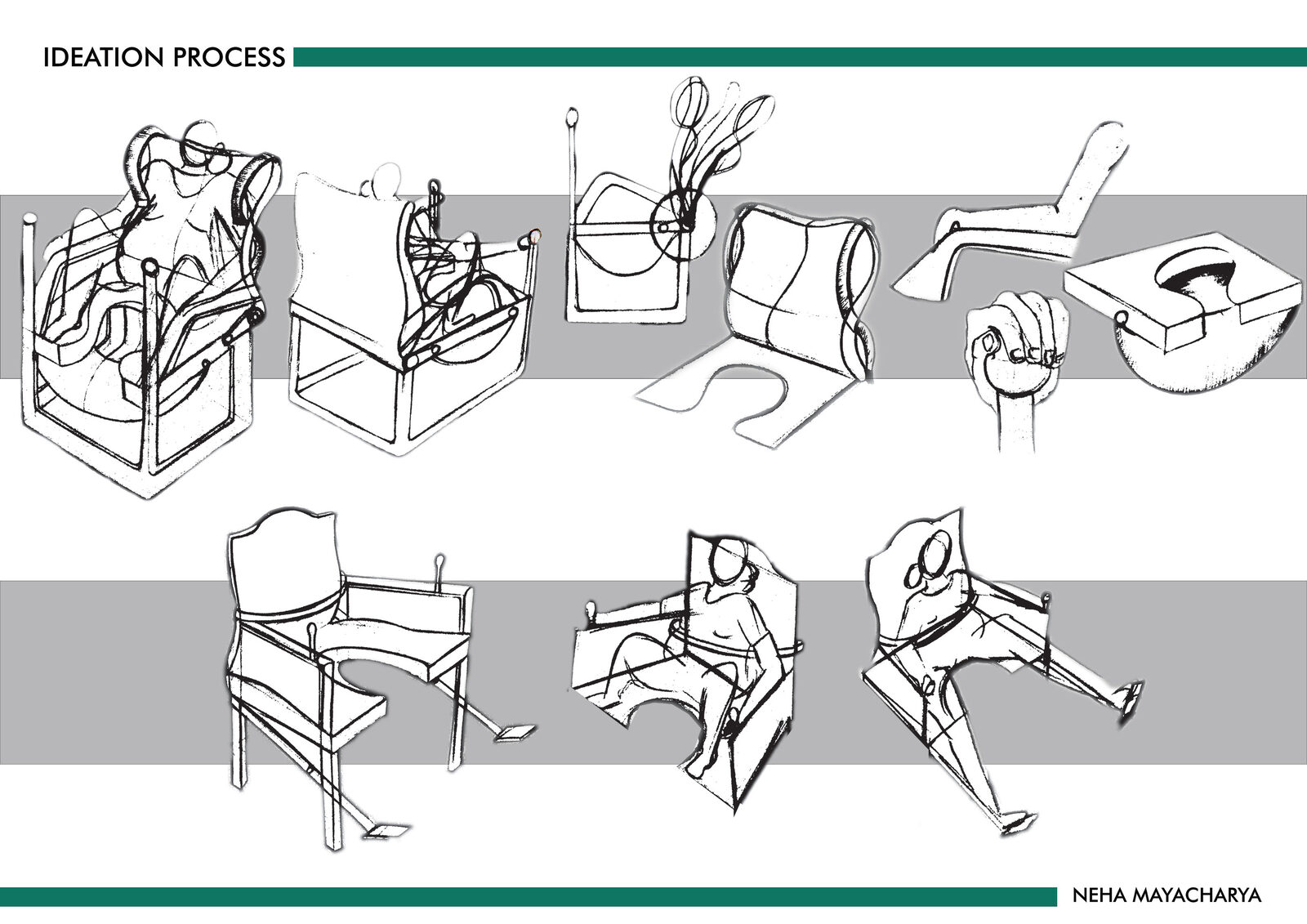
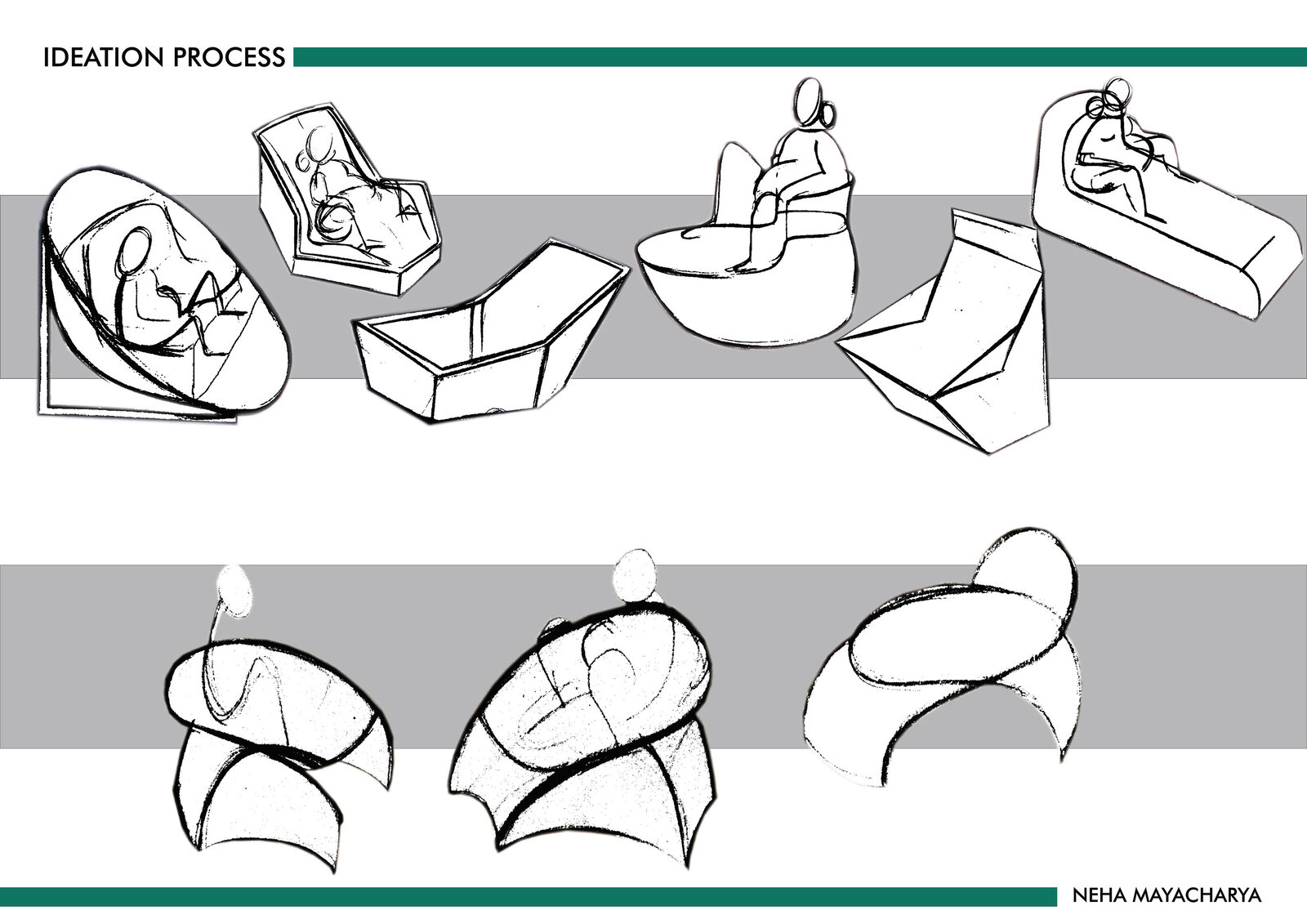
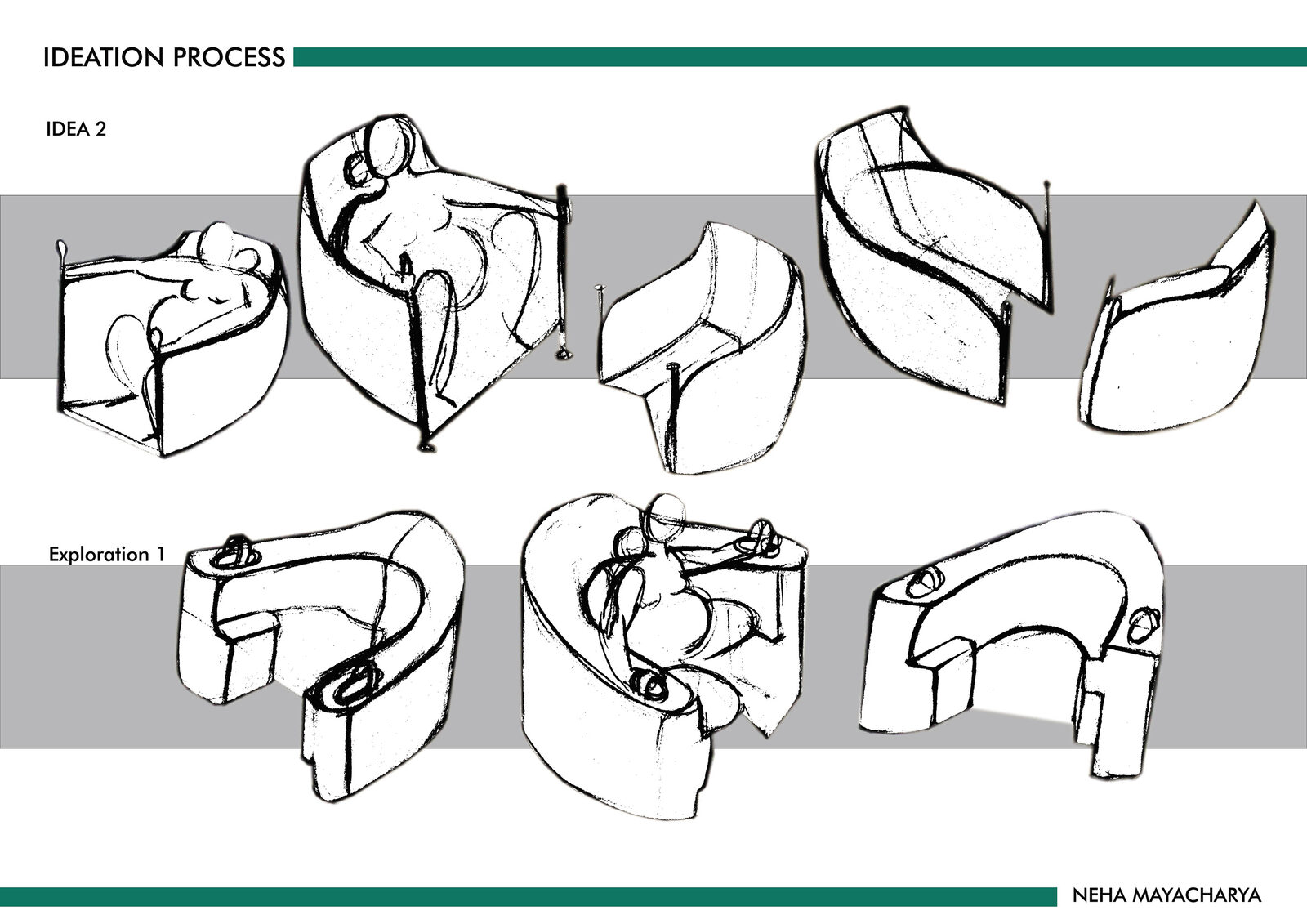
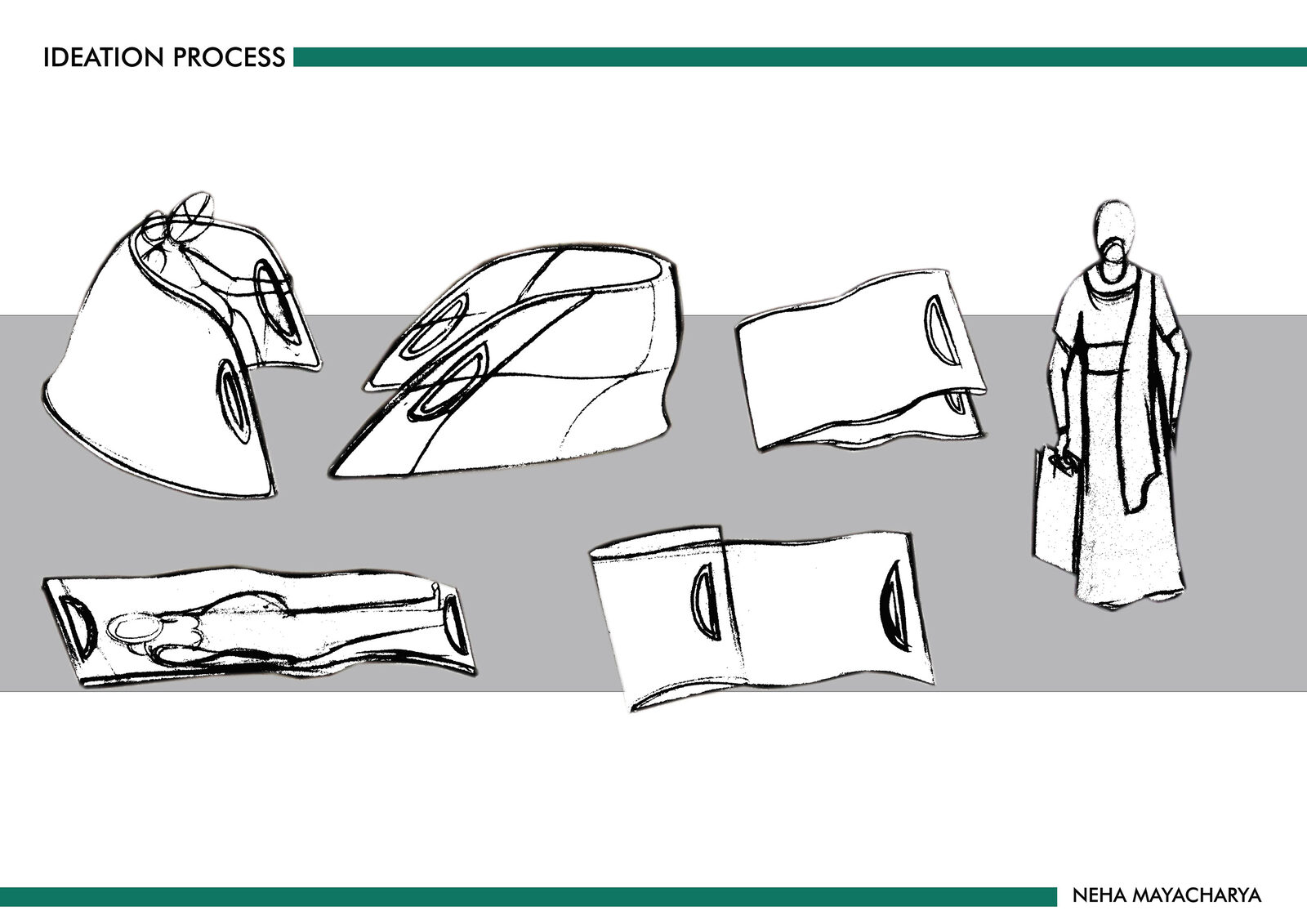
DIRECTION ONE
Framed chairs
Rigid frames built around a horseshoe seat, with side grips, upright poles to push against and trays to catch fluid.
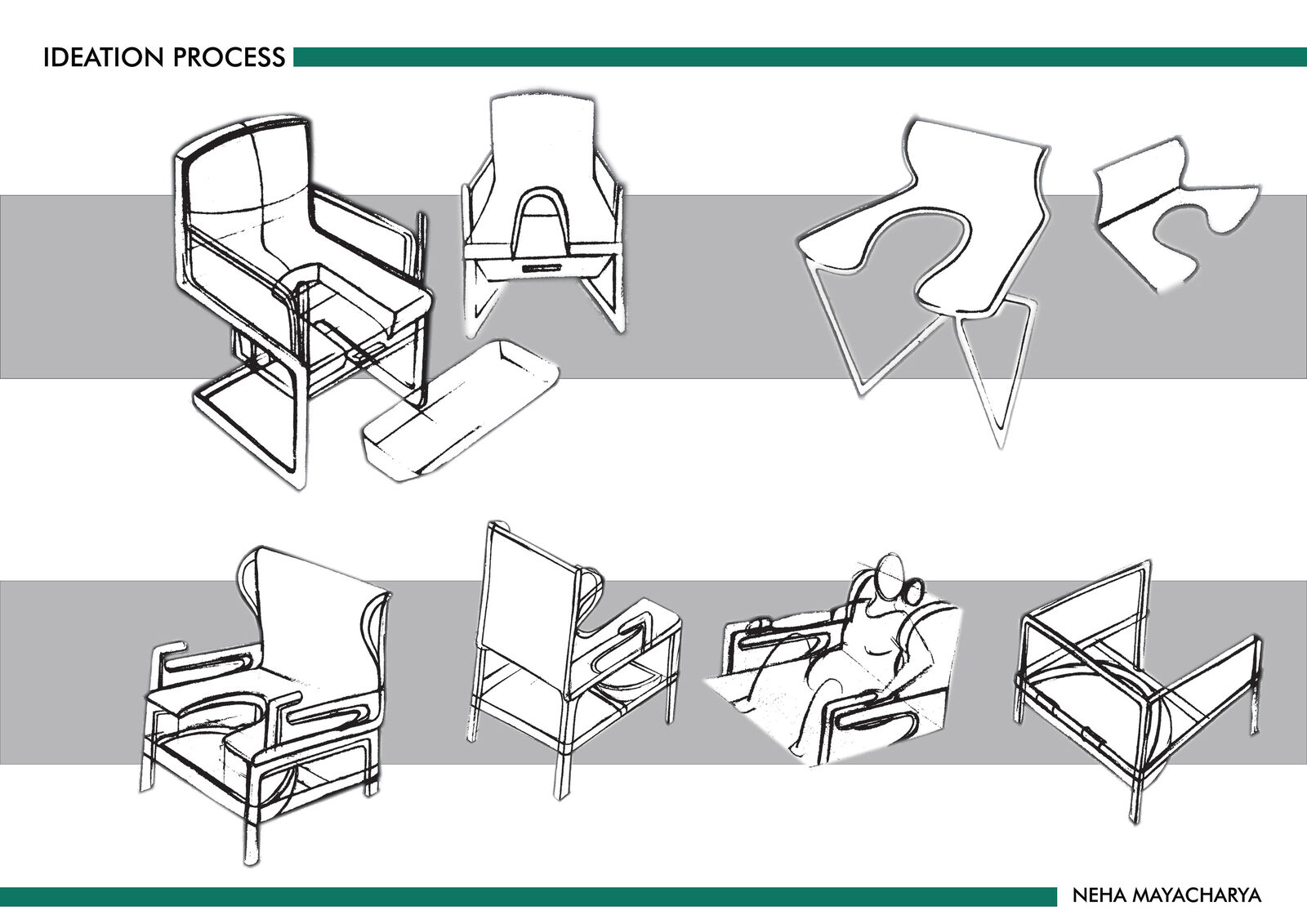
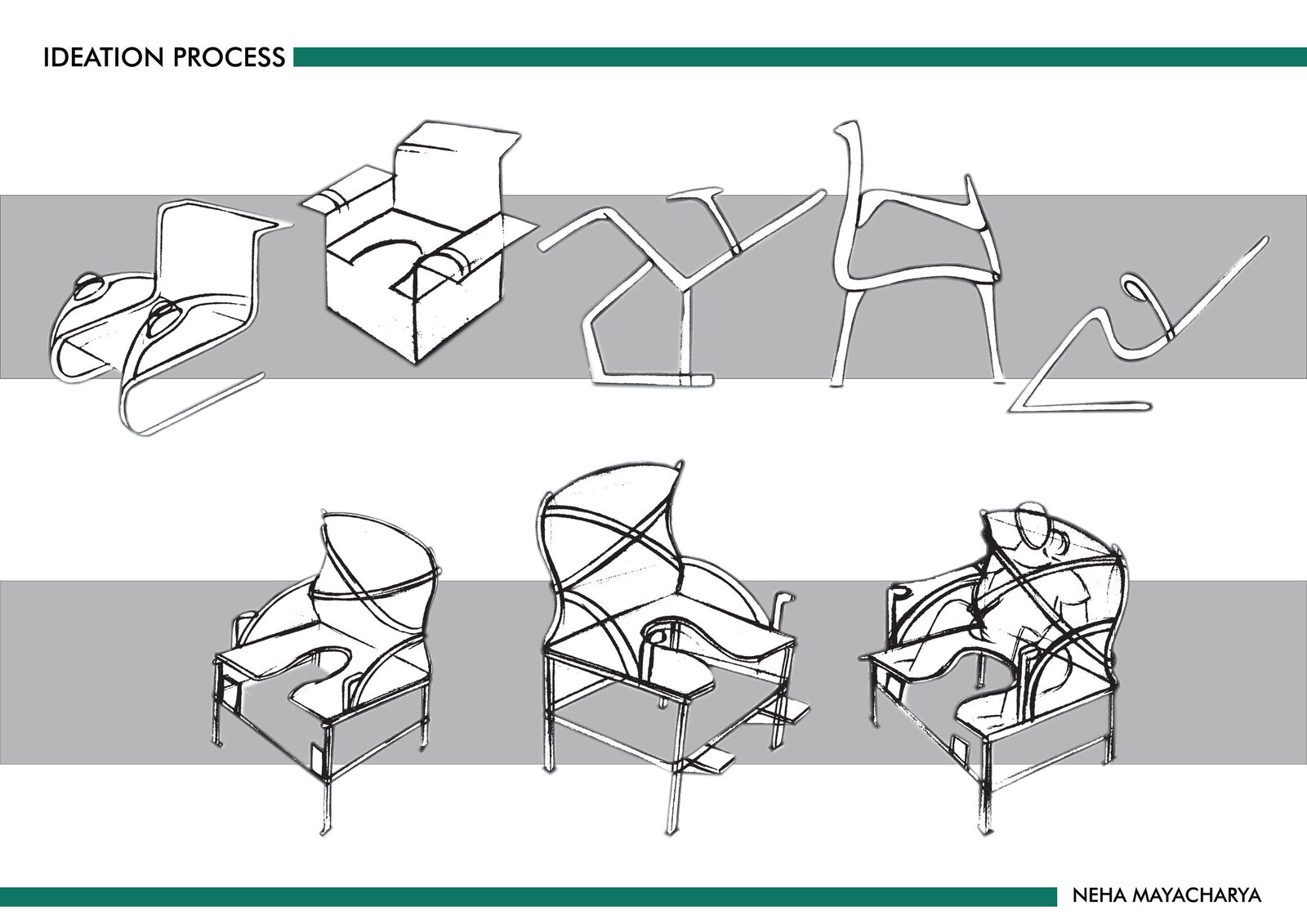
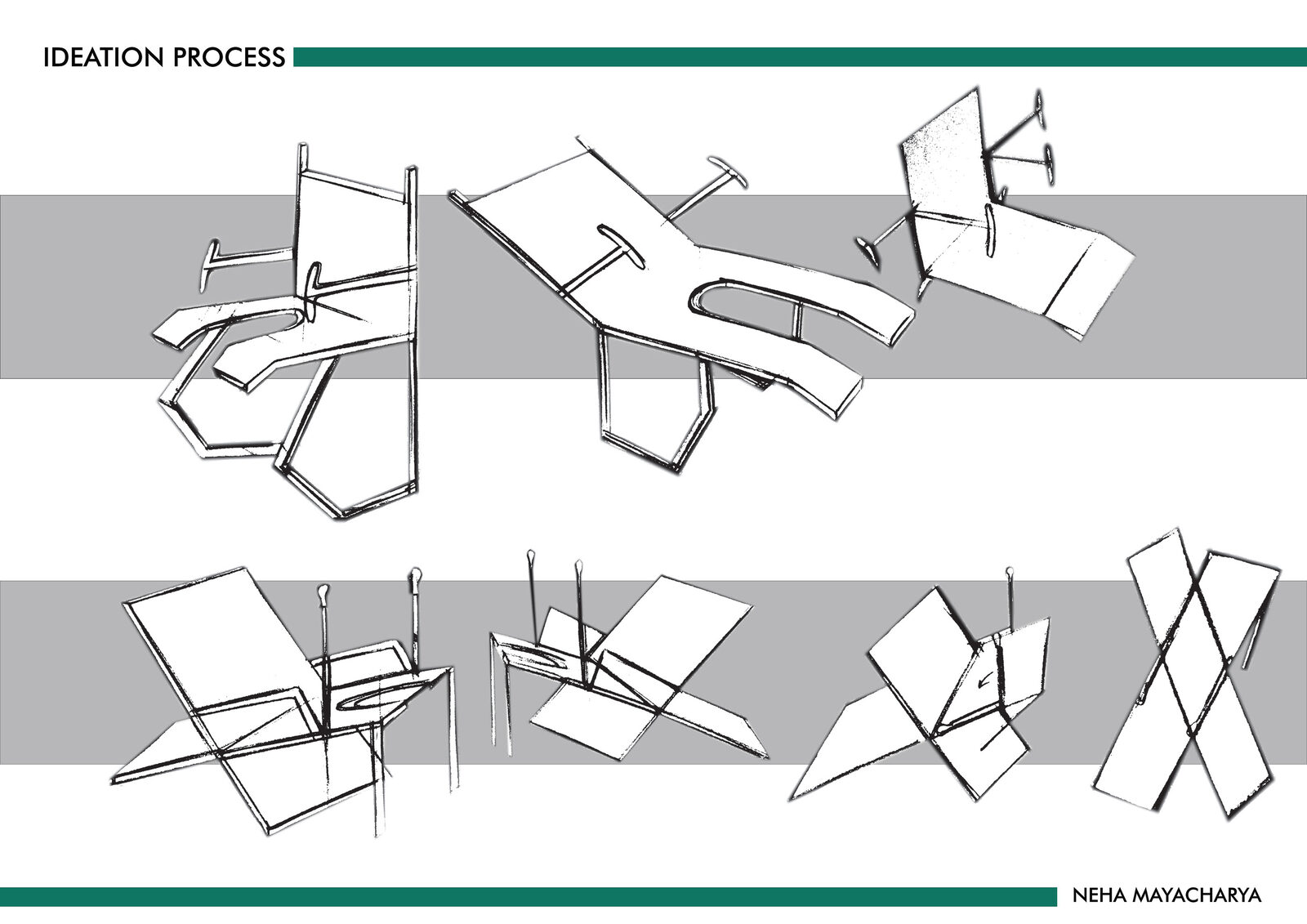
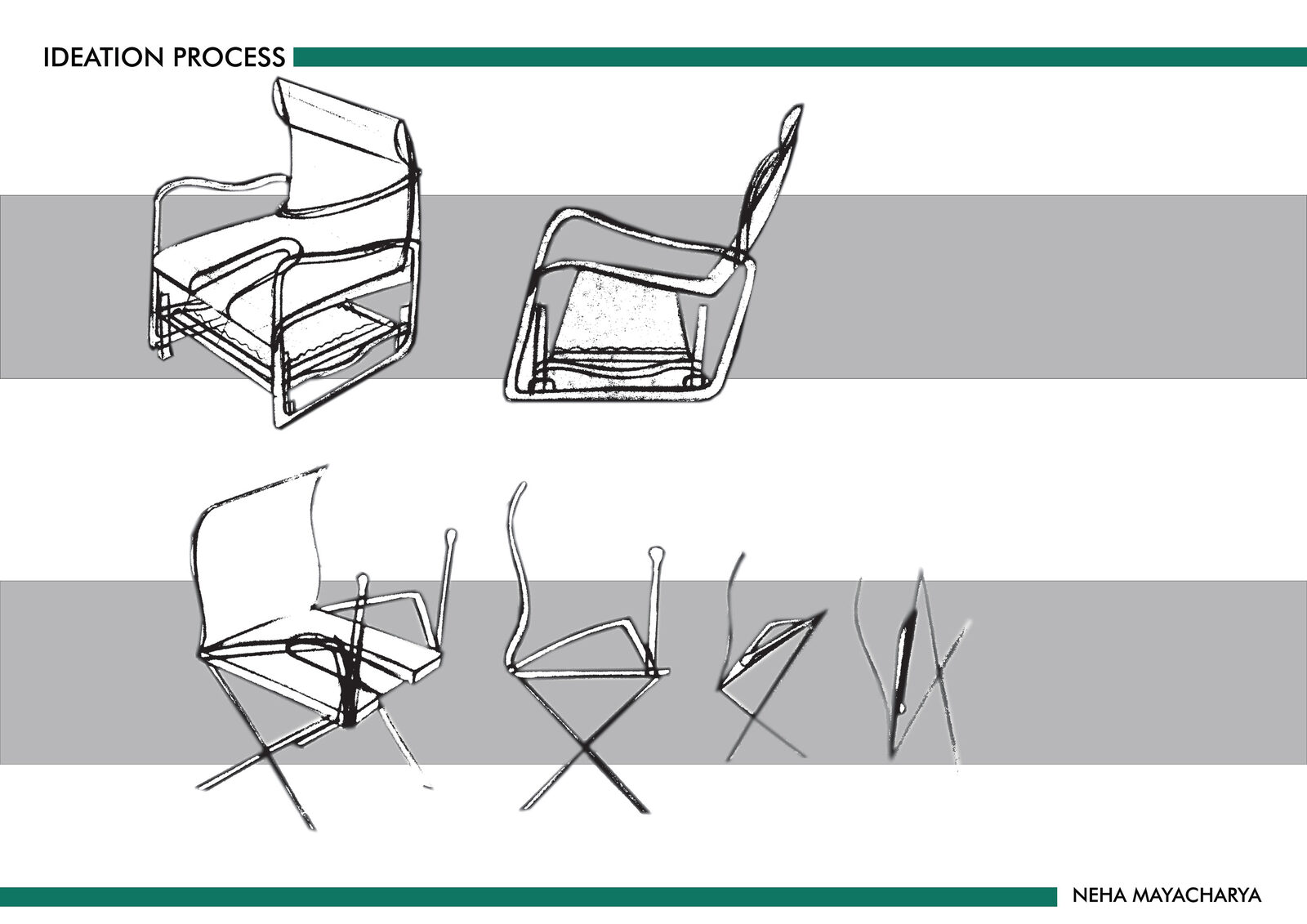
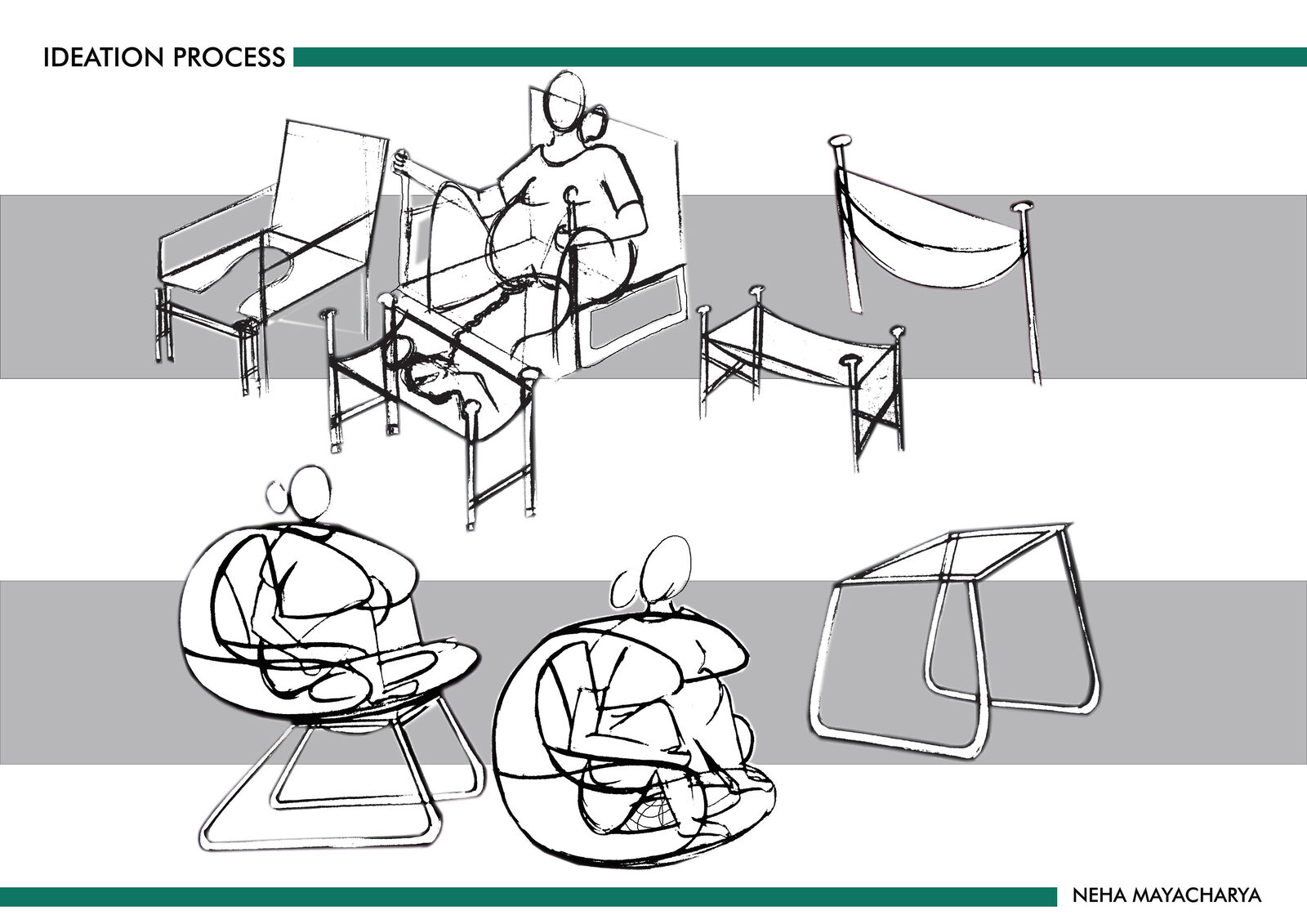
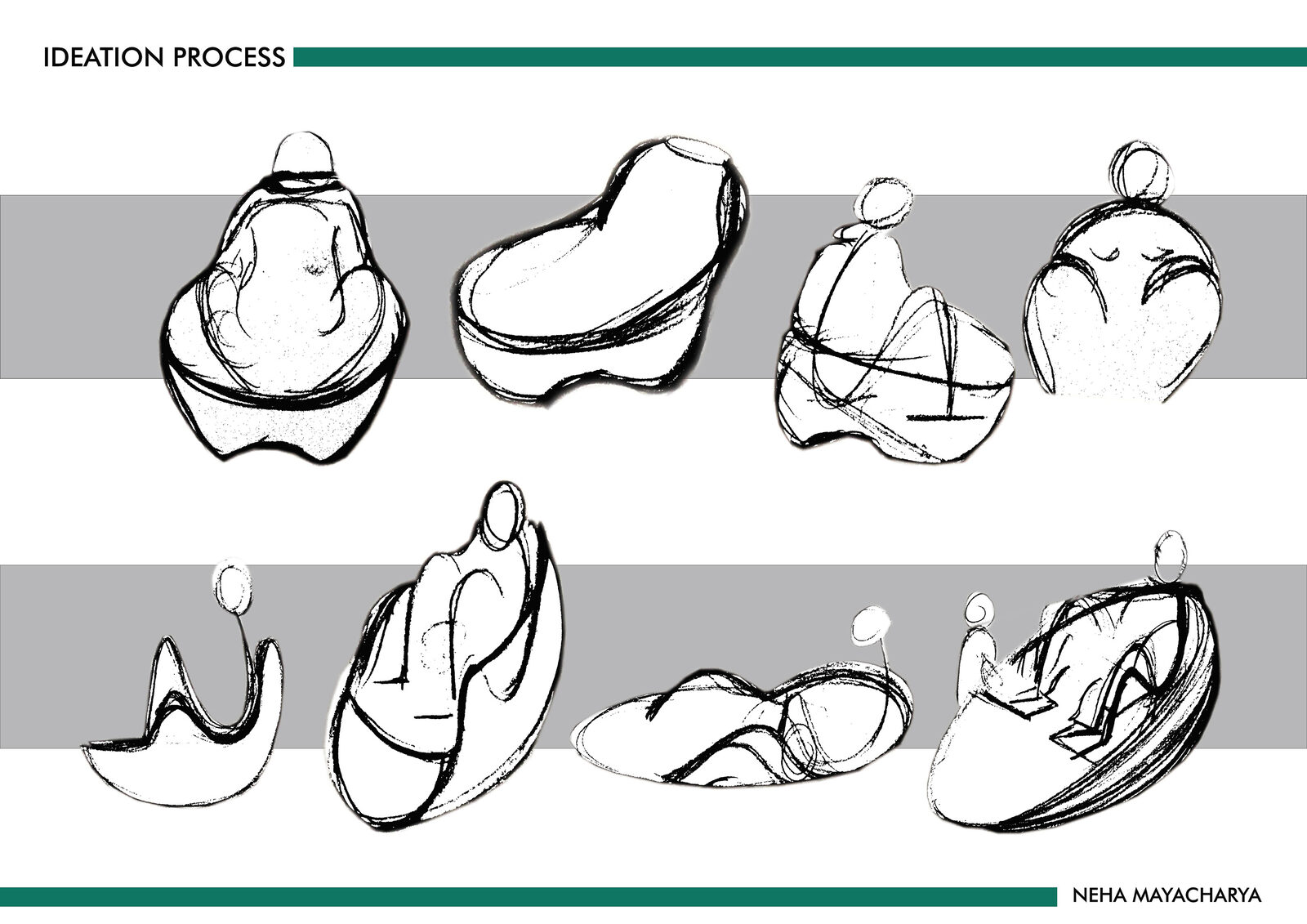
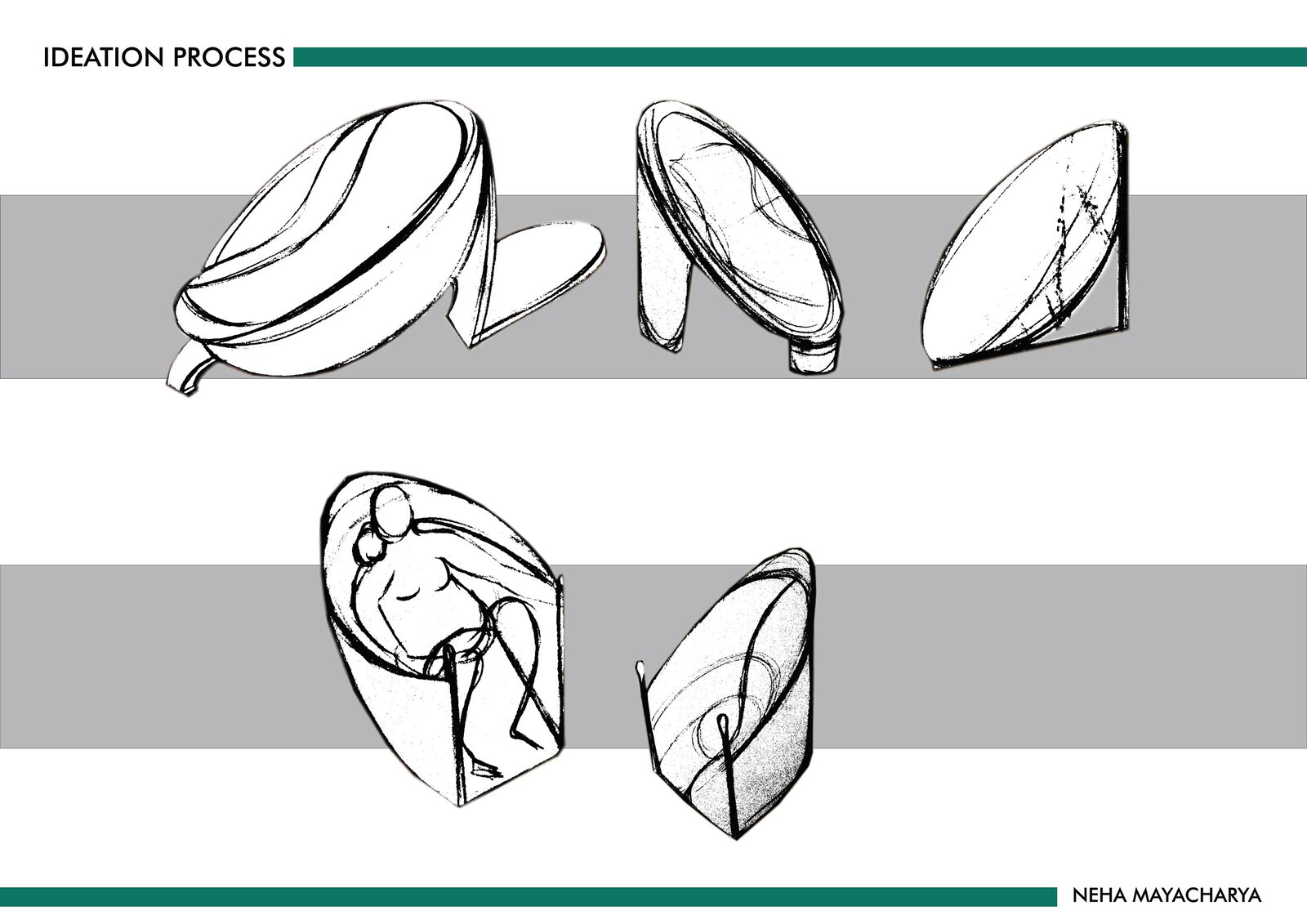
DIRECTION TWO
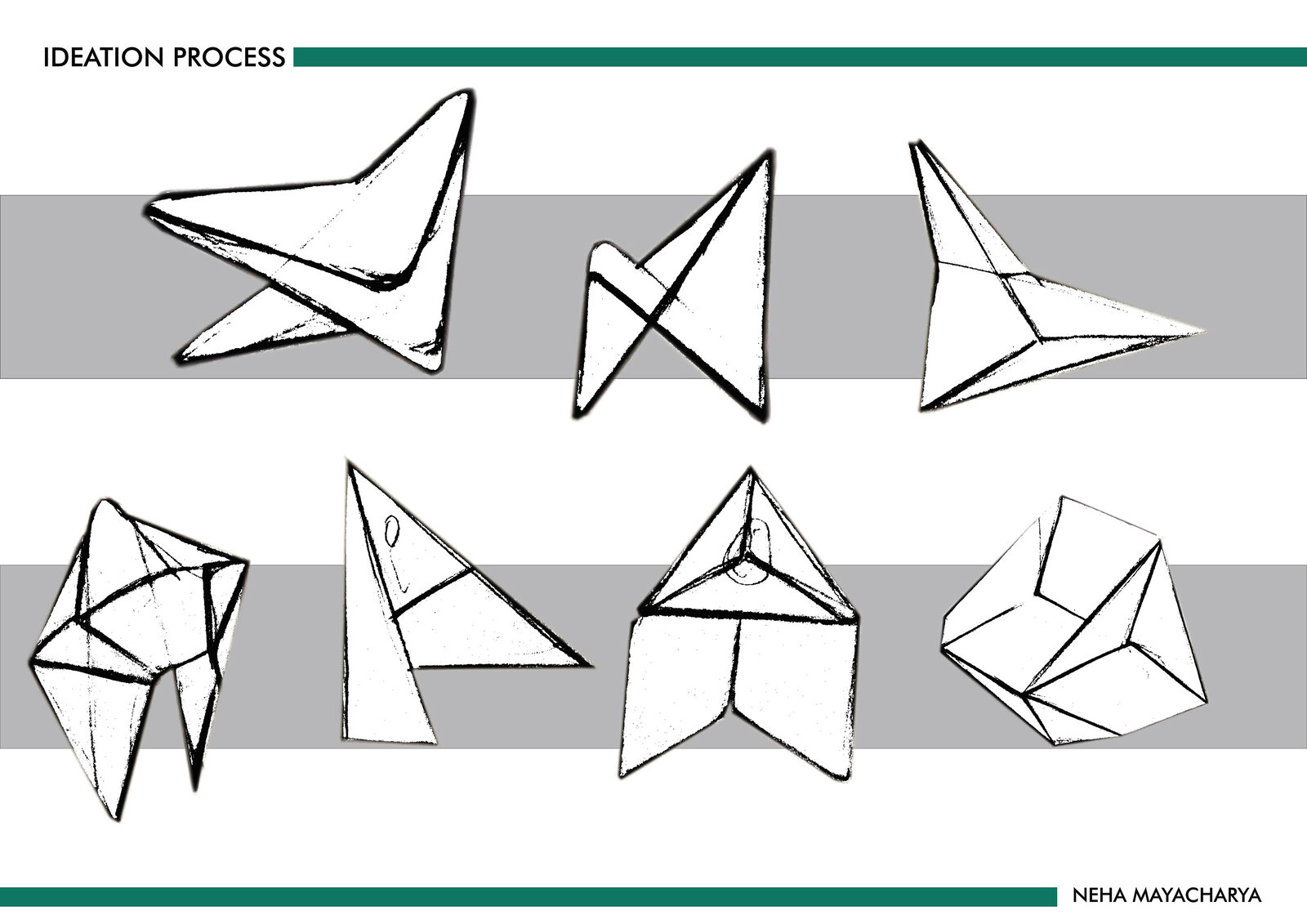
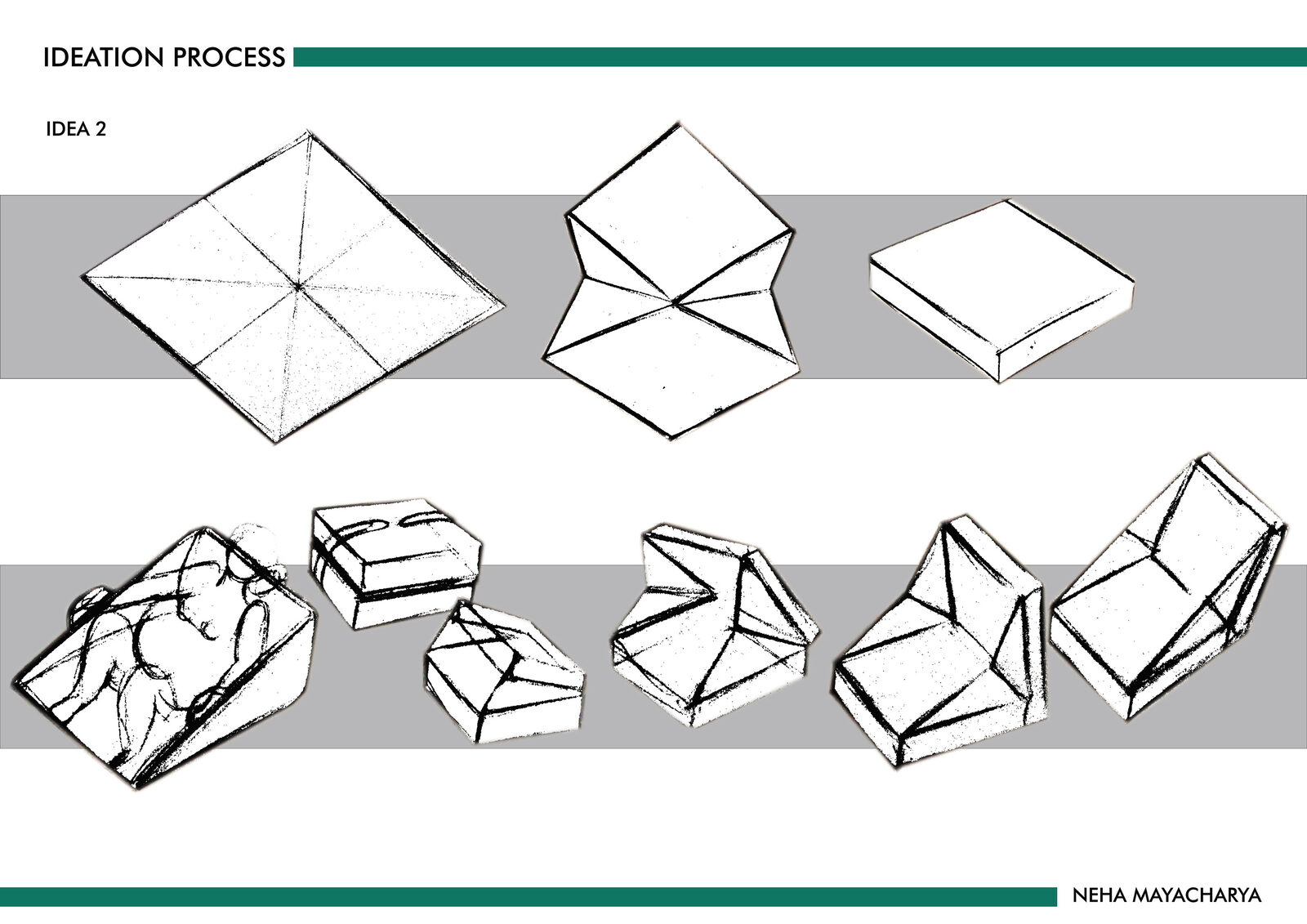
Sculpted shells and folding forms
Moving away from furniture: pods and shells that cradle the body, then faceted forms that fold flat and open into a supported seat.
DIRECTION THREE
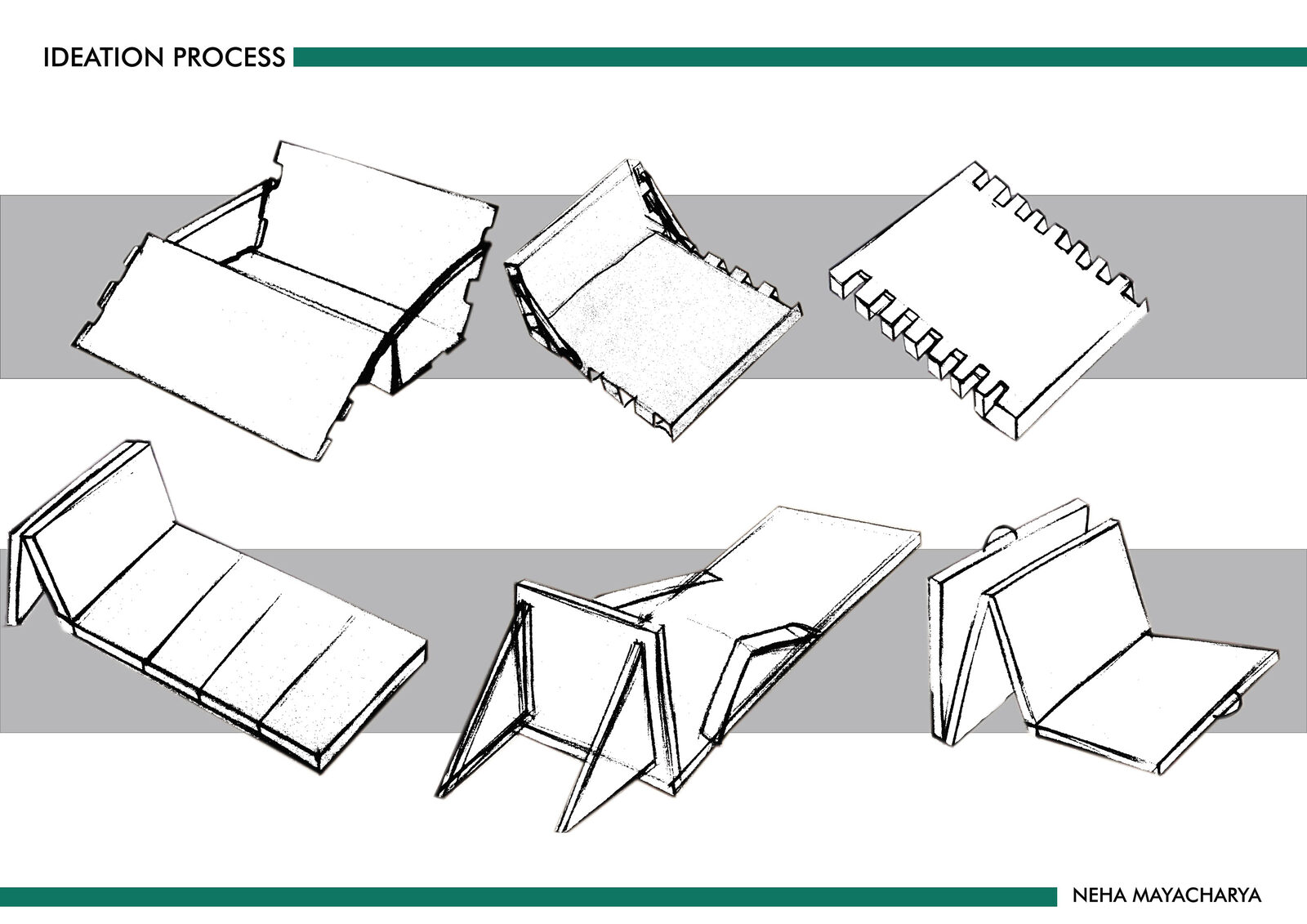
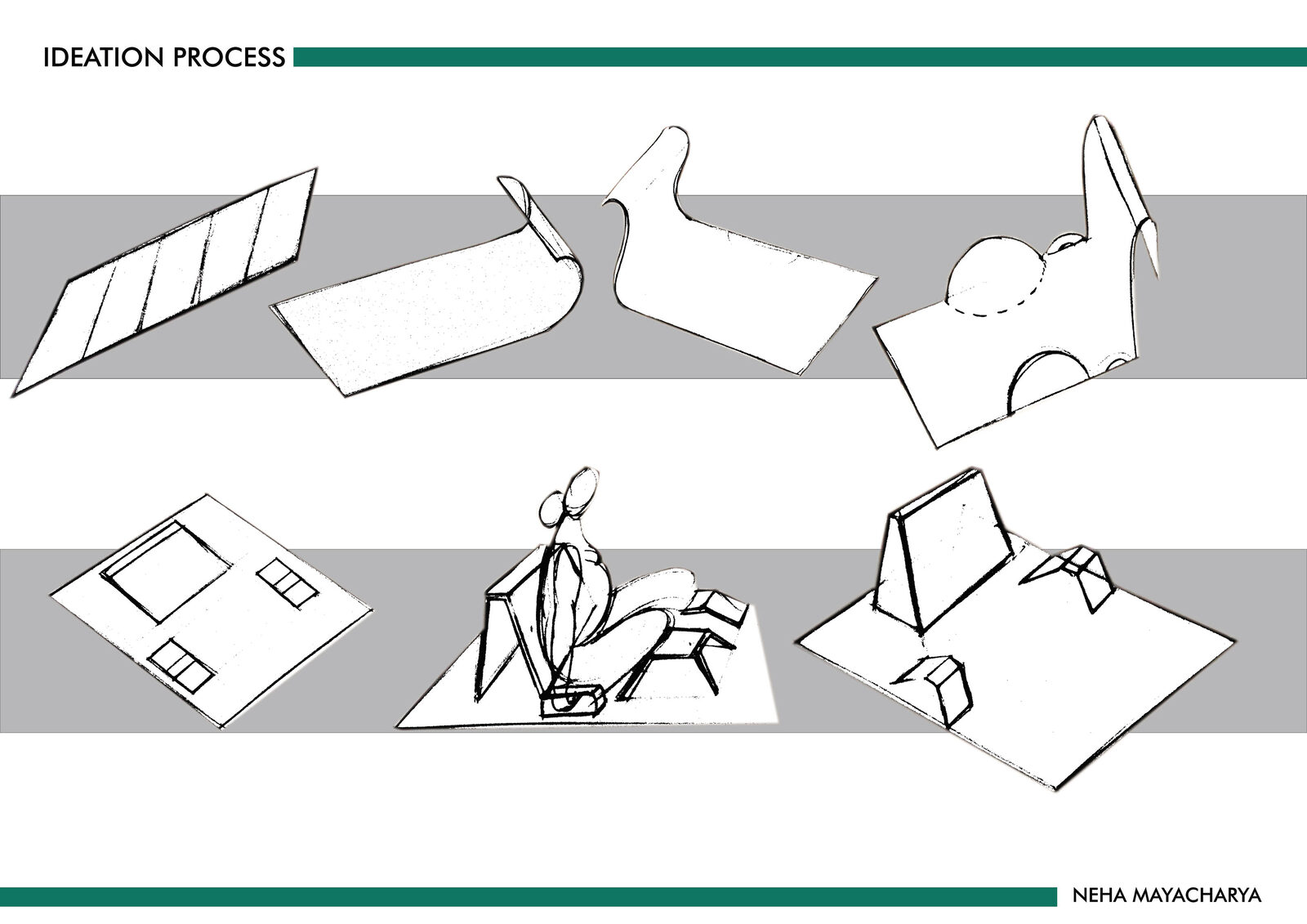
Portable mats that fold, roll and carry
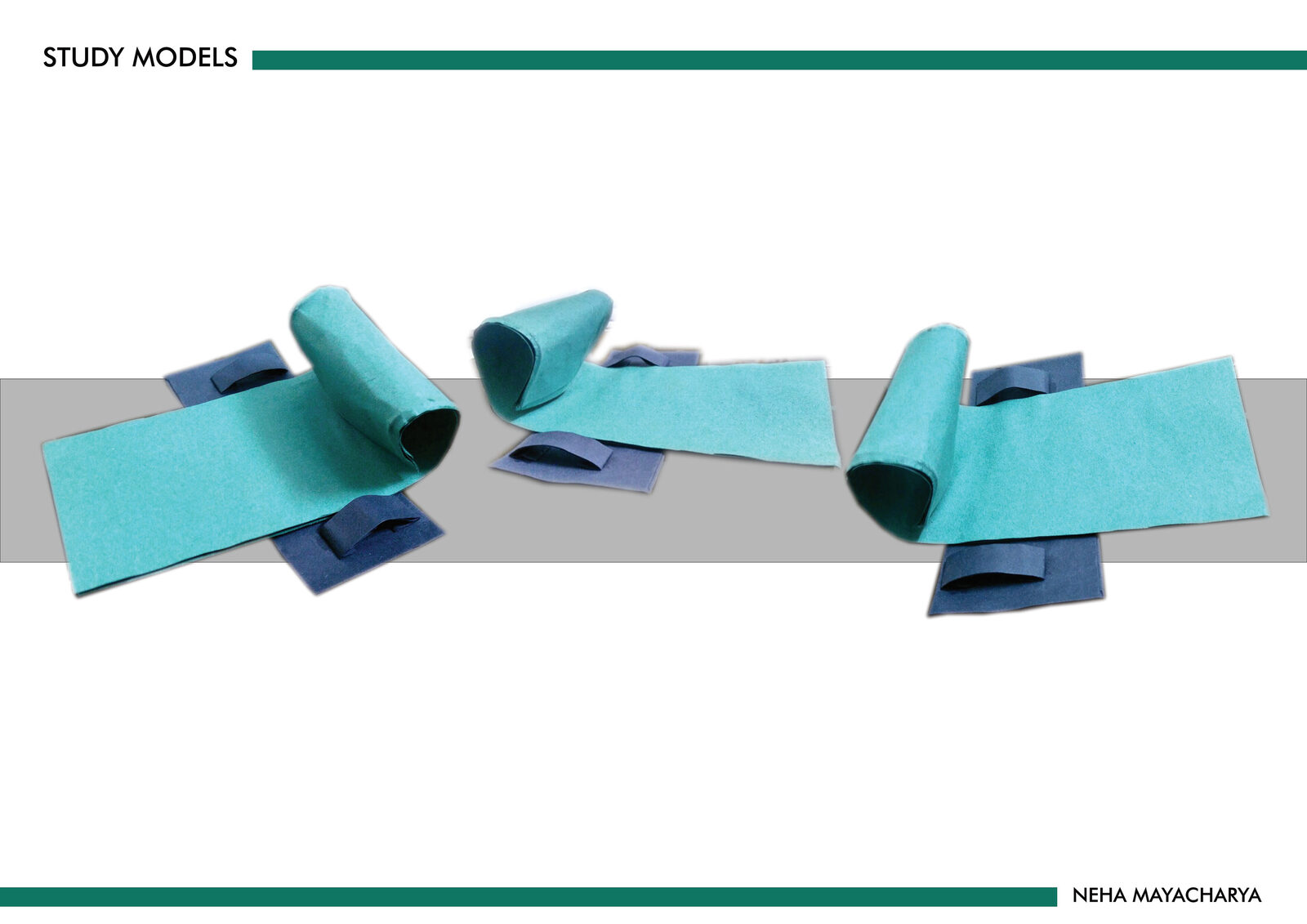
Designing for the ANM worker’s walk to a home delivery: panels and mats that lie flat, roll or fold into a bag, then rise into a backrest and supports.
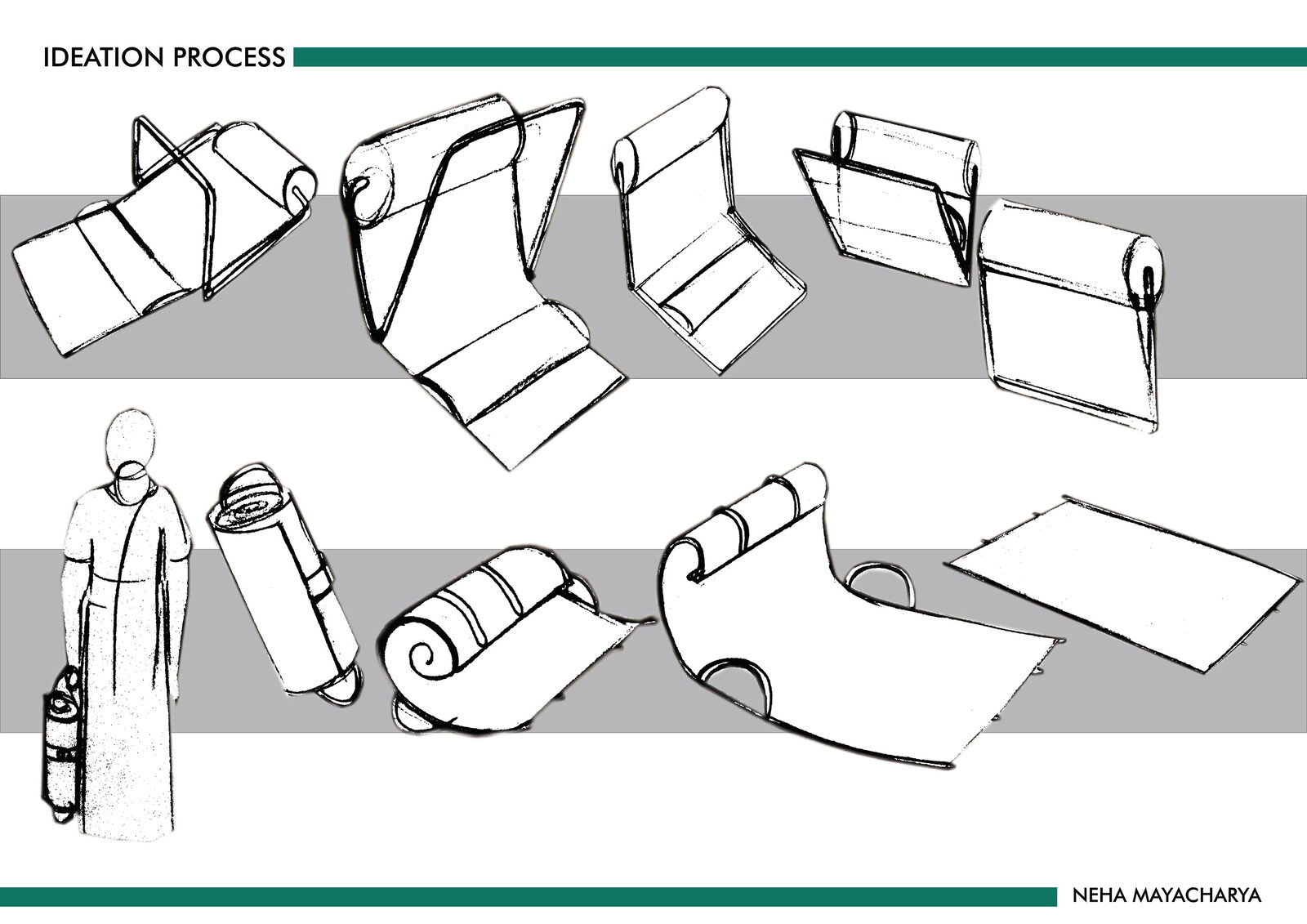
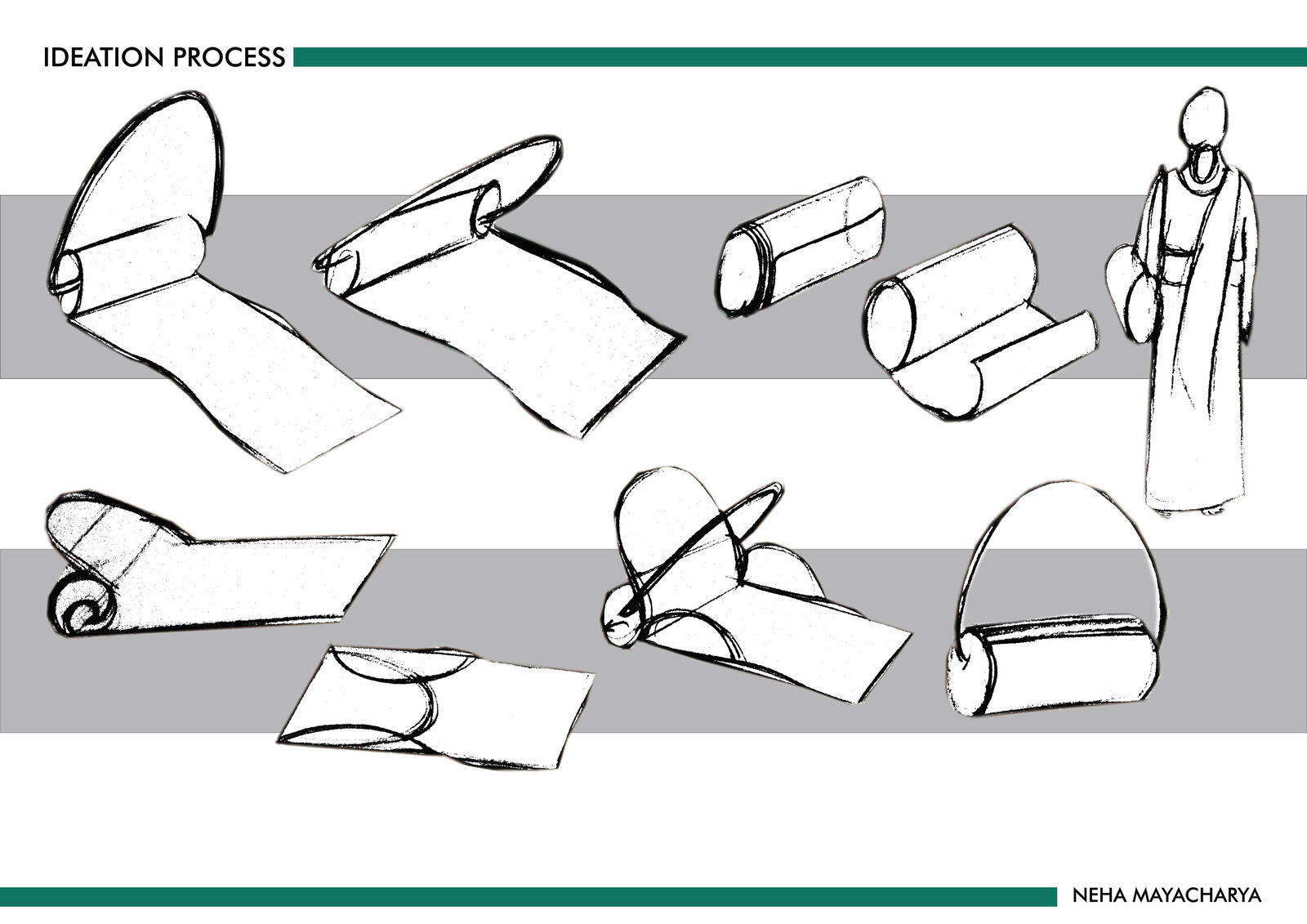
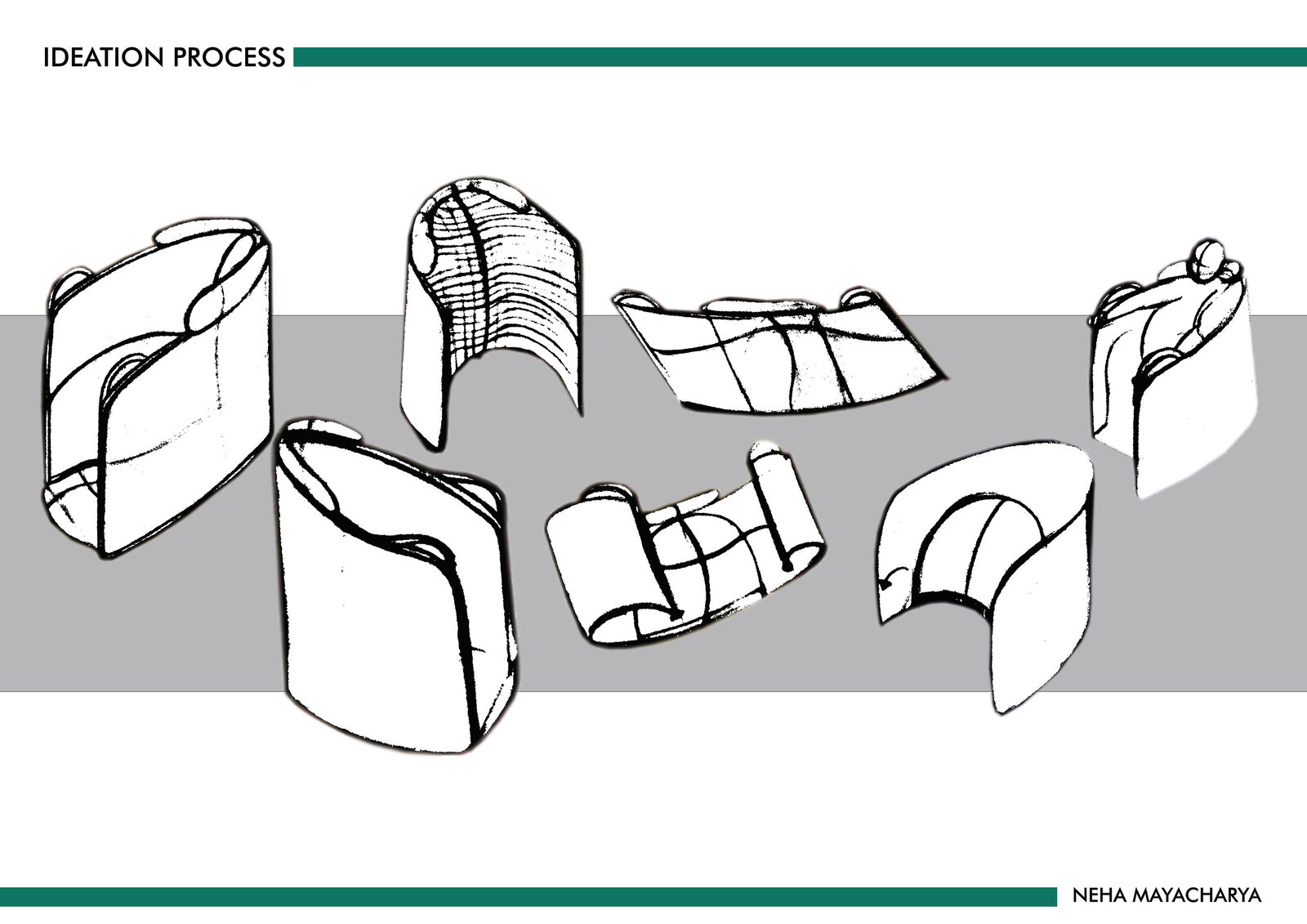
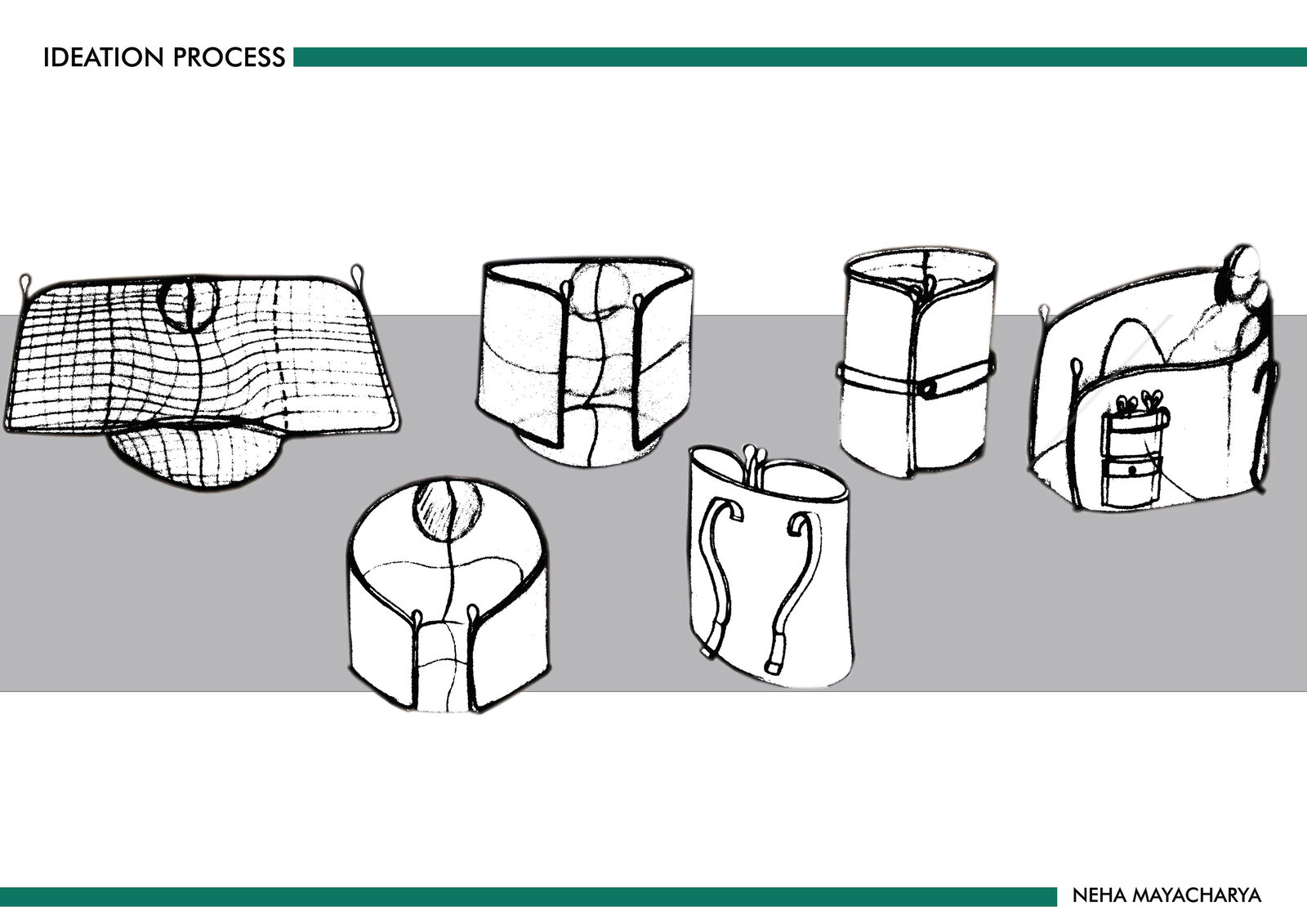
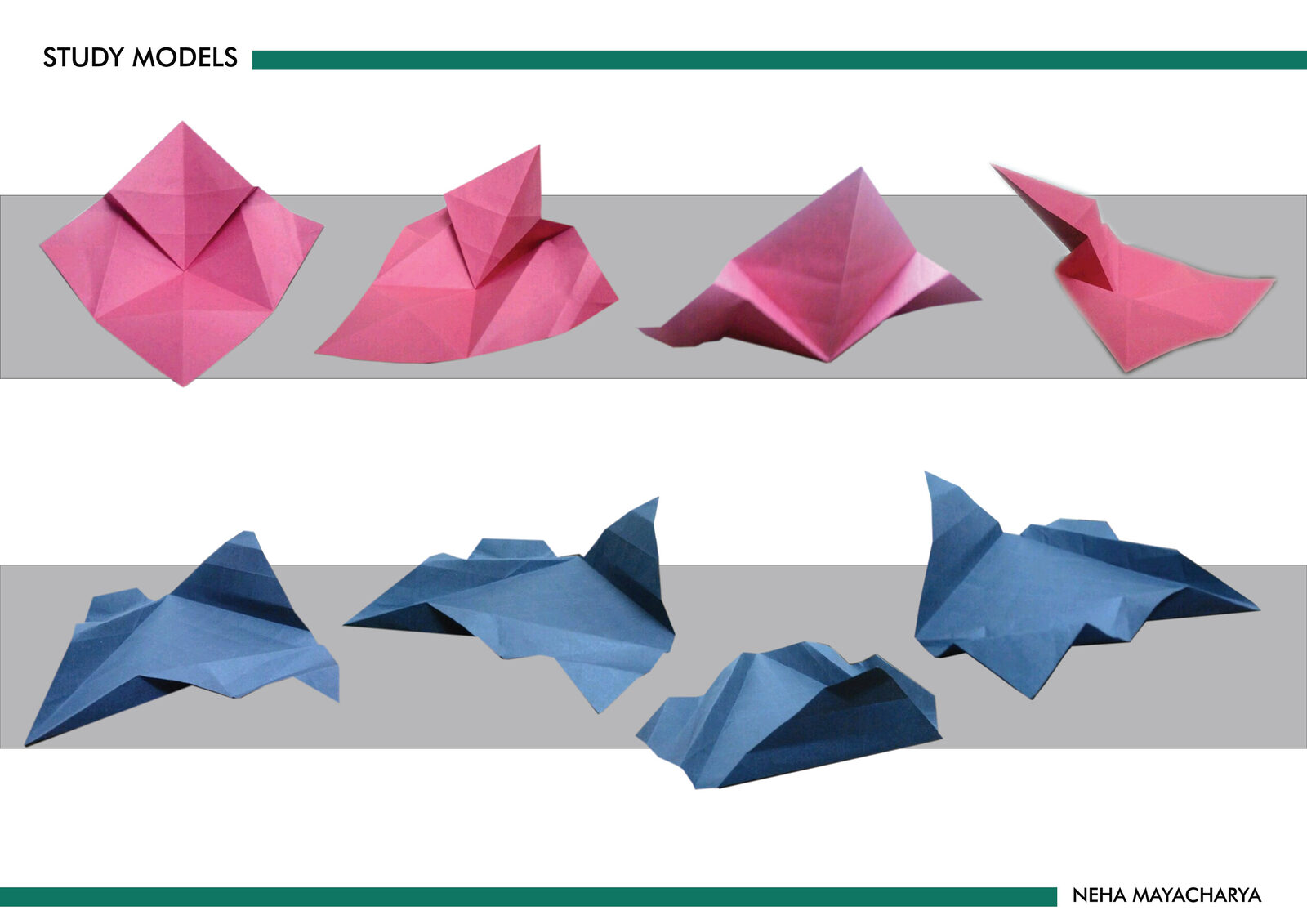
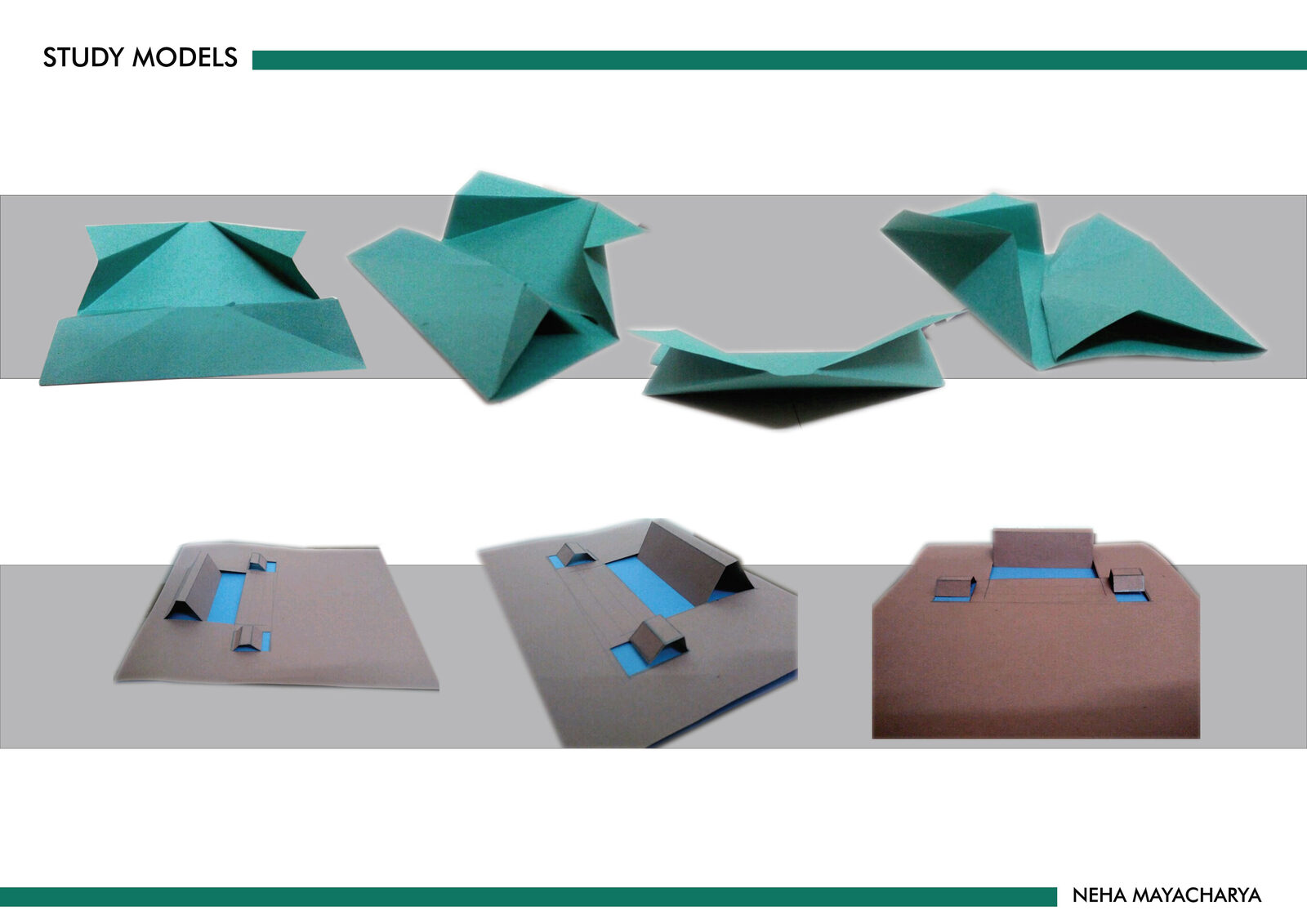
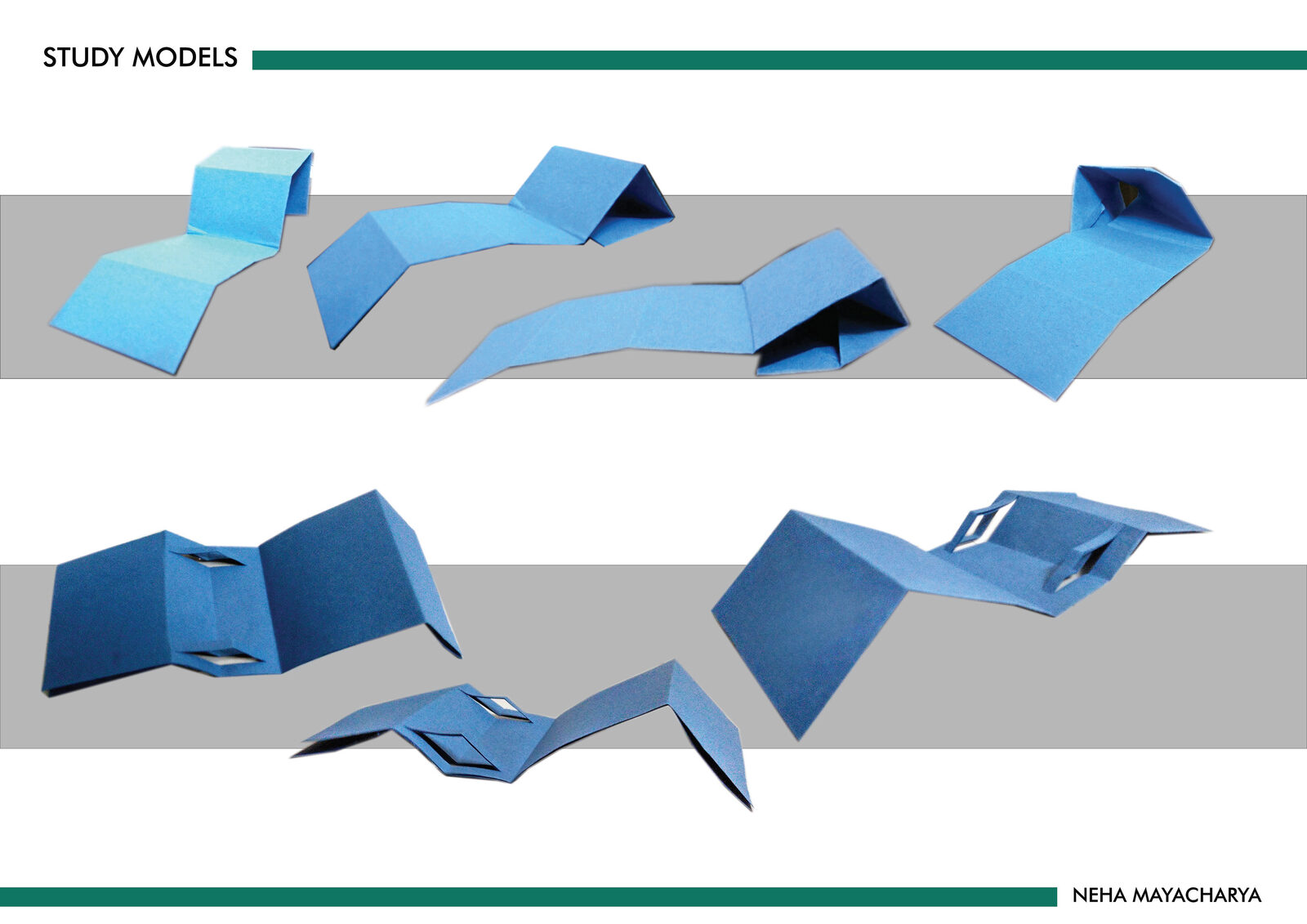
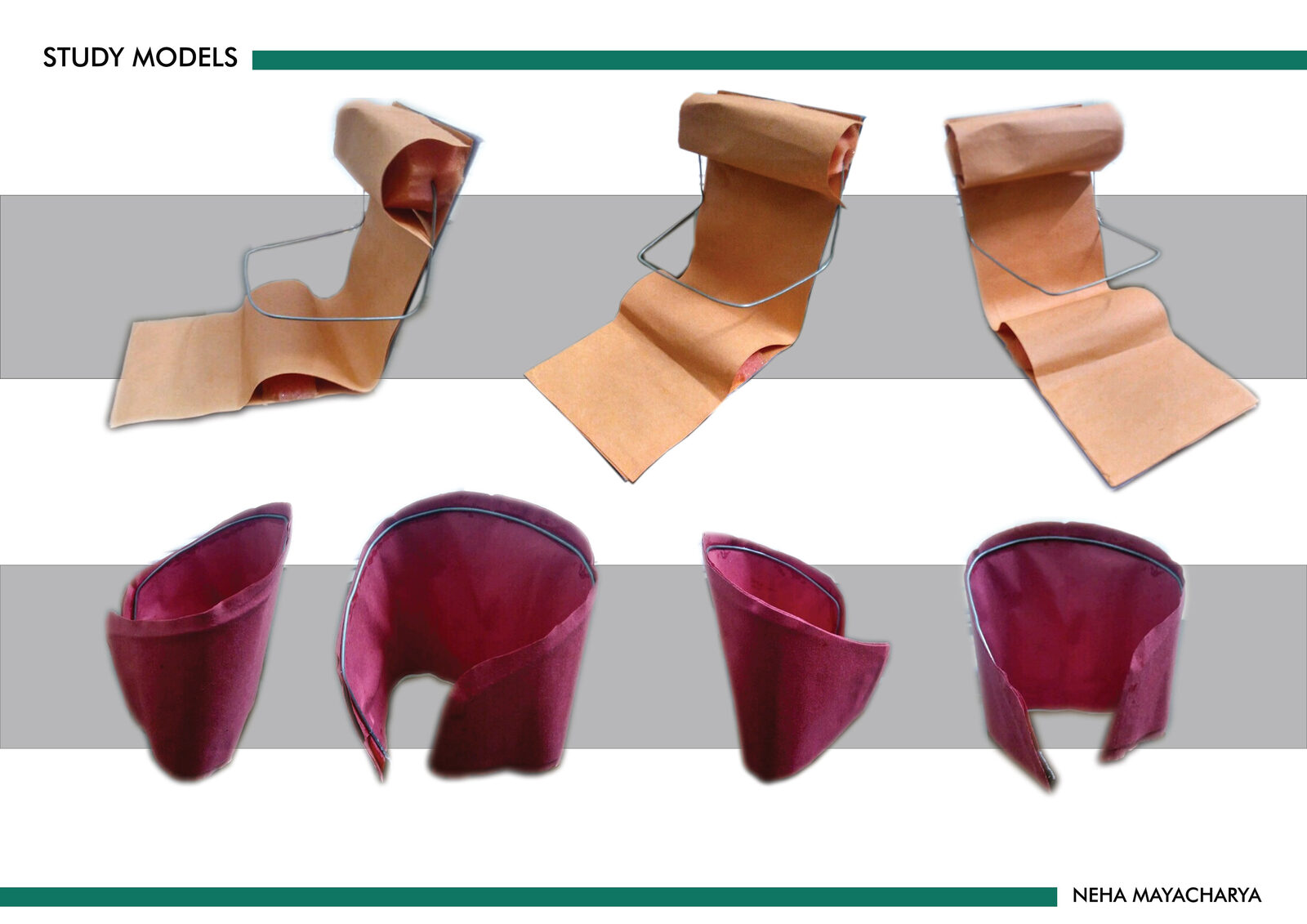
STUDY MODELS
Testing the forms in paper, card, wire and cloth
Quick physical models to check how each direction folds, stands and supports.
Final concept
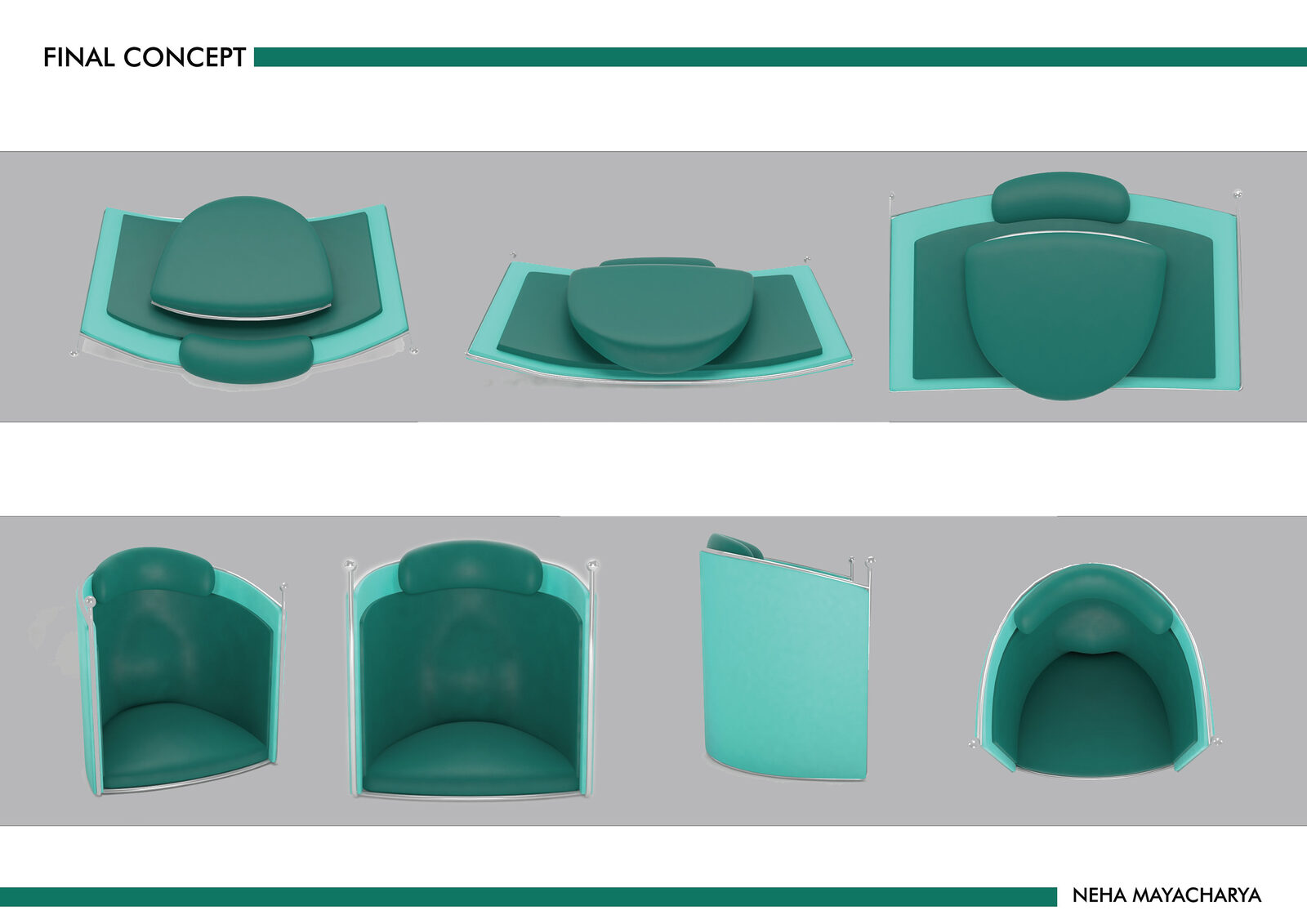
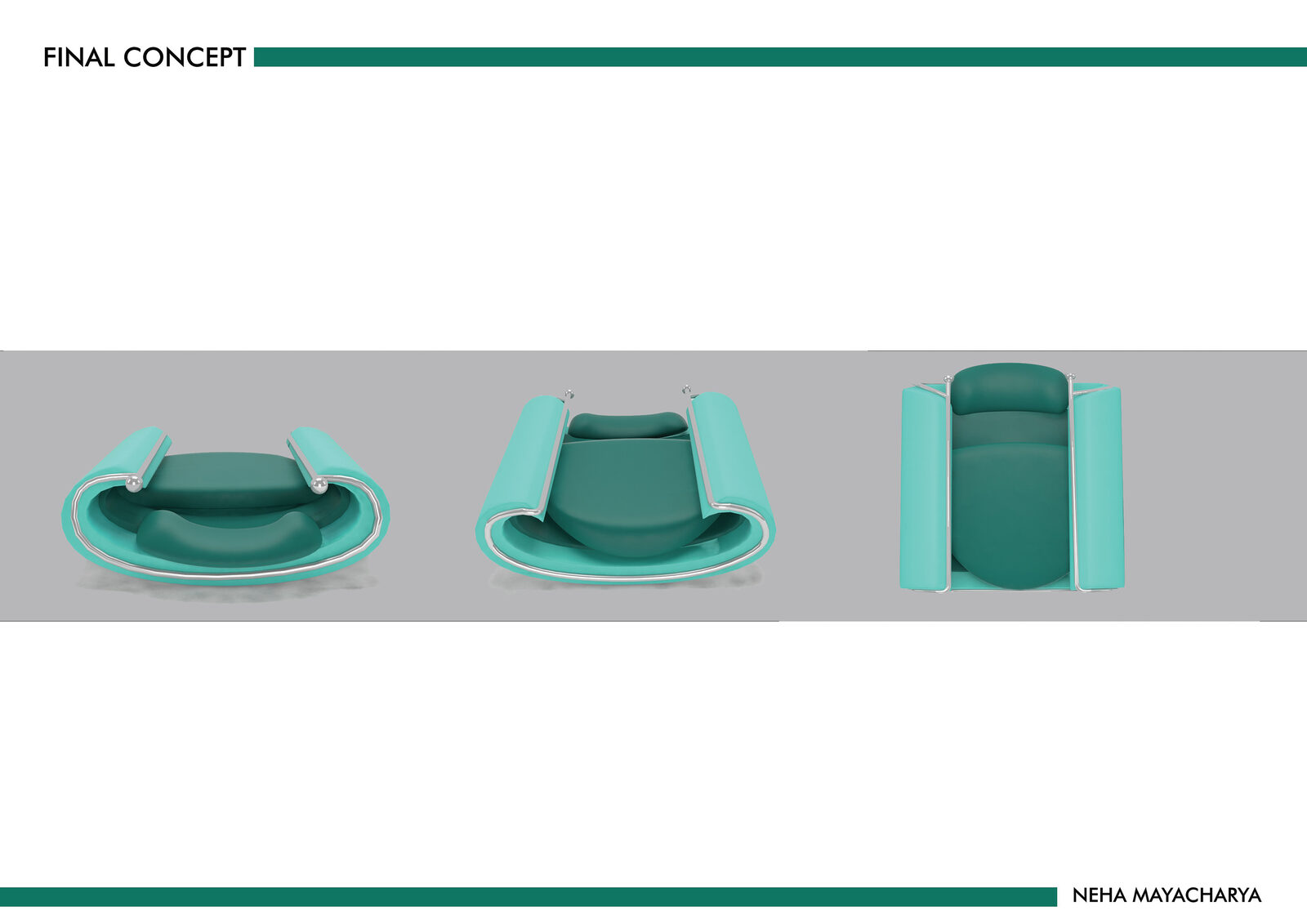
A shell that holds her in the squat
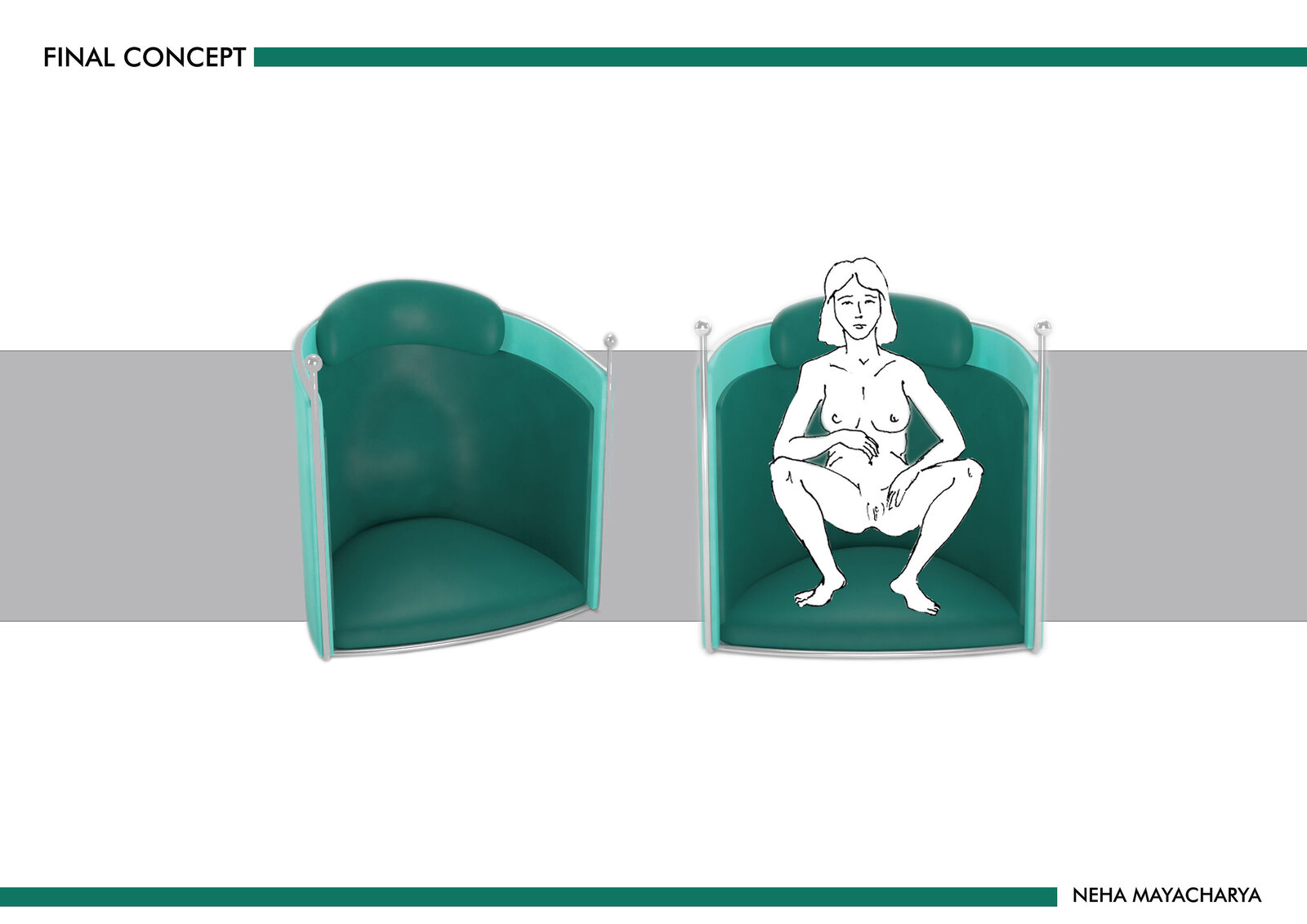
A curved, cushioned shell with a headrest, a supported seat and two upright grip poles to push against, built on a bent-tube frame.
Sensitive content
This image may include live childbirth documentation or medical visuals that some people may find disturbing.
Backrest and headrest
For rest between contractions, answering the back support from my posture study.
Two grip poles
Upright poles to push against, like the ones I saw used in the Sub Centre.
A supported squat
A low, cushioned seat that keeps her in the squatting position.
Curved, cushioned shell
The enclosing form wraps her body for support and privacy.
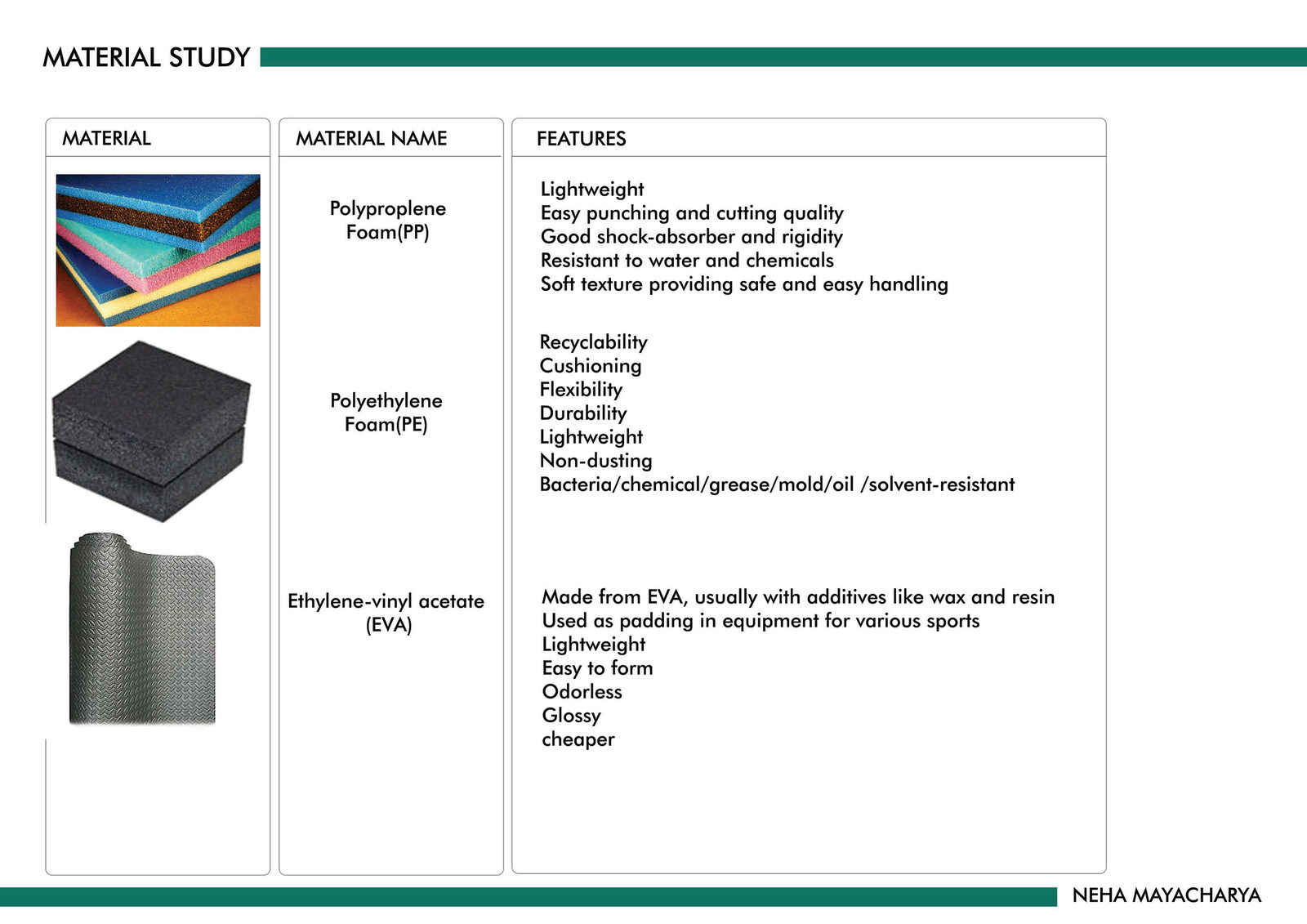
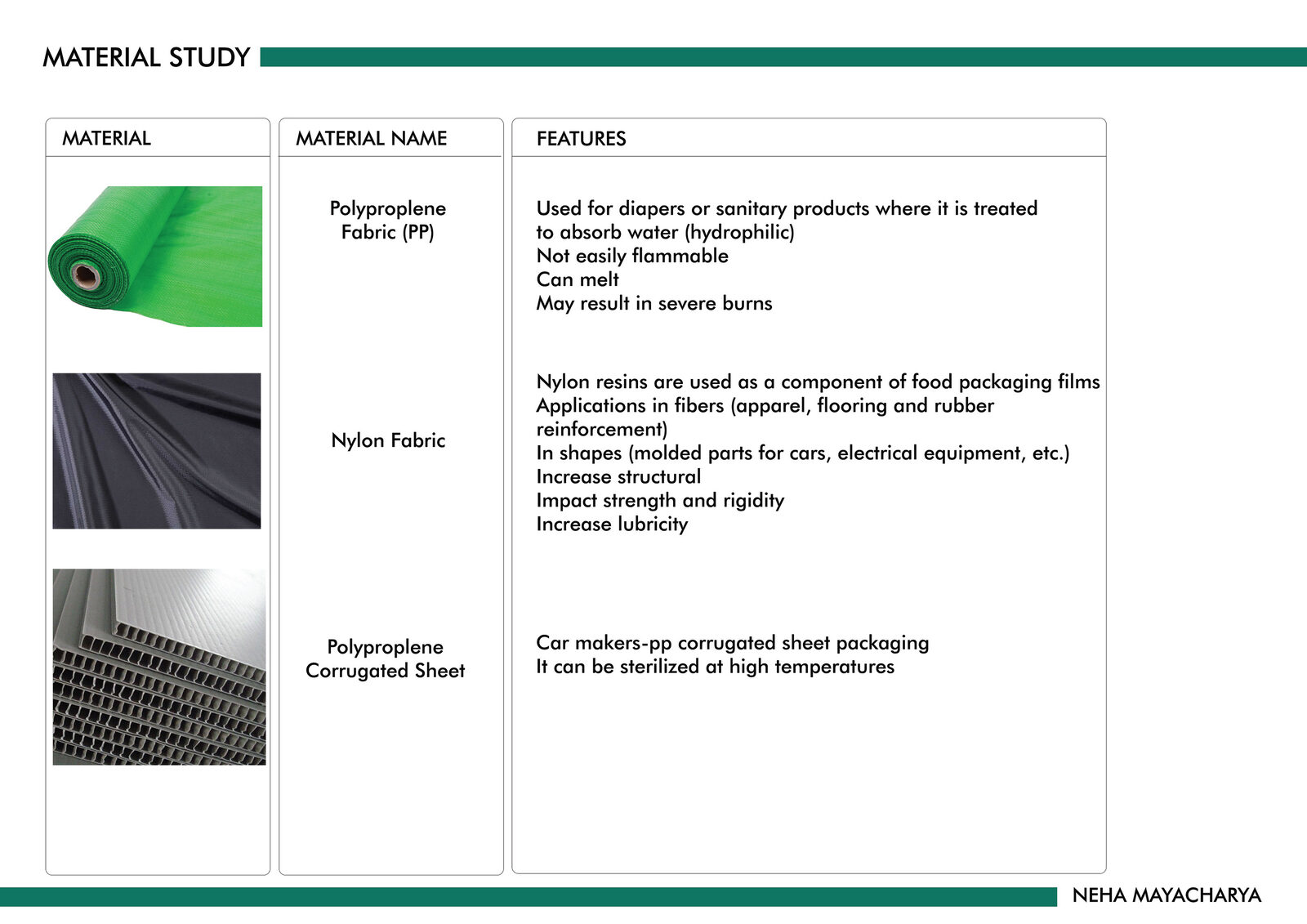
MATERIAL STUDY
CUSHIONING · PE foam
Cushioning, flexible and durable; resistant to bacteria, chemicals, grease, mould and oil.
STRUCTURE · PP corrugated sheet
Can be sterilised at high temperatures.
PADDING · PP foam and EVA
Lightweight, easy to cut and form, and resistant to water.
Prototyping
Built full scale, with local fabricators
I built the working prototype in a fabrication workshop: a bent steel frame first, then layered cushioning and upholstery.
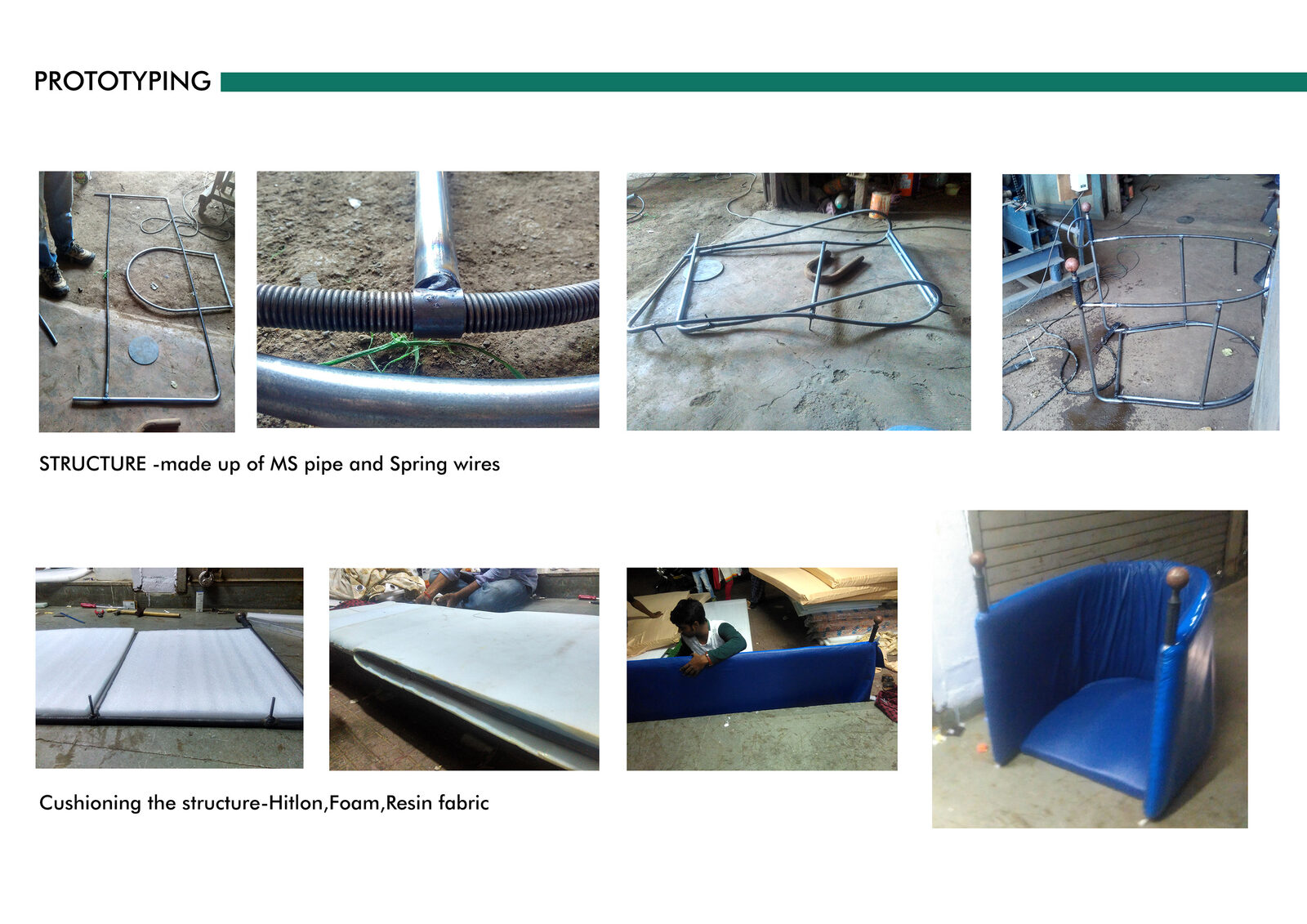
01 · STRUCTURE
MS pipe and spring wire
Mild steel pipe bent into the frame, with spring wire joints and the two grip poles.
02 · CUSHIONING
Hitlon, foam and resin fabric
Hitlon and foam layers over the frame, covered in wipe-clean resin fabric.
03 · RESULT
A full-scale working aid
A wraparound seat with grip poles, ready to test the squatting posture at real scale.
Bachelor of Design graduation project, Product Design, 2017. Presented at my final jury, where it received the Best Graduation Project award. All research, field documentation, sketches and design are my own; sources for secondary data are credited on each slide.
MORE PROJECTS
All work