Inspirit VR · Graduation internship project
Molecular structure of DNA, explored and built by hand
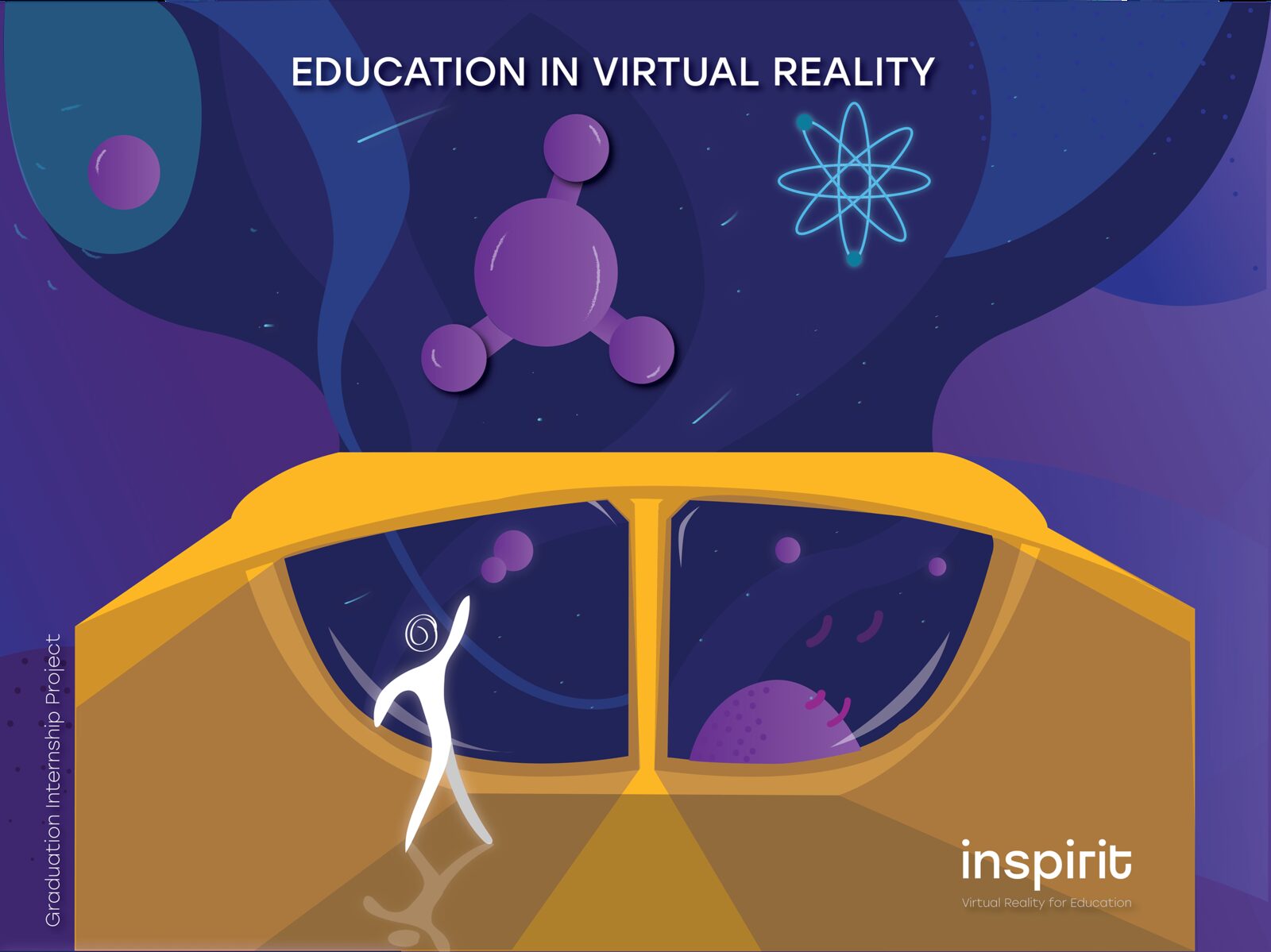
A spaceship carries students into a eukaryotic cell, through the nucleus and into the chromatin, where they explore DNA’s structure and then construct it themselves.
VR Design Intern · Inspirit VR
Research, storyboarding, 3D, UI, sound and learning assessment · December 2019, 4 weeks

ROLE
VR Design Intern

CONTEXT
Graduation internship project, Immersive Media Design

PLATFORM
Google Cardboard (3DoF) · Unity, Maya

TIMELINE
December 2019 · 4 weeks
The brief
Turning a hard-to-picture topic into a place you can stand inside
December 2019
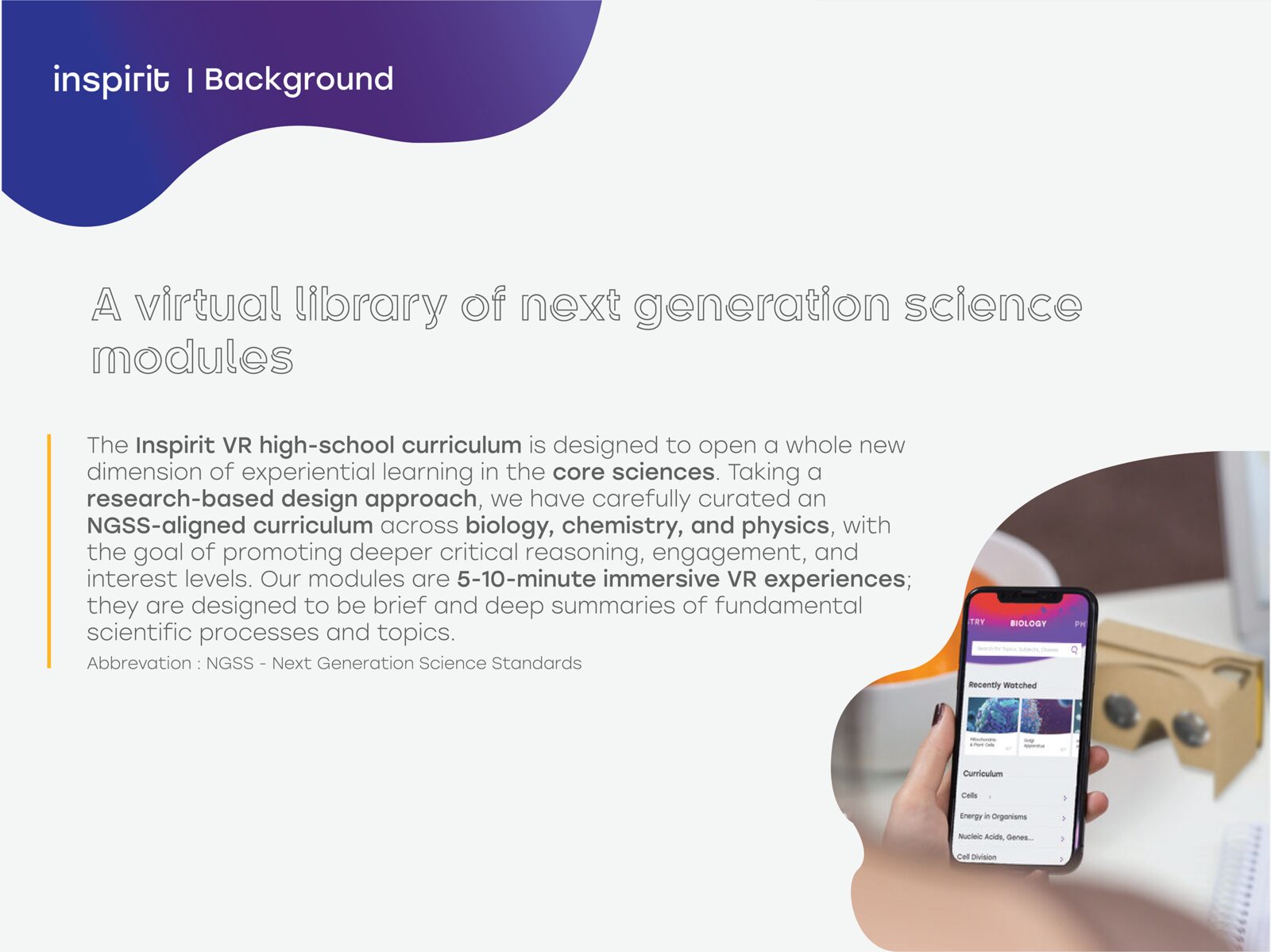
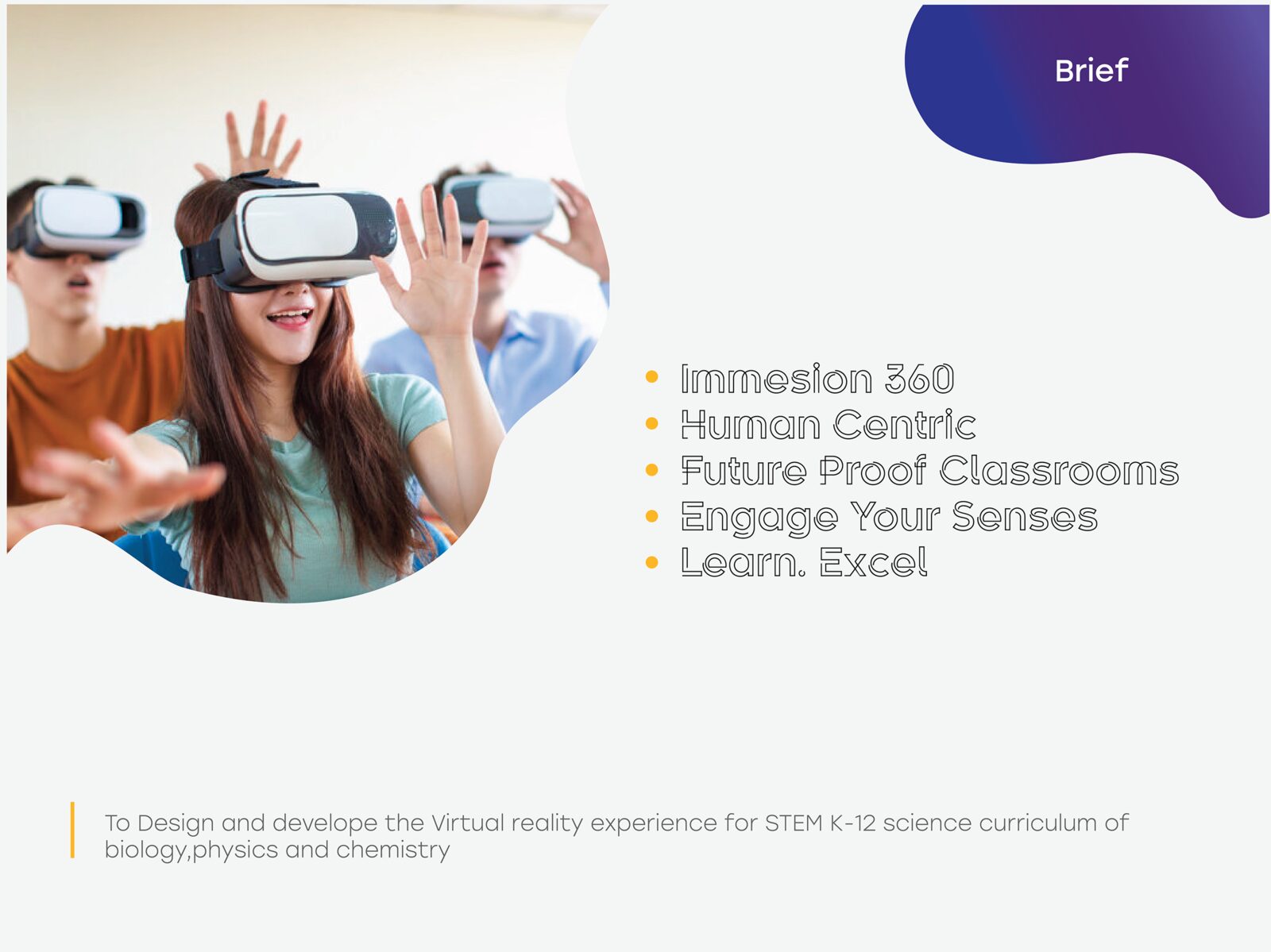
Inspirit VR invited me to intern on designed experiences for the NGSS K-12 science curriculum, part of a catalogue meant to help students visualize inherently complex subjects.
The focus: interactive, immersive storytelling, and how interaction and animation in 6DoF VR can teach.
Design process
Six stages, from requirements to usability testing
1
Understand
Requirements, users and personas
2
Research
Competitors, latest trends and standard guidelines
3
Sketch
Gathering ideas: storyboards and illustrations
4
Design
Visuals and functions: assets, environment, icons, micro-interactions
5
Development
Building those assets, environment, icons and micro-interactions
6
Evaluate
Usability testing to identify improvements
EXPERIENCE GOALS
Immersion 360Human-centricFuture-proof classroomsEngage your sensesLearn. Excel.Biological research
Learning the science before designing the story
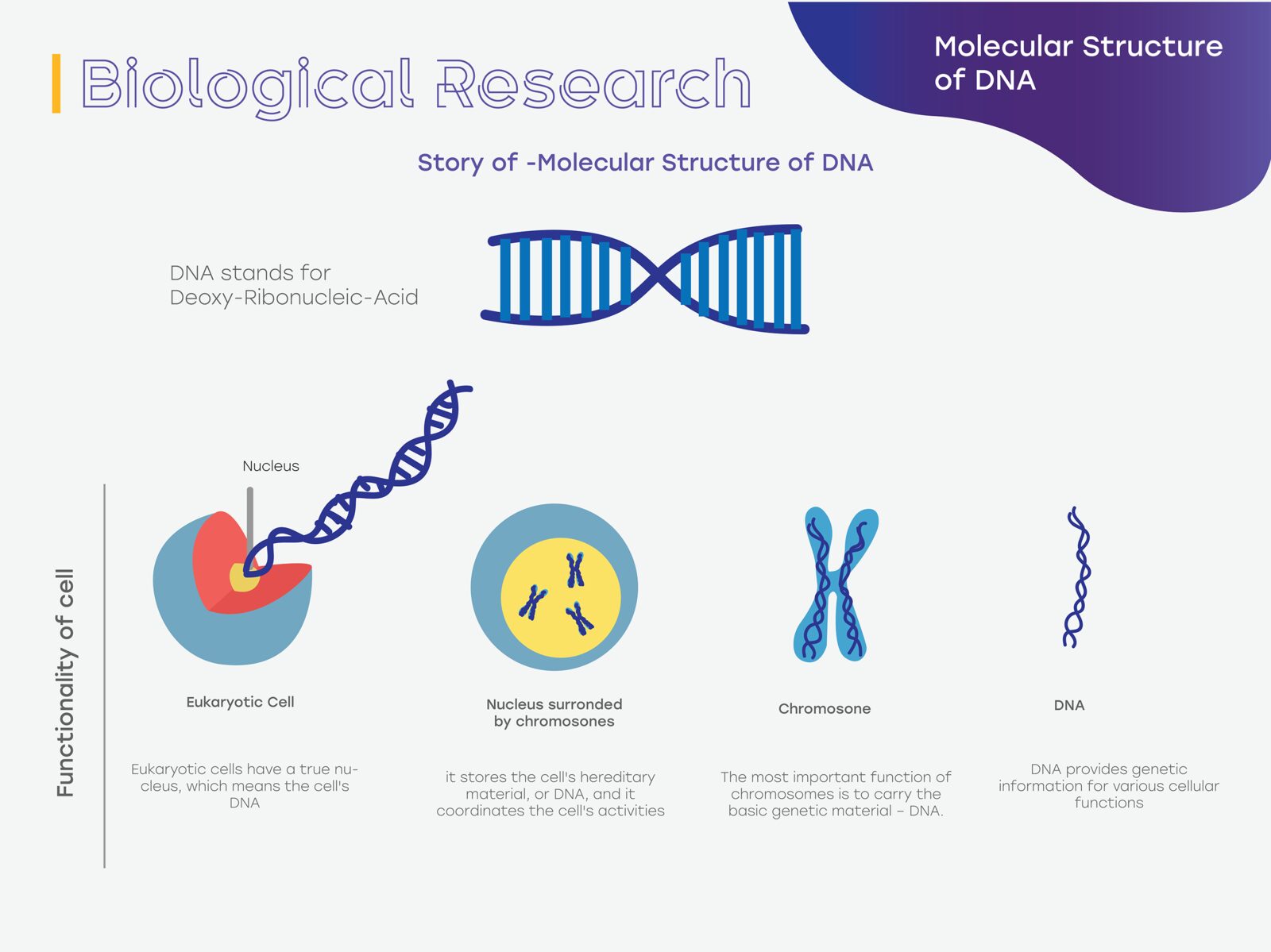
I mapped the story from cell to nucleus to chromosome to DNA, then down to nucleotides and bonds.
Cell → DNA
Eukaryotic cells keep DNA in a true nucleus, carried on chromosomes.
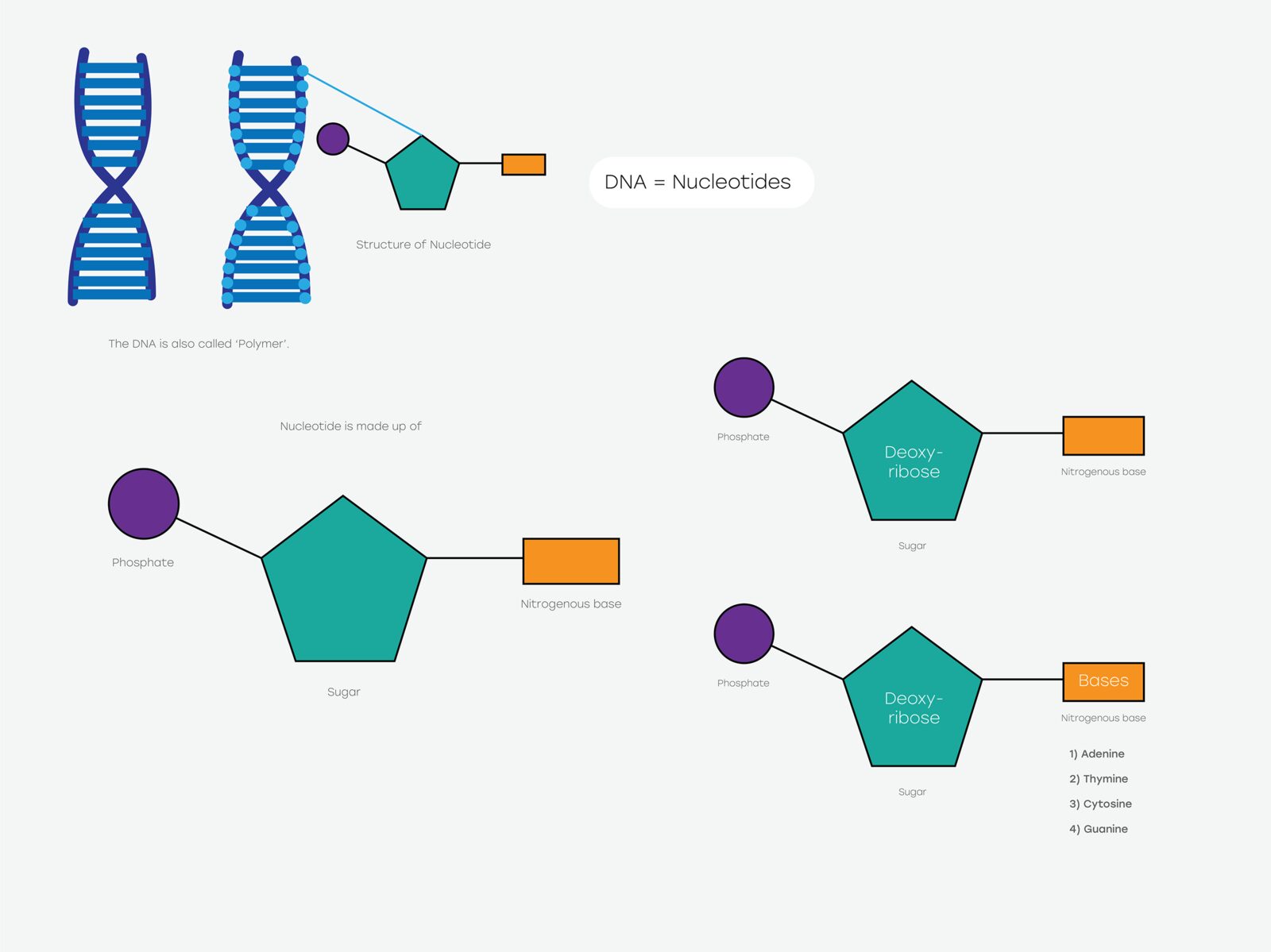
DNA = nucleotides
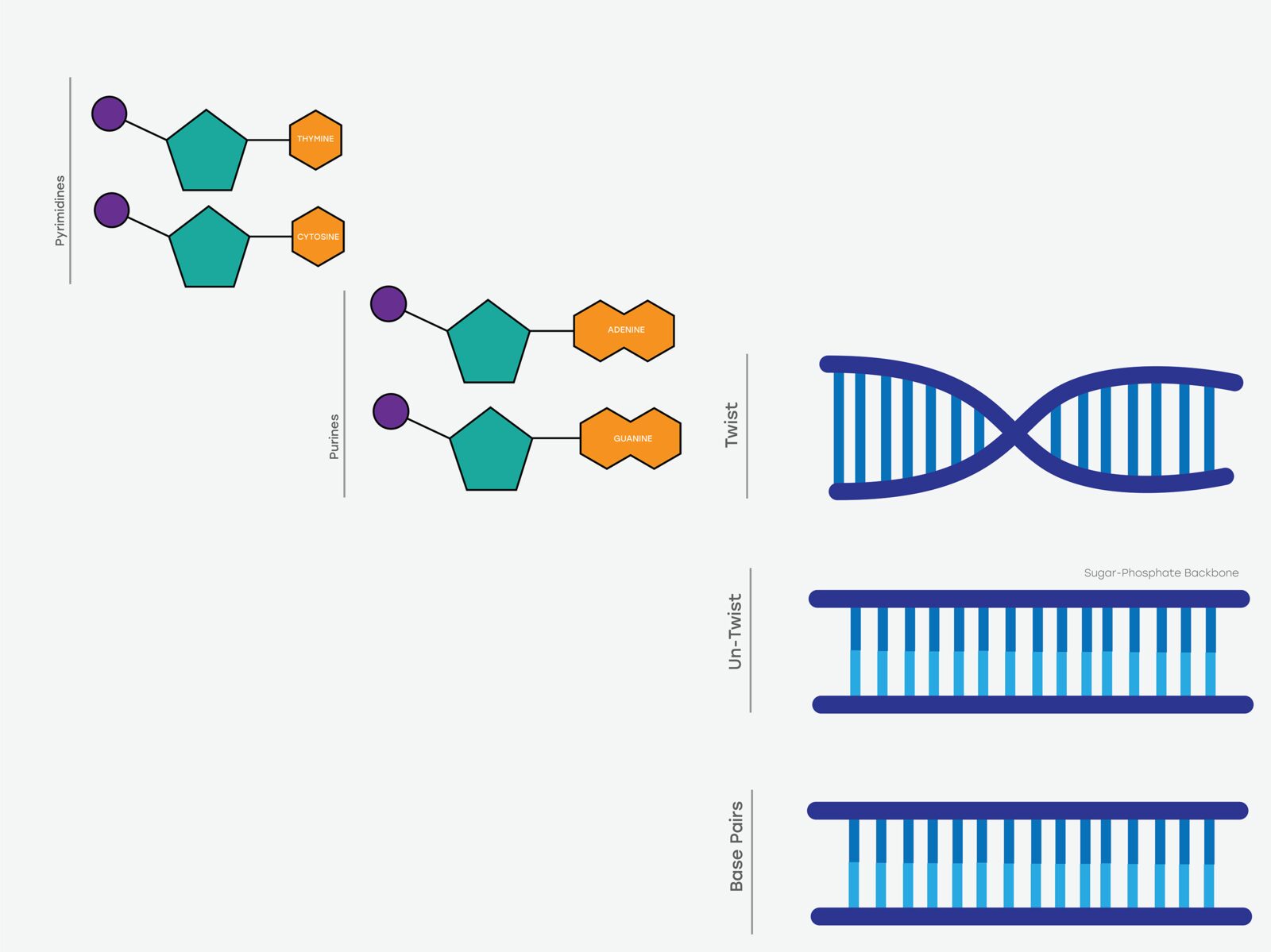
DNA is a polymer built from repeating nucleotide units.
3 parts
Each nucleotide: a phosphate, a deoxyribose sugar and a nitrogenous base.
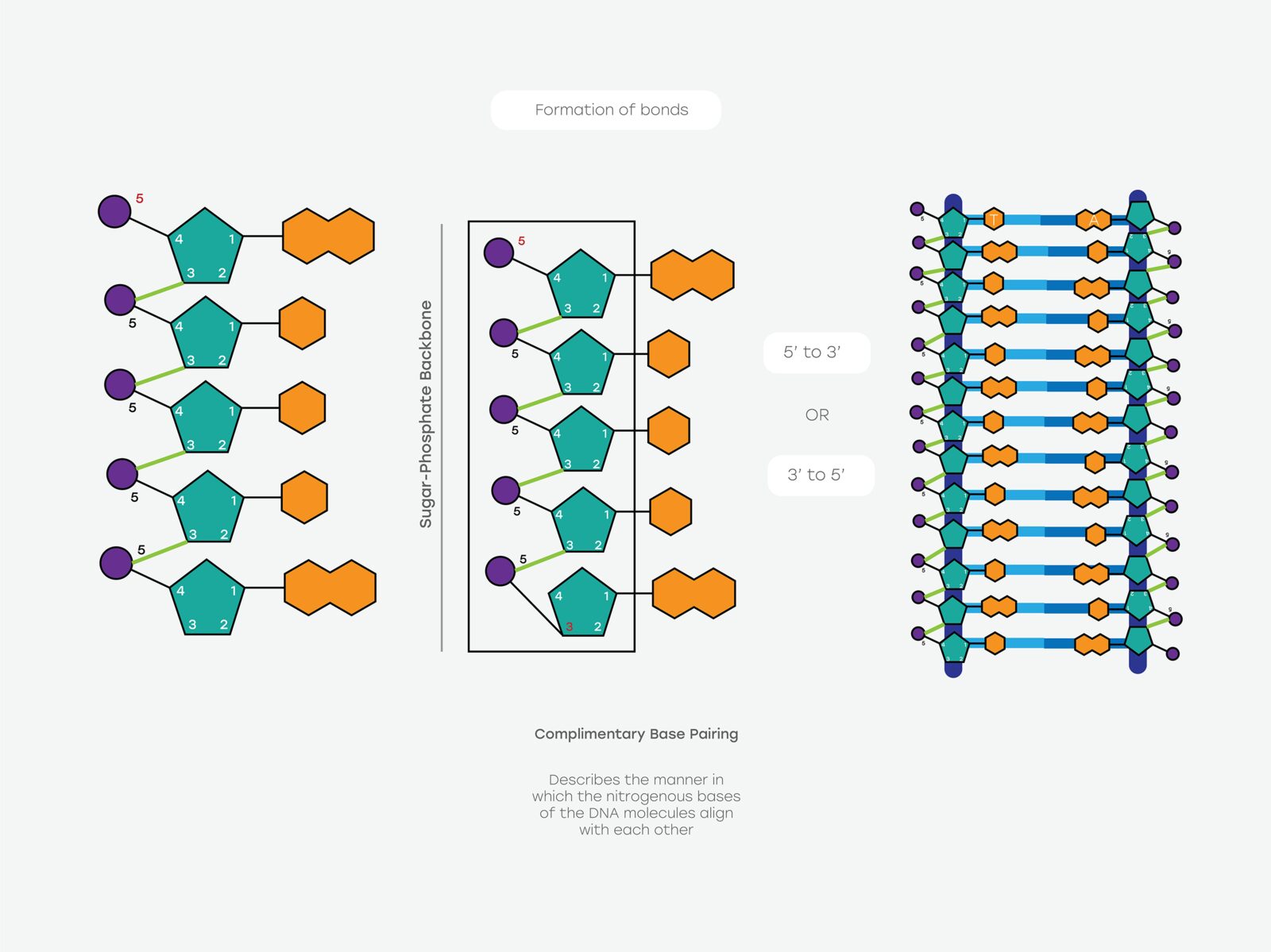
A–T, G–C
Complementary base pairing aligns the two strands, 5′ to 3′.
Technical research
Designed for a VR headset any school can afford
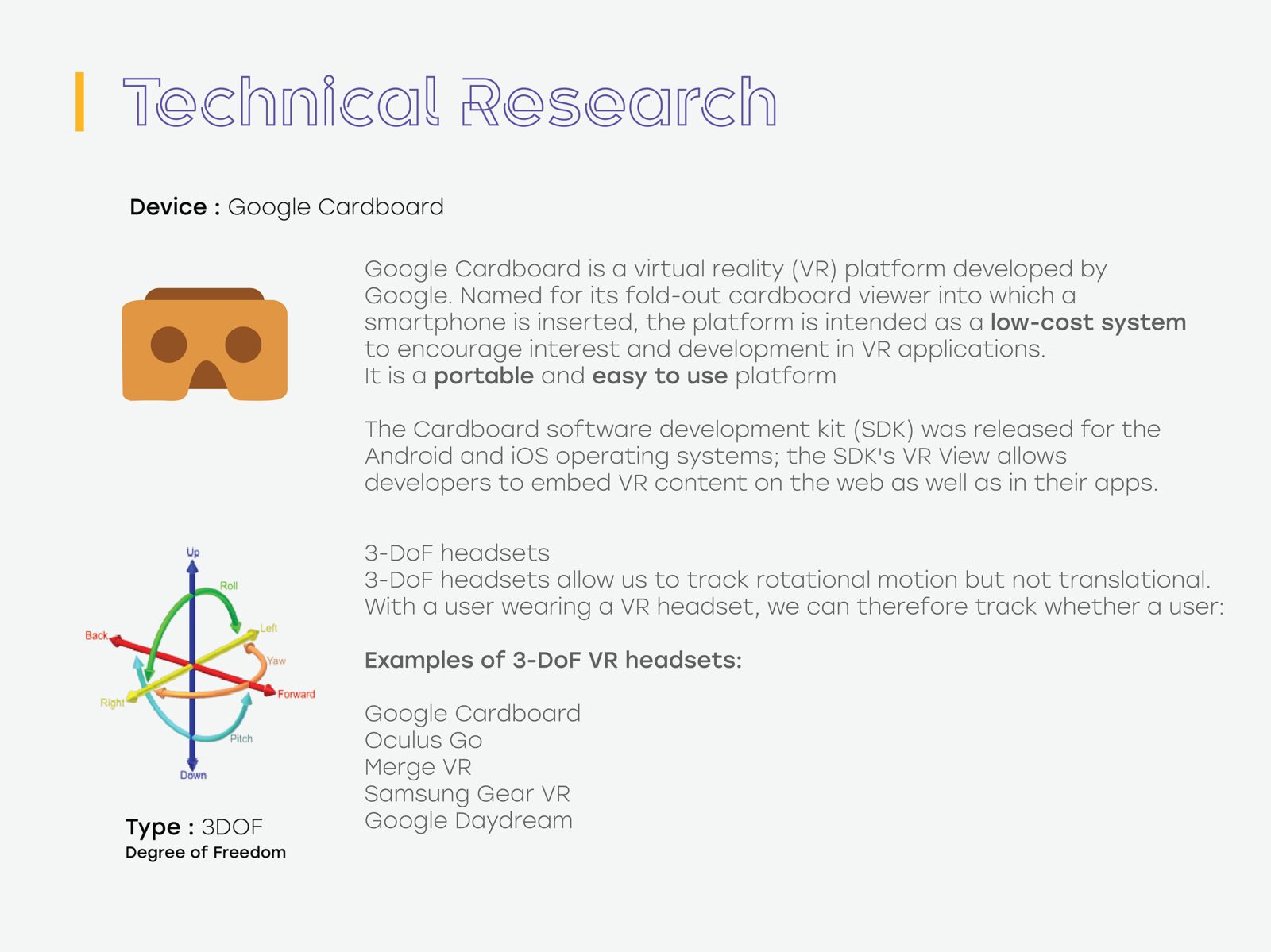
I designed within the limits of a 3DoF viewer: head rotation is tracked, but not movement through space.

Google Cardboard
A low-cost, portable fold-out viewer: insert a smartphone and you’re in VR. Its SDK runs on Android and iOS.

3 degrees of freedom
Roll, pitch and yaw are tracked; walking is not. So the spaceship does the moving, and learners look and select.
Software
Unity: the build
Maya: 3D modelling
Visual Studio: scripting
Storyboarding
Every scene planned across four tracks
Each moment specifies the environment, animation, audio and any learning assessment (LA).
Environment
Animation
Audio
Learning assessment
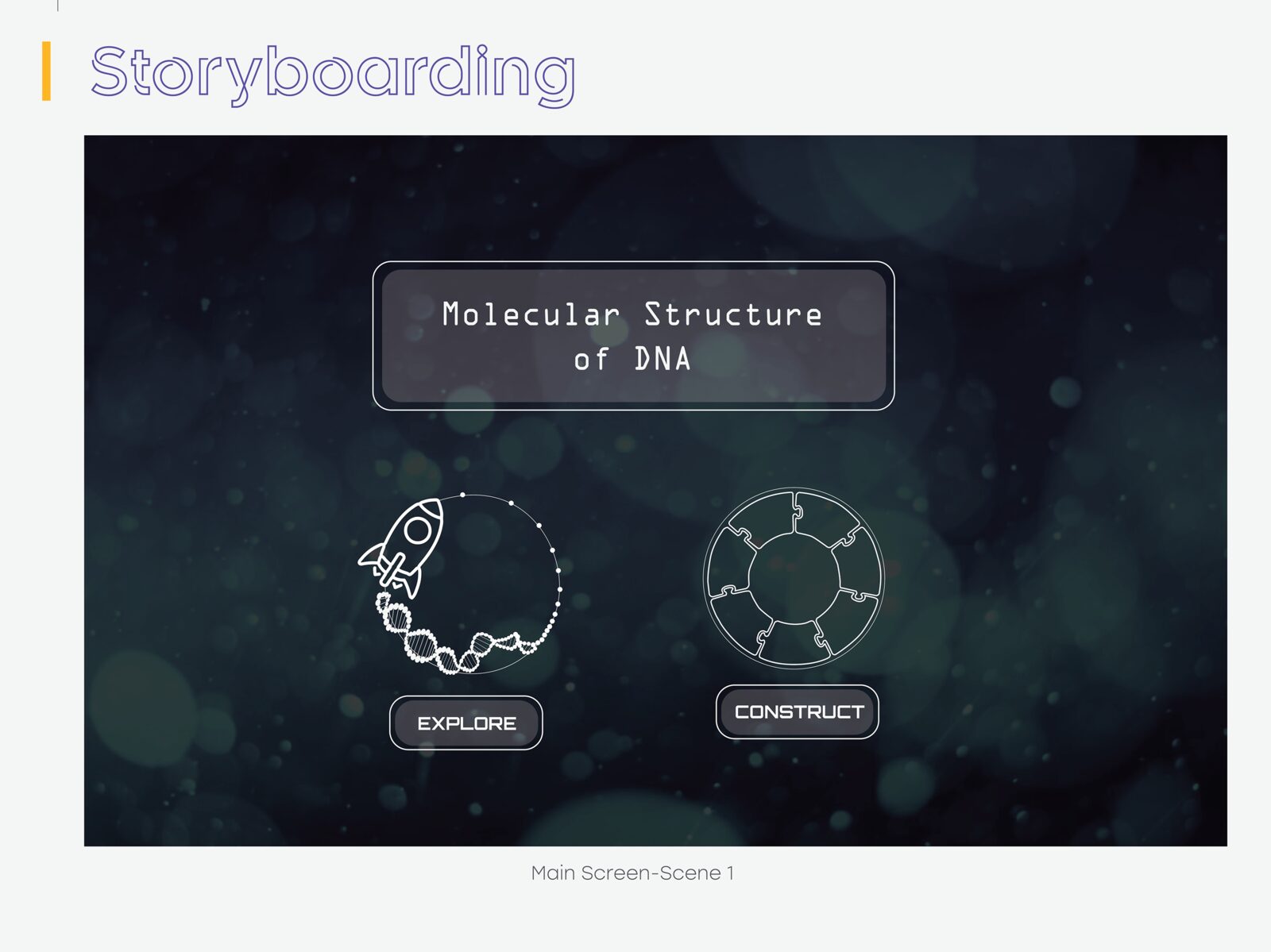
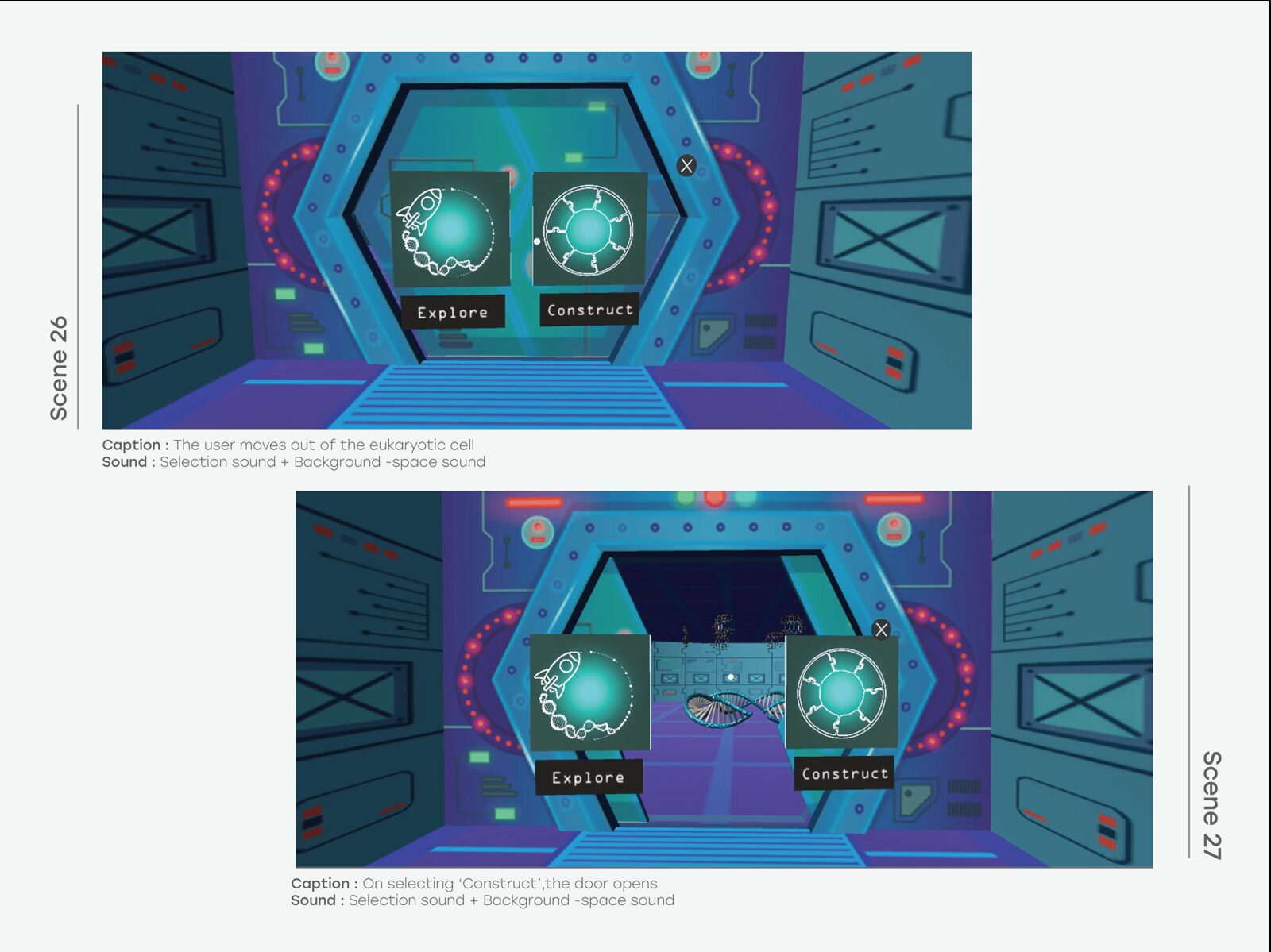
In the skybox, two options float: 1. Explore, 2. Construct.
The two options float
Space sound
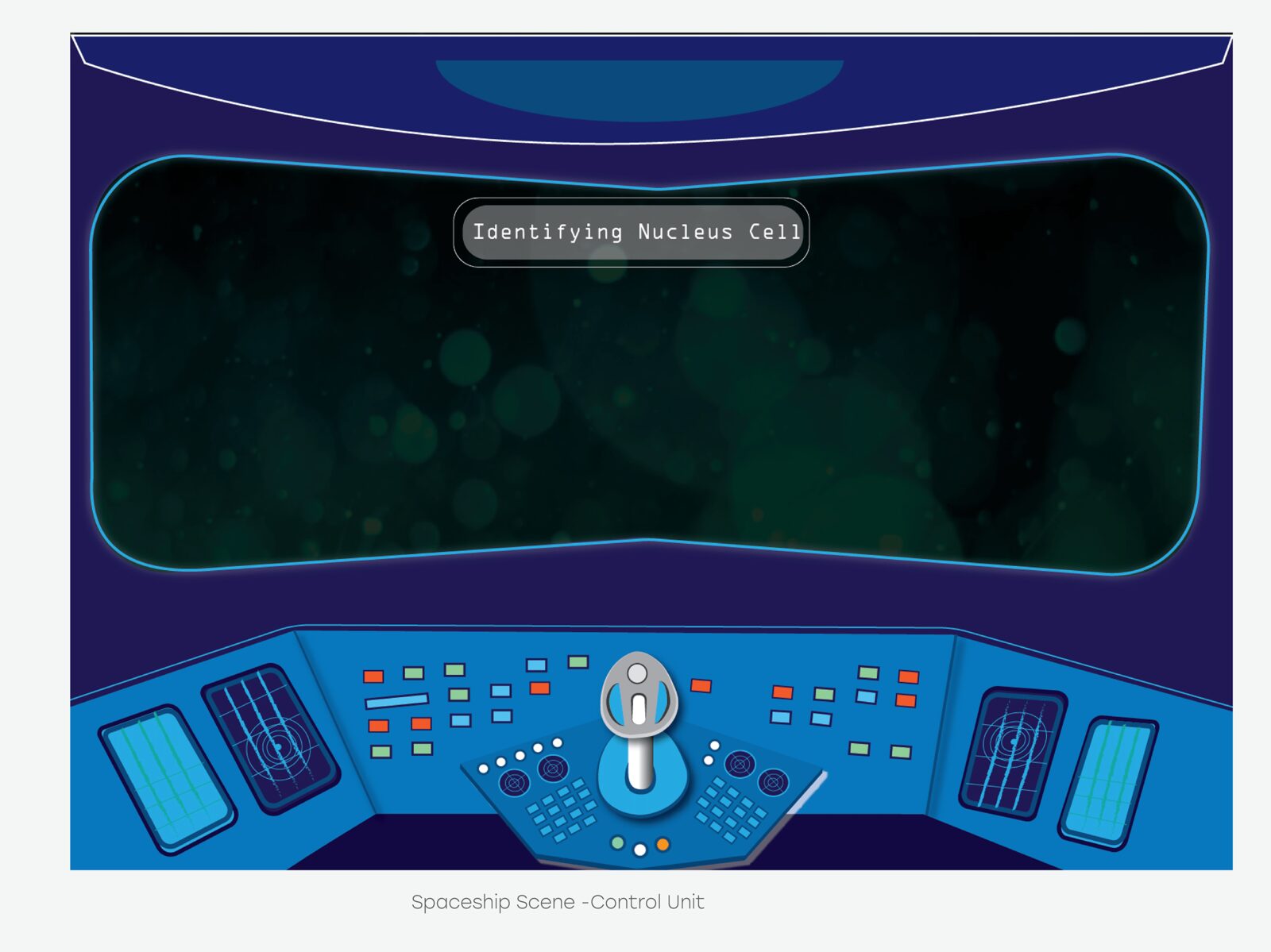
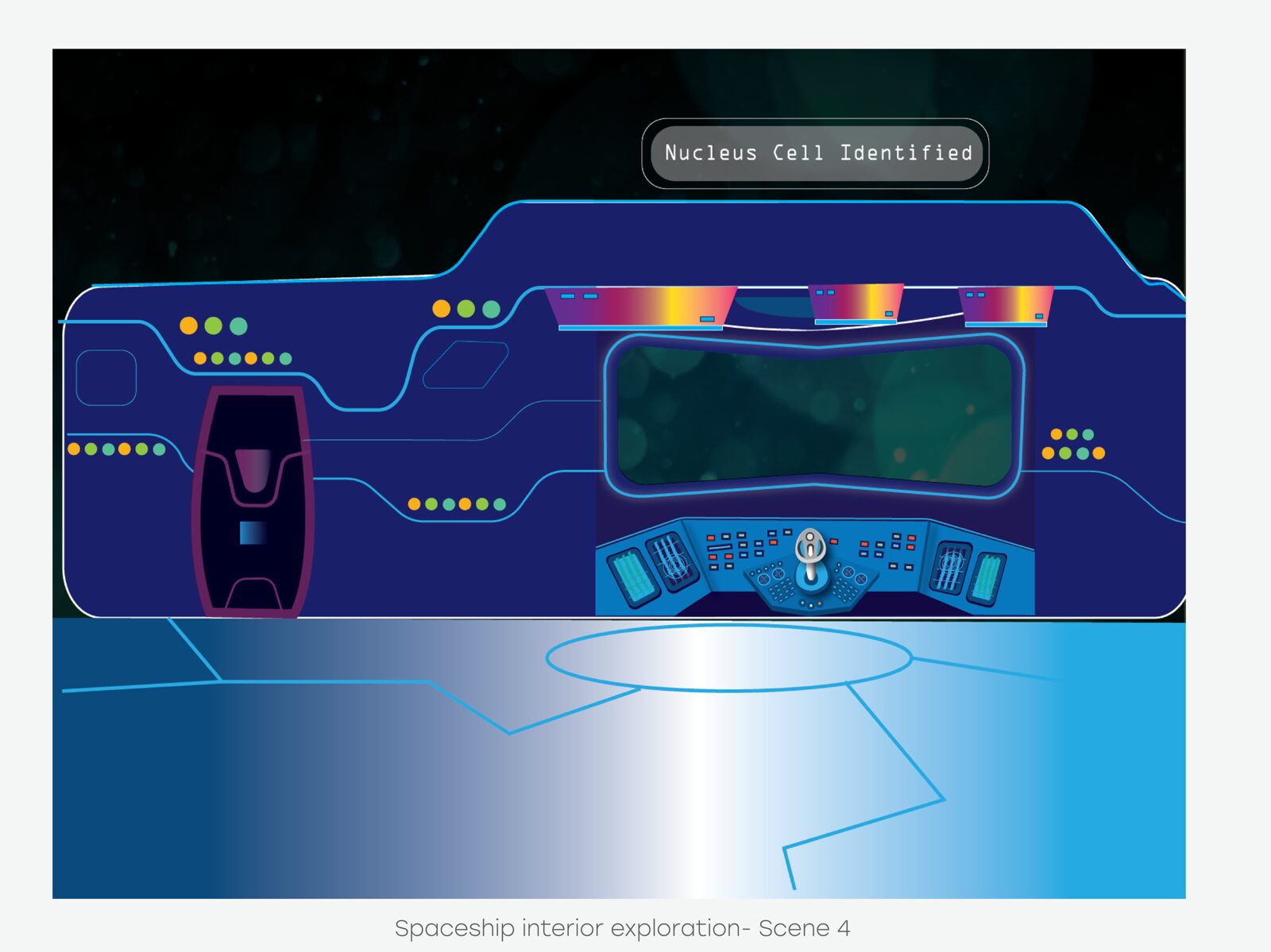
Choosing Explore takes the learner inside the eukaryotic cell by spaceship.
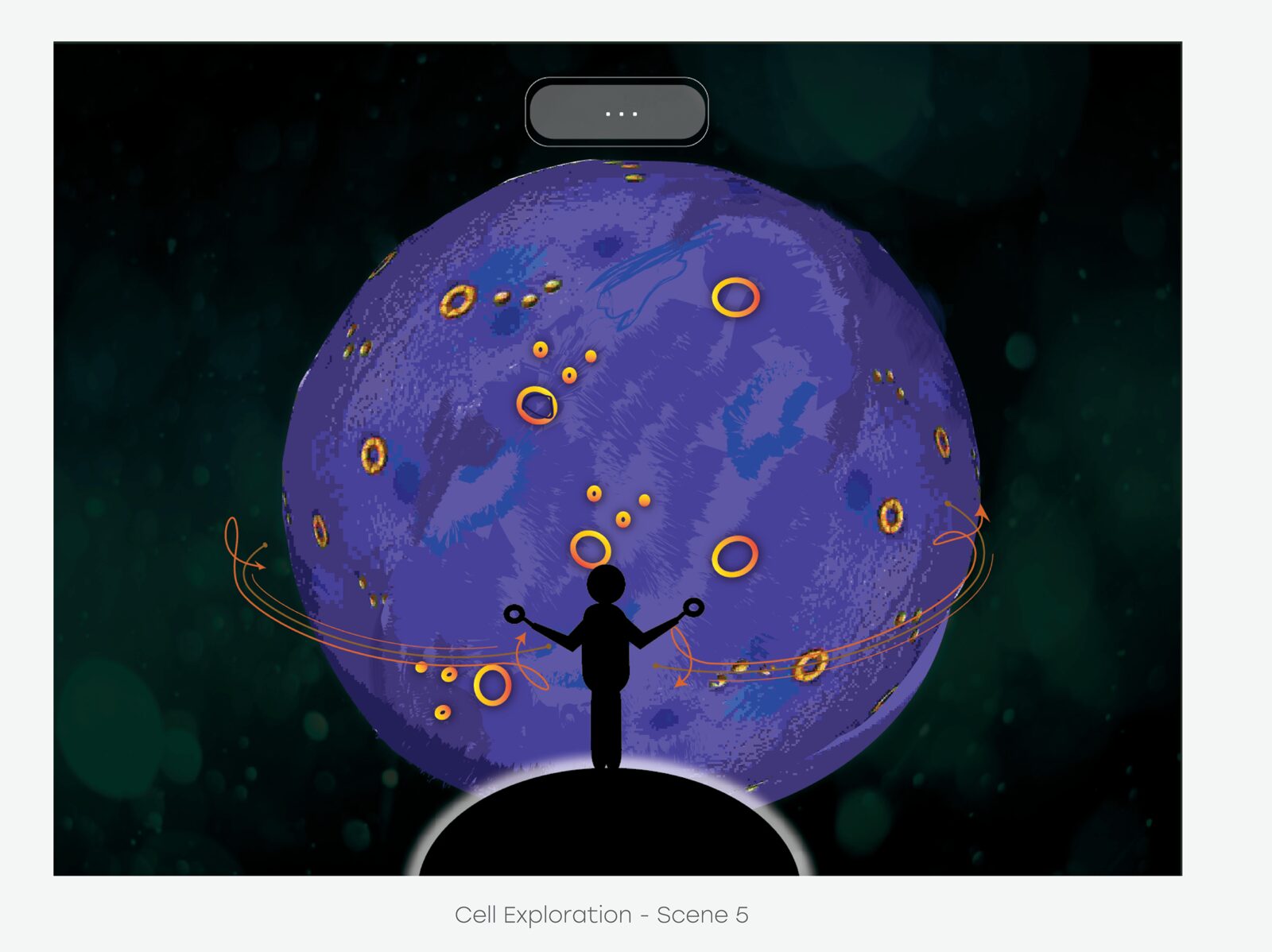
Cell organelles float
Spaceship sound
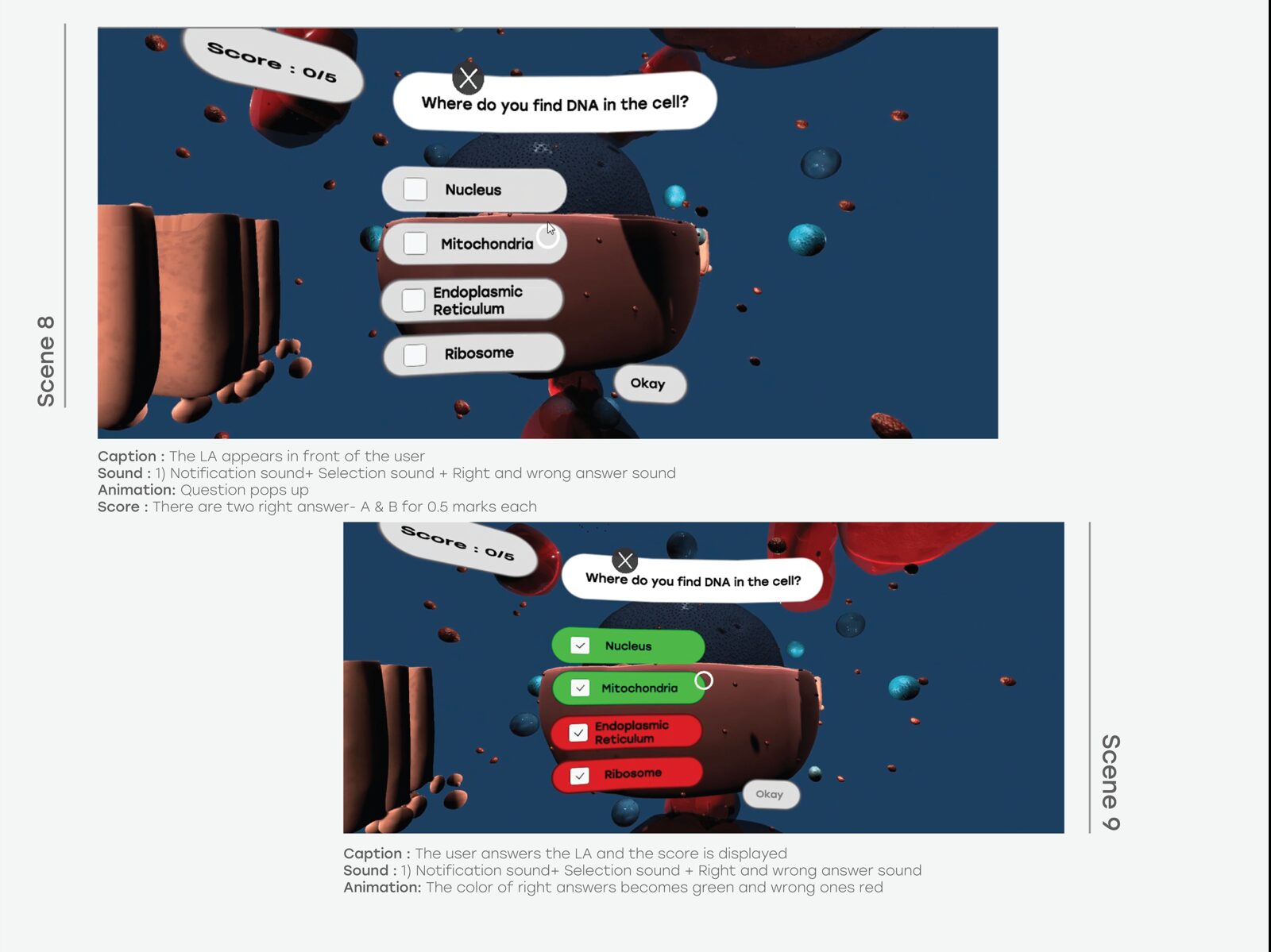
Entering the cell, an assessment pops up.
Water drop, plus right and wrong answer sounds
Where do you find DNA in the cell? Nucleus and mitochondria (0.5 marks each)
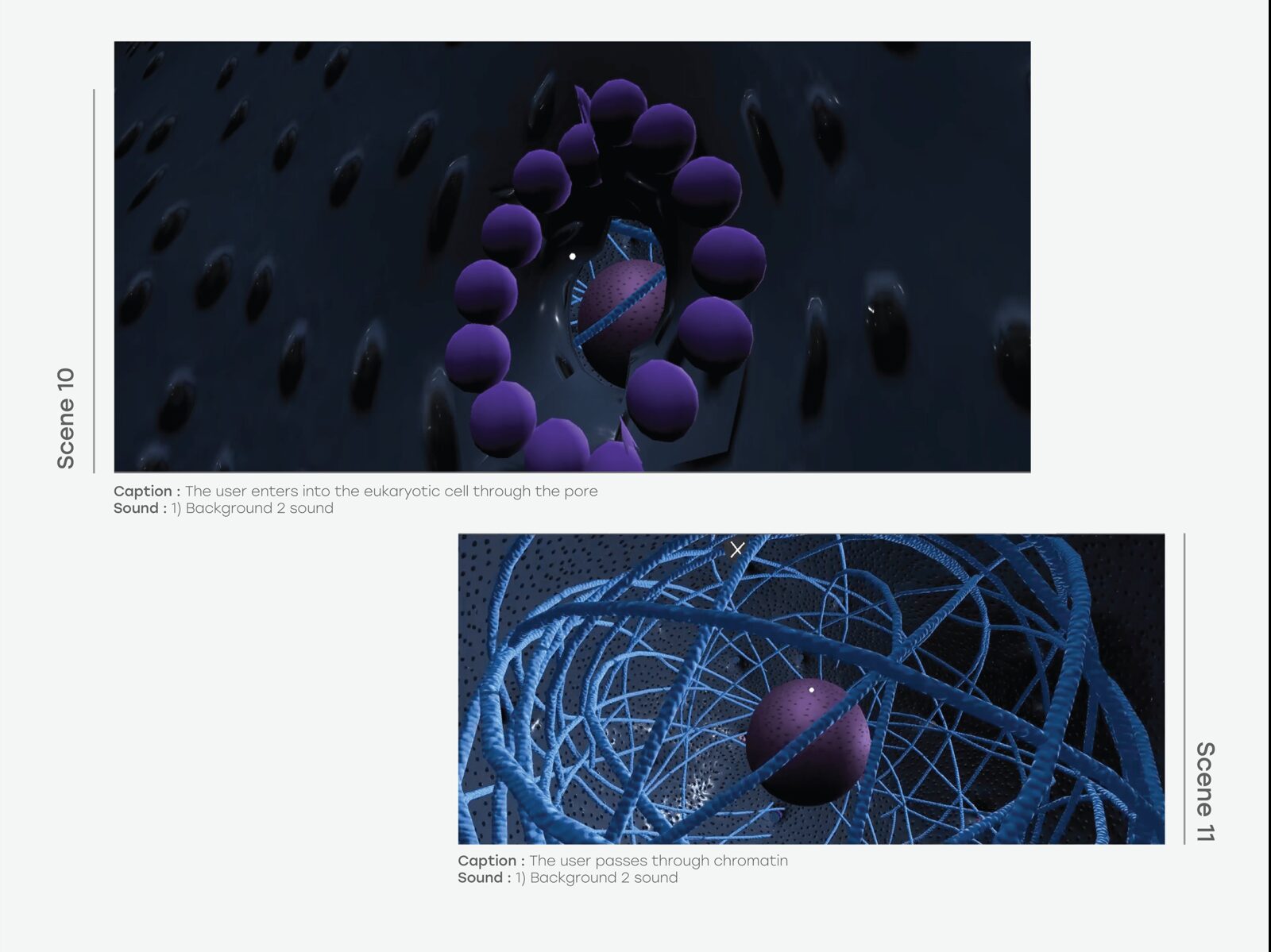
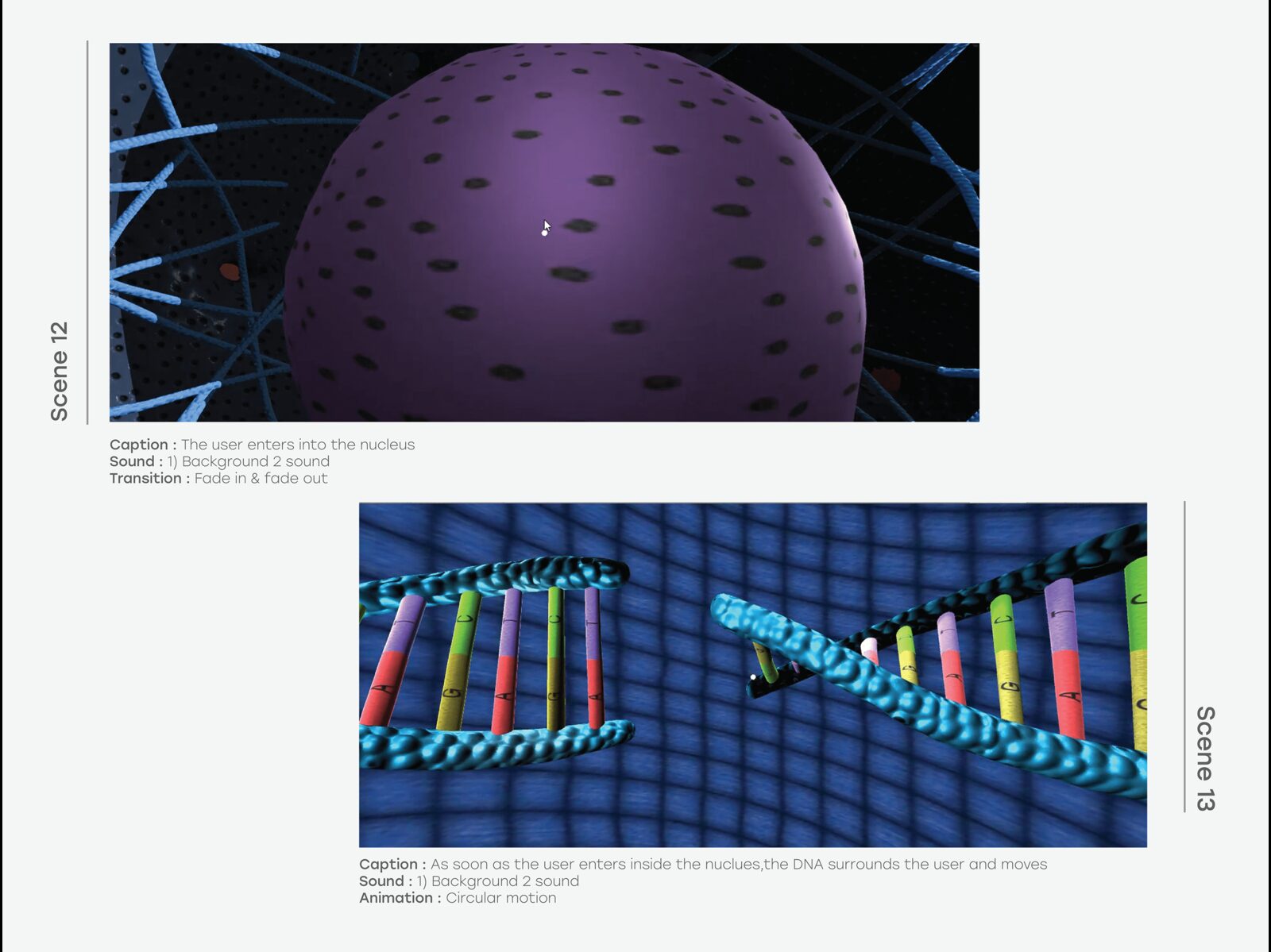
Into the nucleus, then the chromatin skybox: a 360° loop of DNA around the learner, open at the back like a bracelet. A voiceover starts after 1 second.
DNA scales up and rotates in a wave
Background sound + voiceover
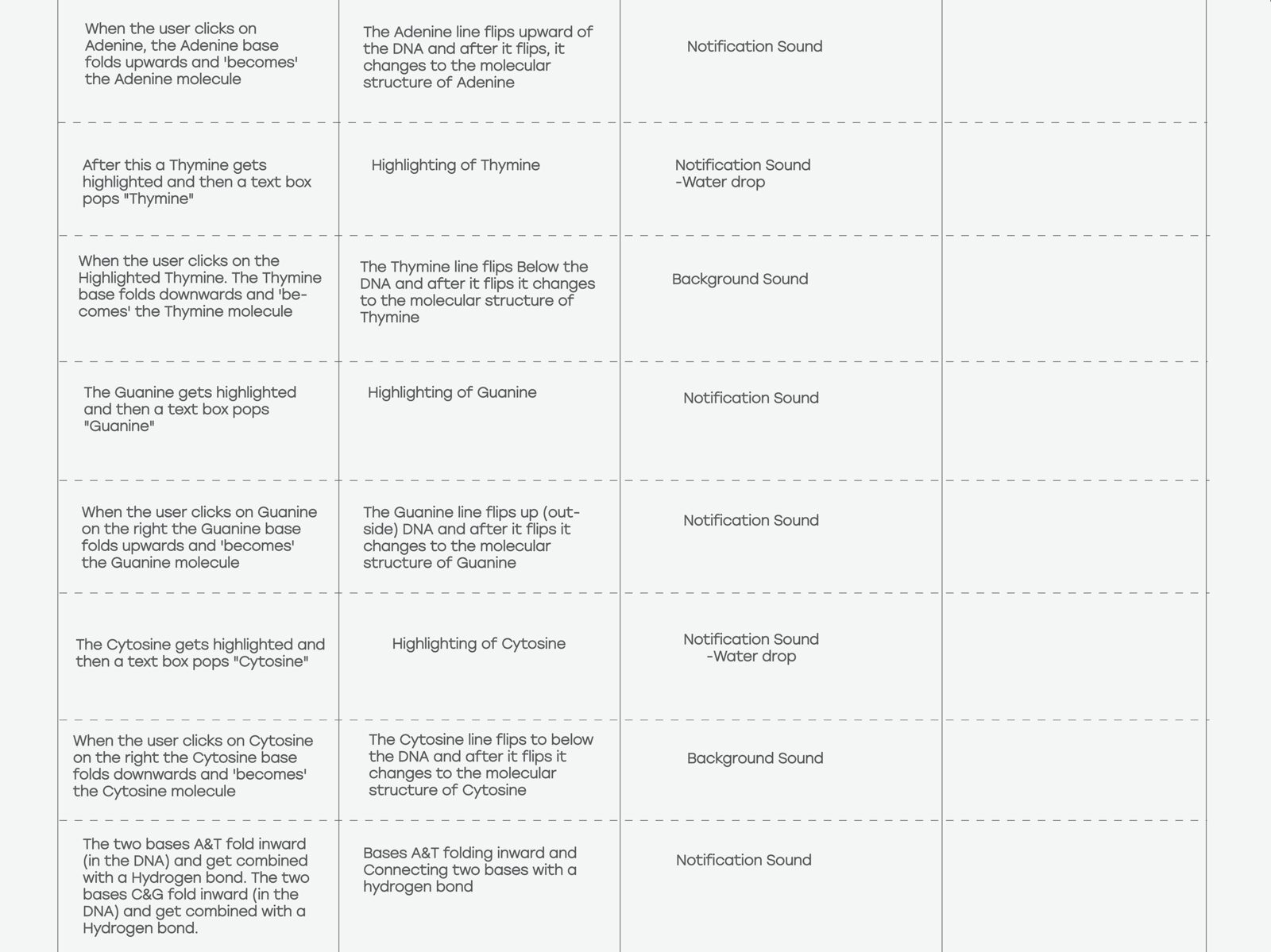
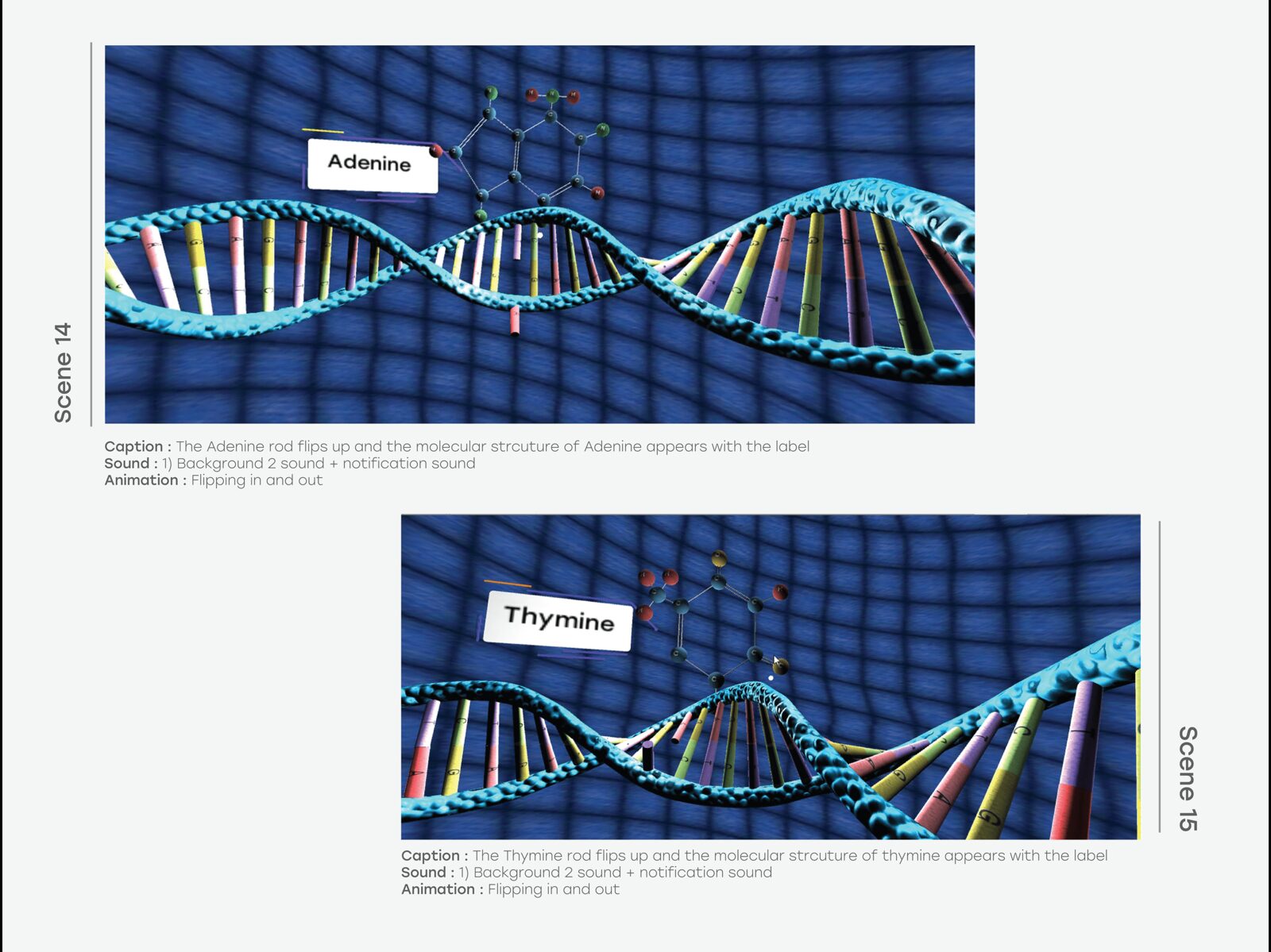
Adenine highlights and a text box pops up: “Adenine”.
Highlighting adenine
Notification sound
Two ways in
Explore it first, then construct it yourself

Explore
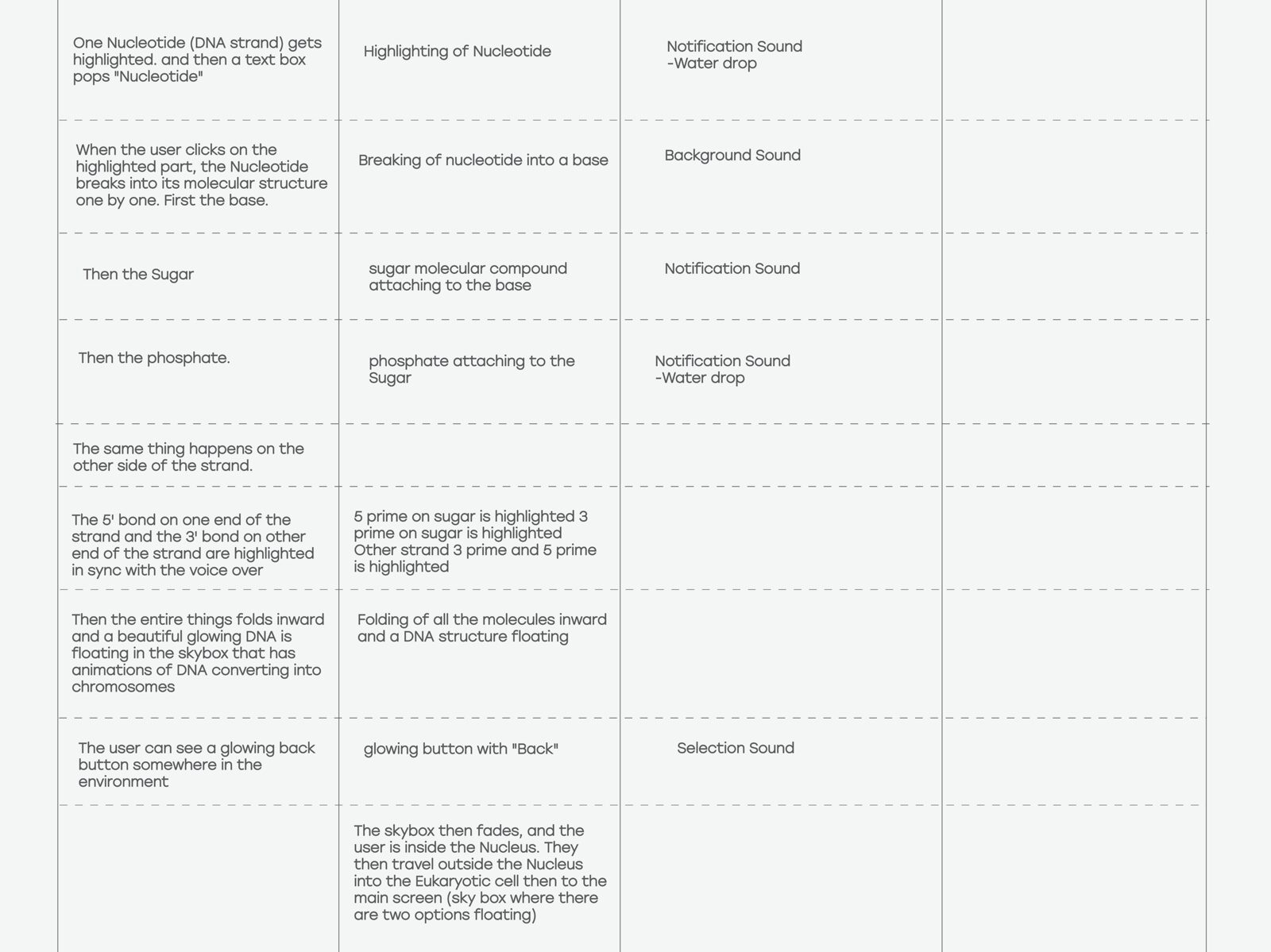
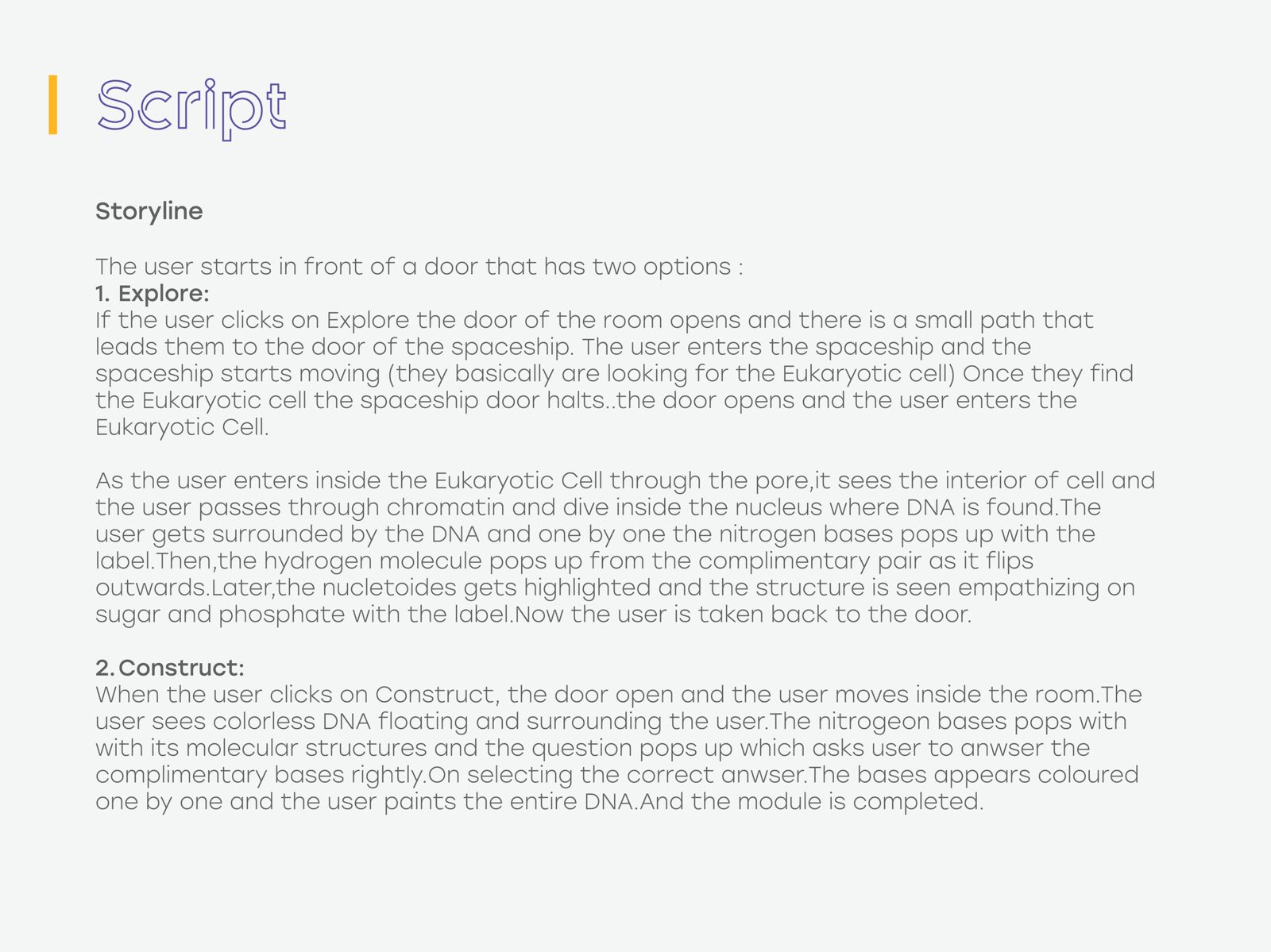
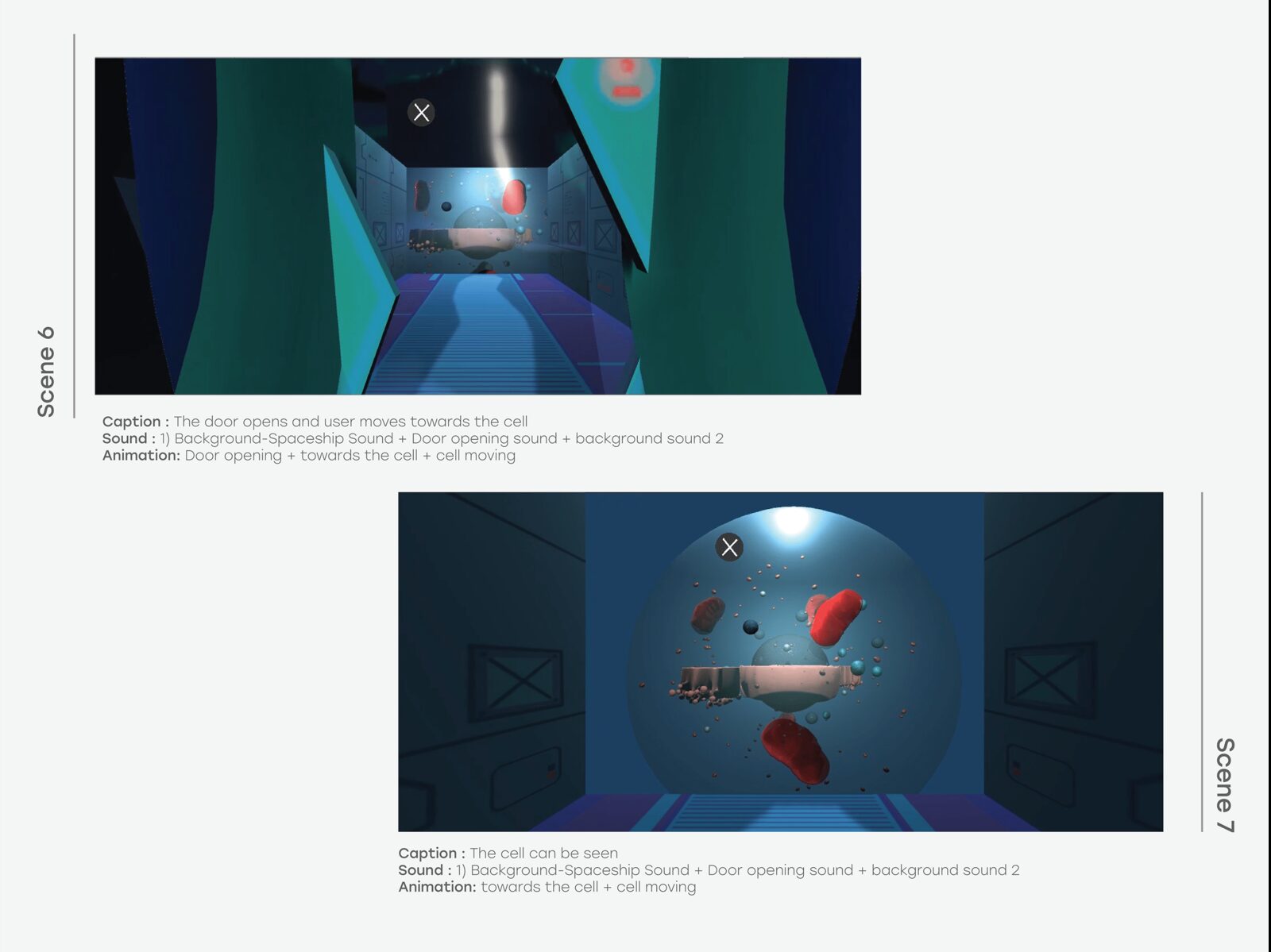
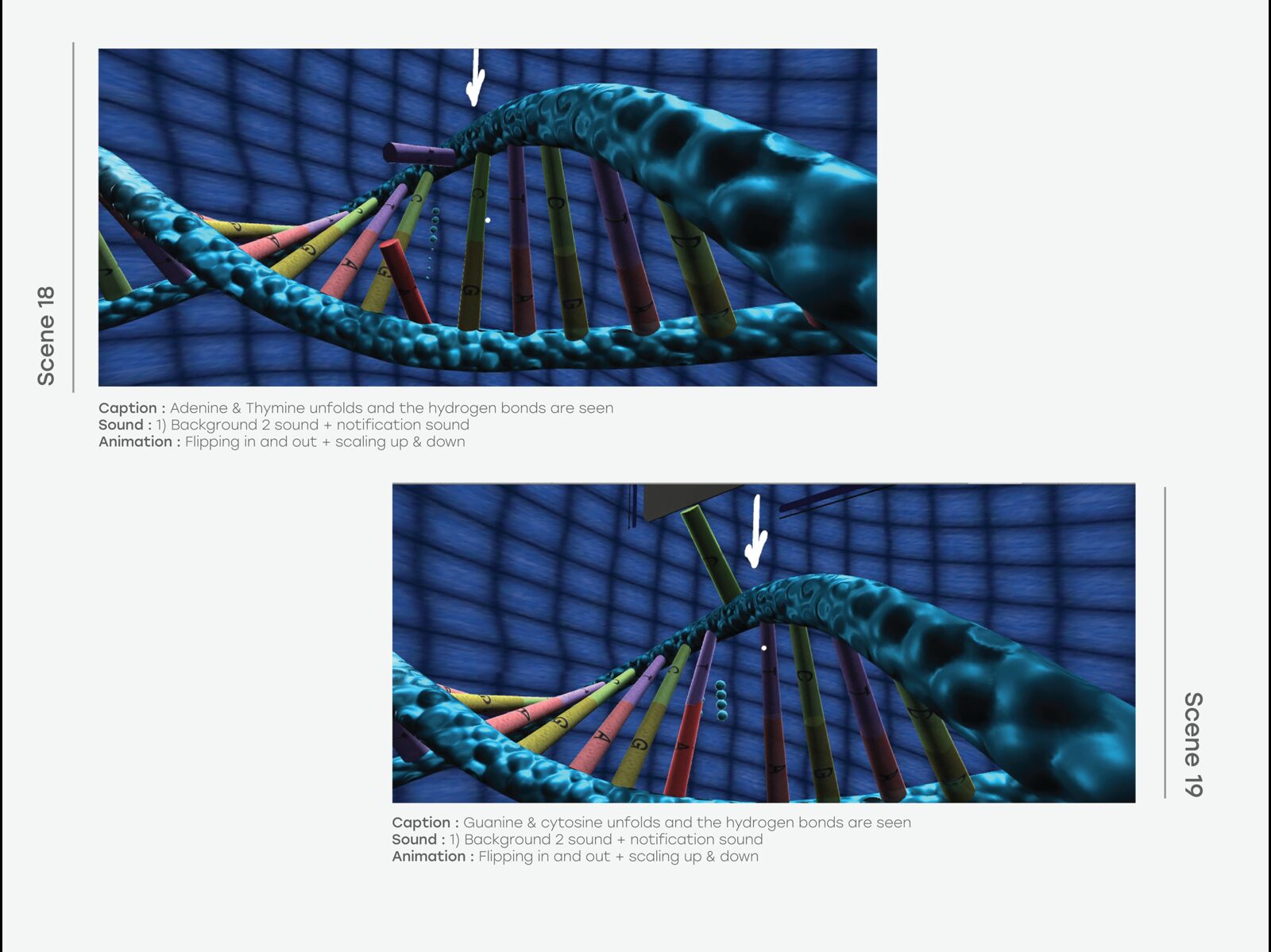
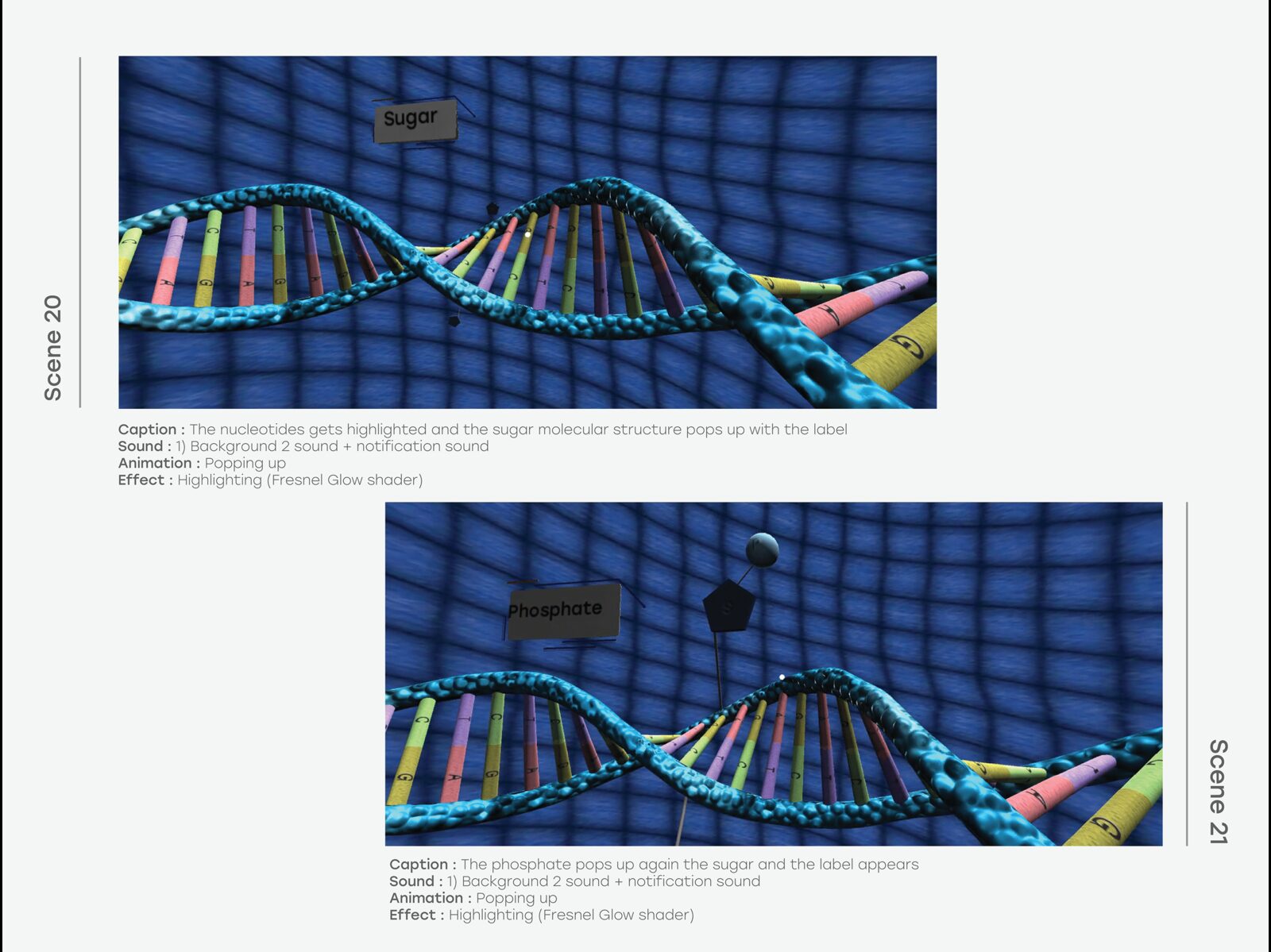
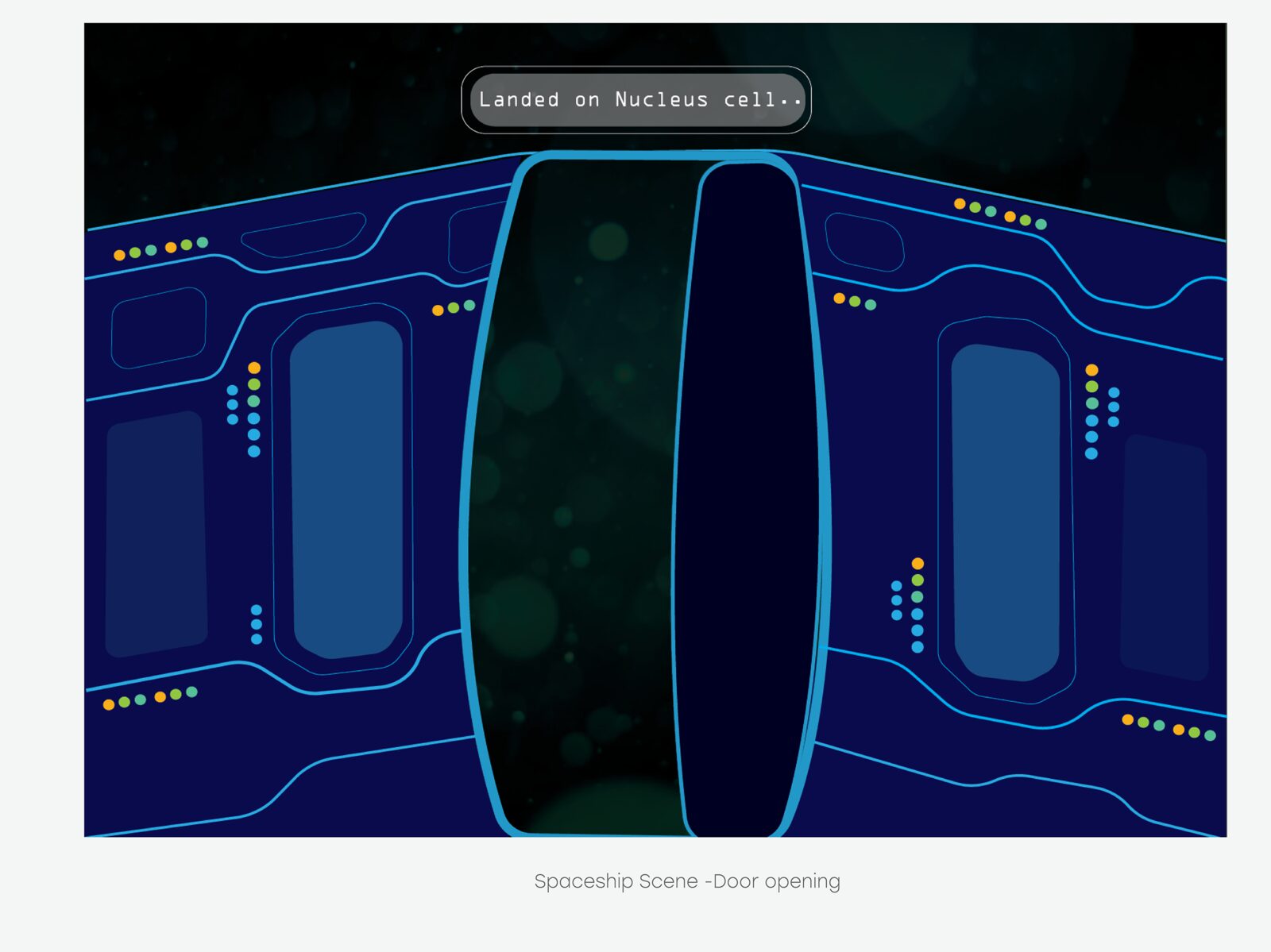
A door opens onto a path to the spaceship, which flies off to find the eukaryotic cell. Inside, learners pass through the pore and chromatin into the nucleus, where each base, the hydrogen bonds, then sugar and phosphate pop up with labels.

Construct
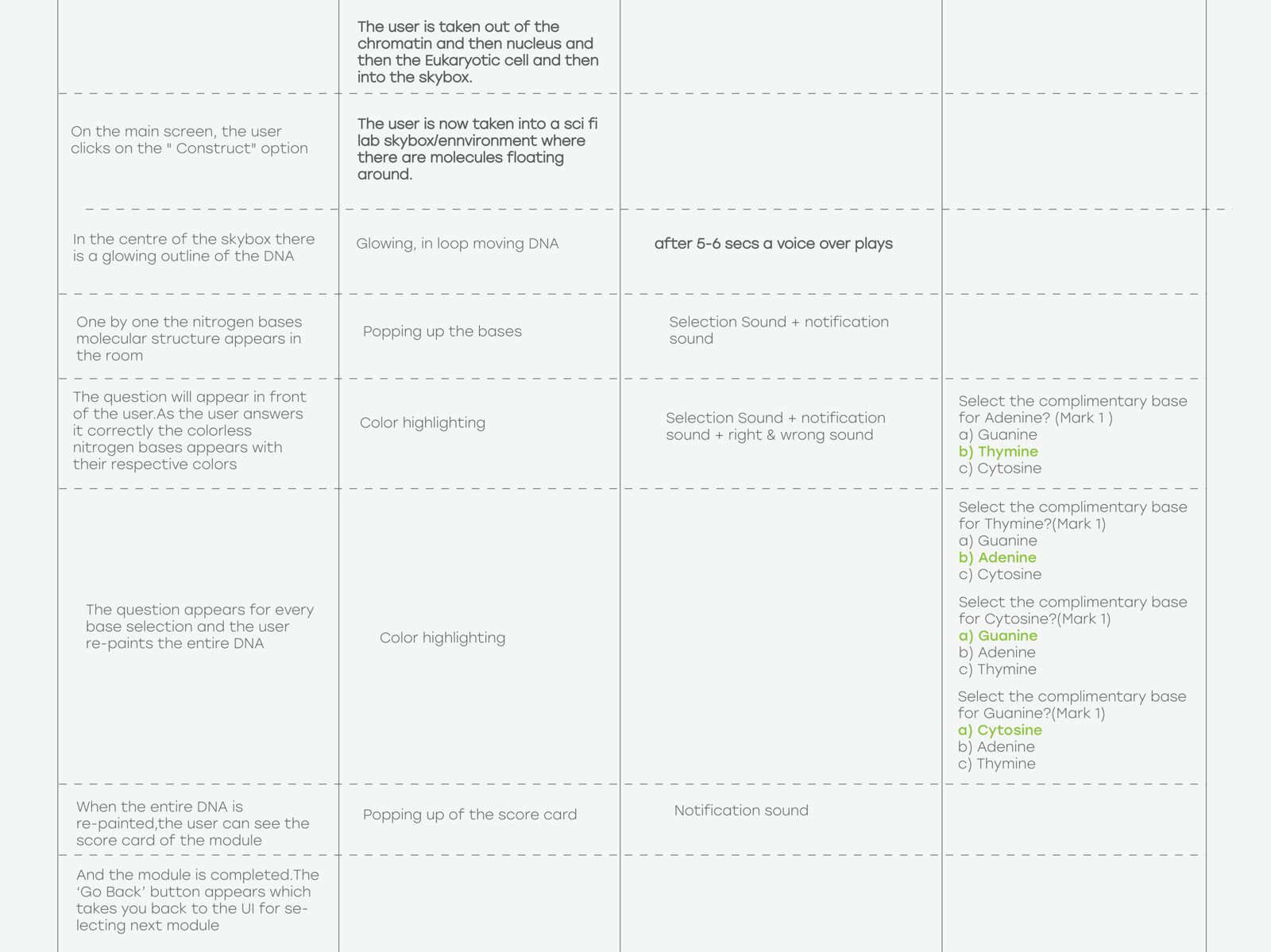
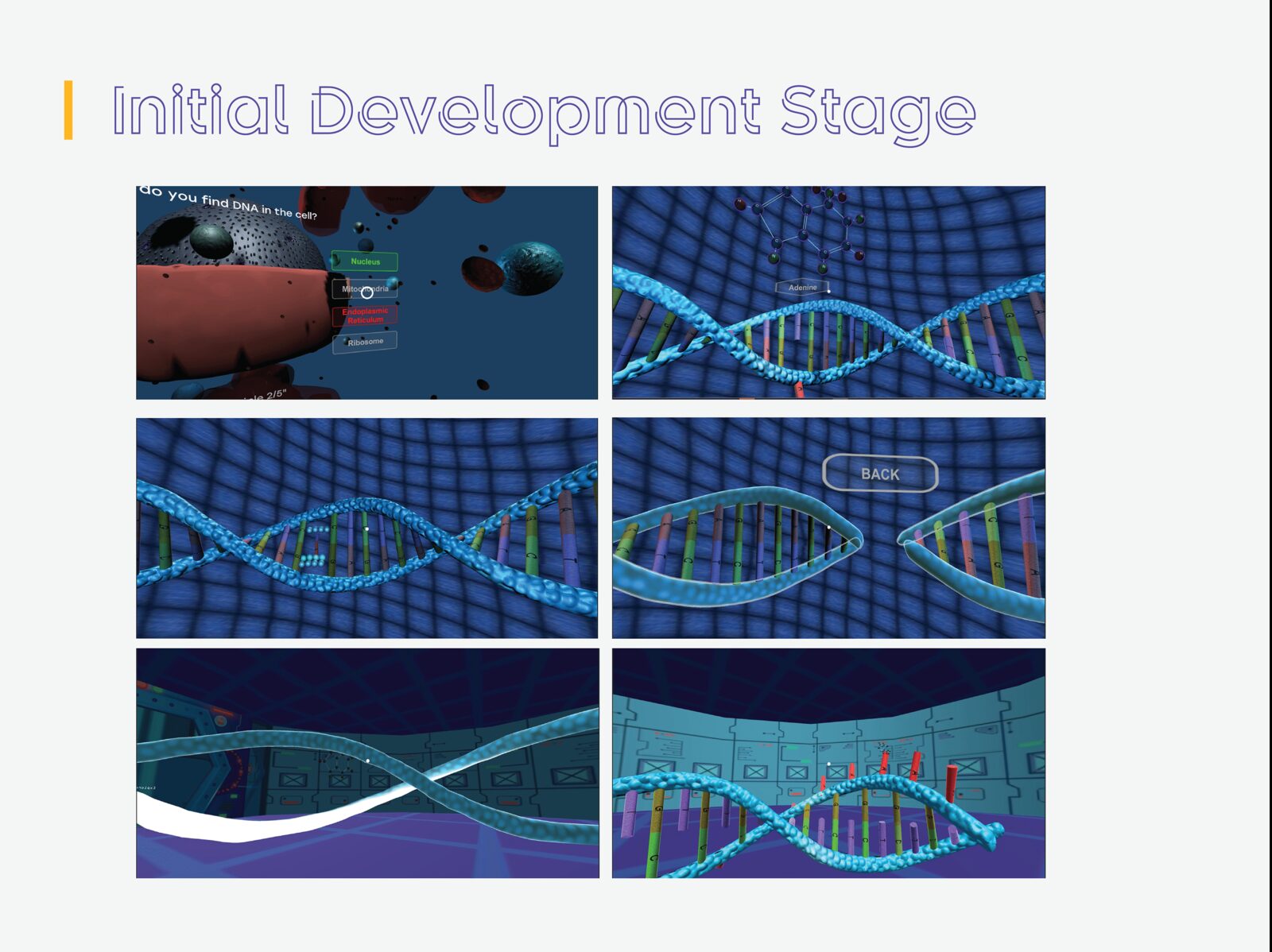
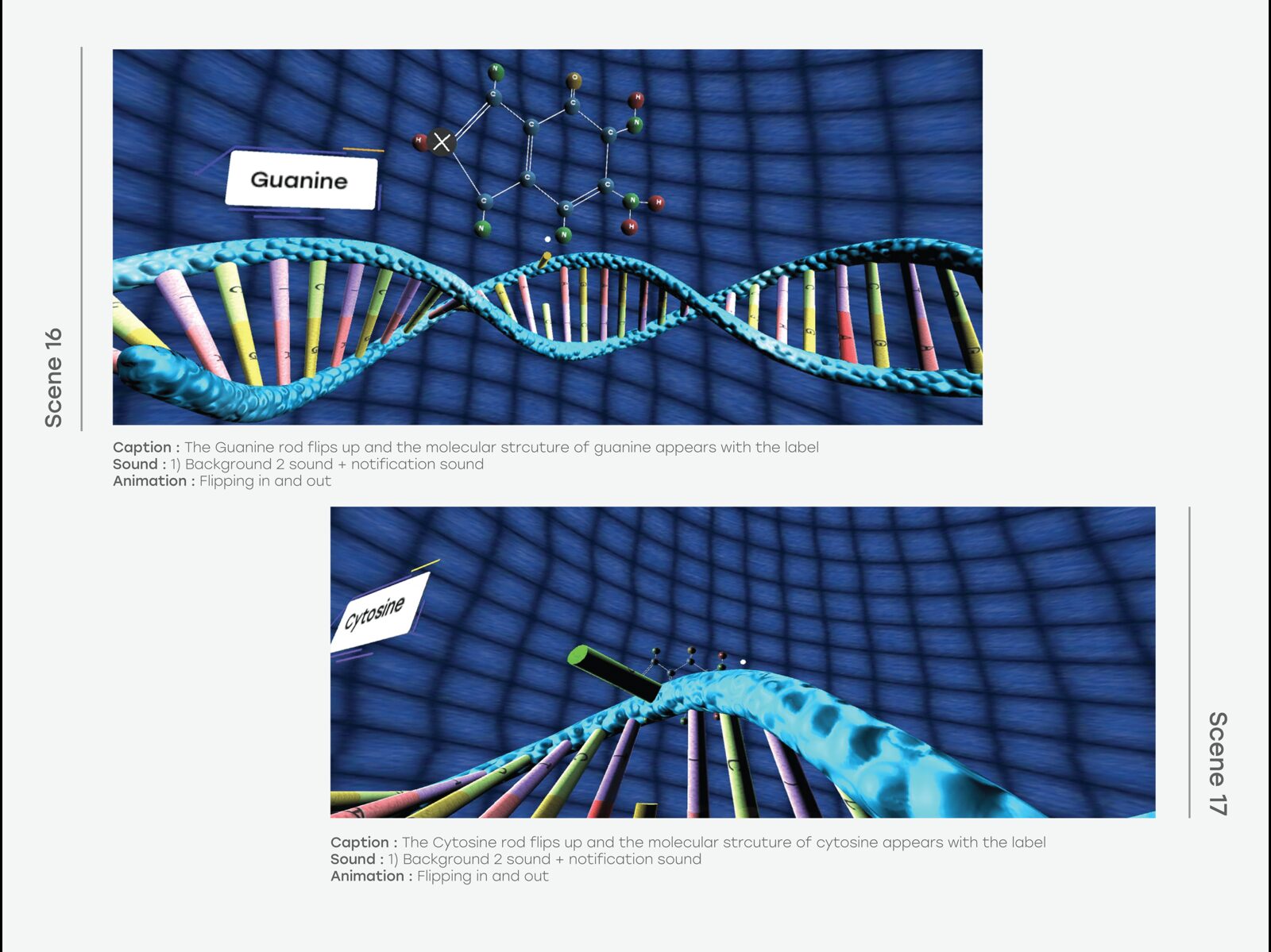
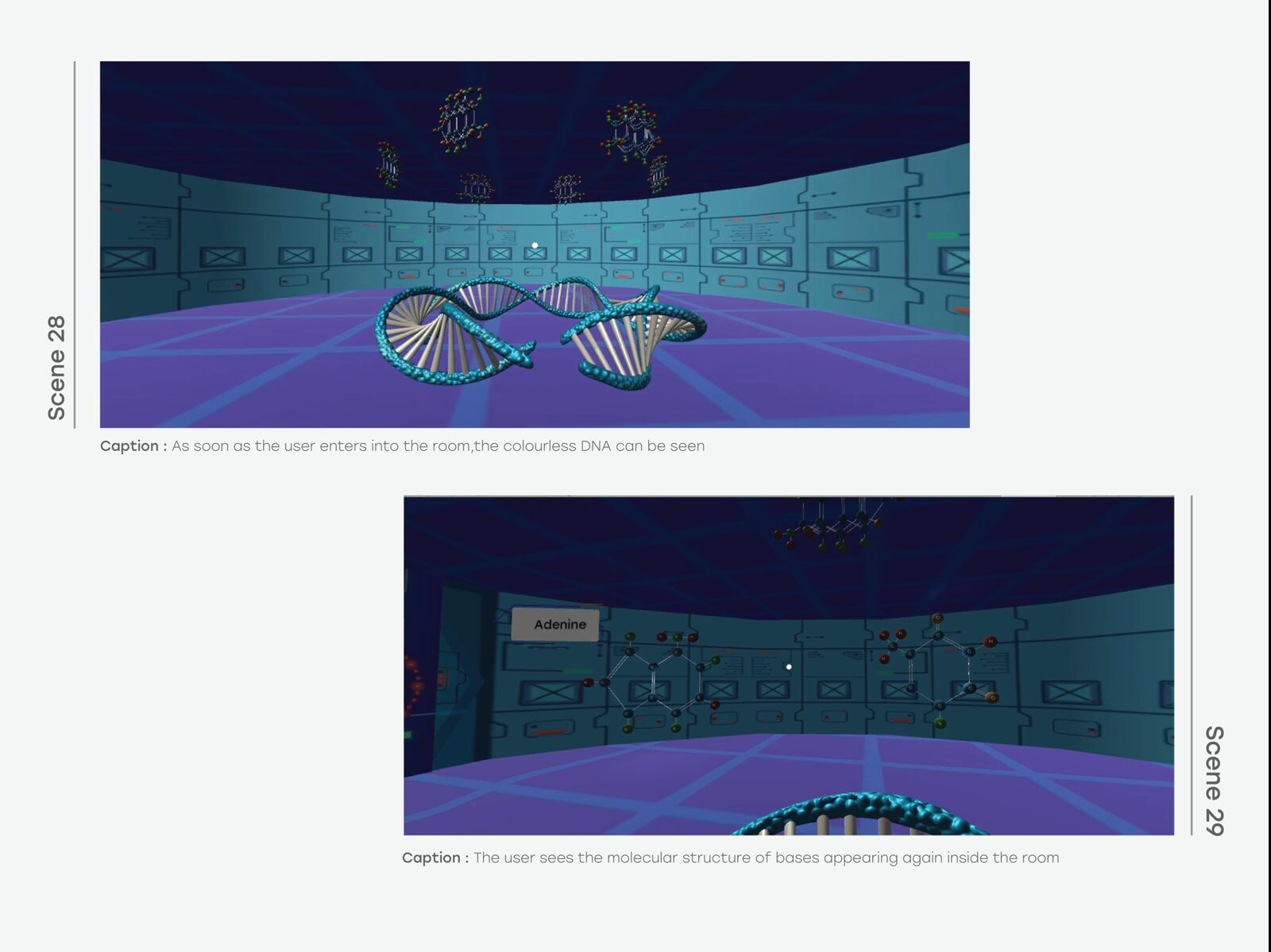
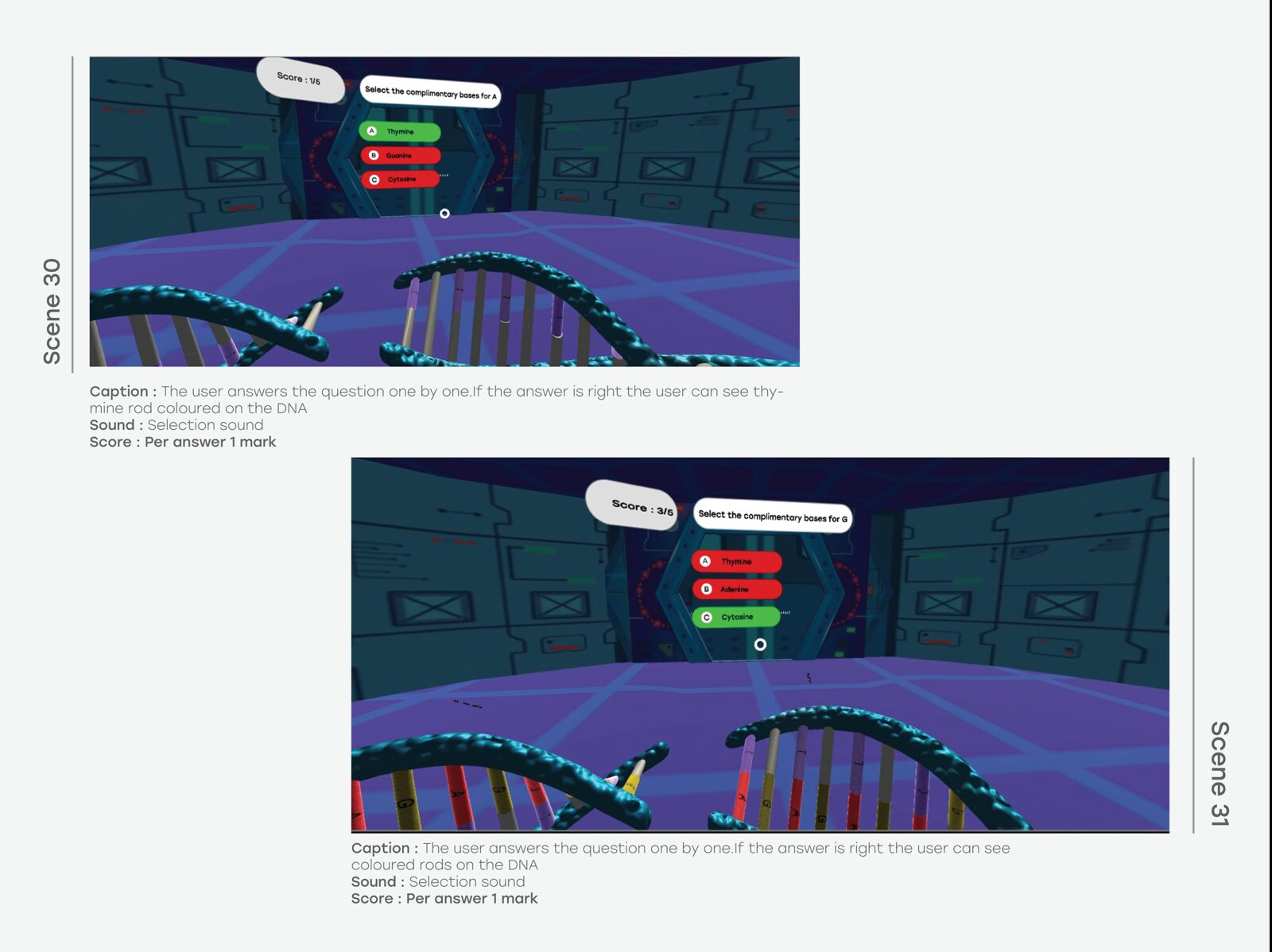
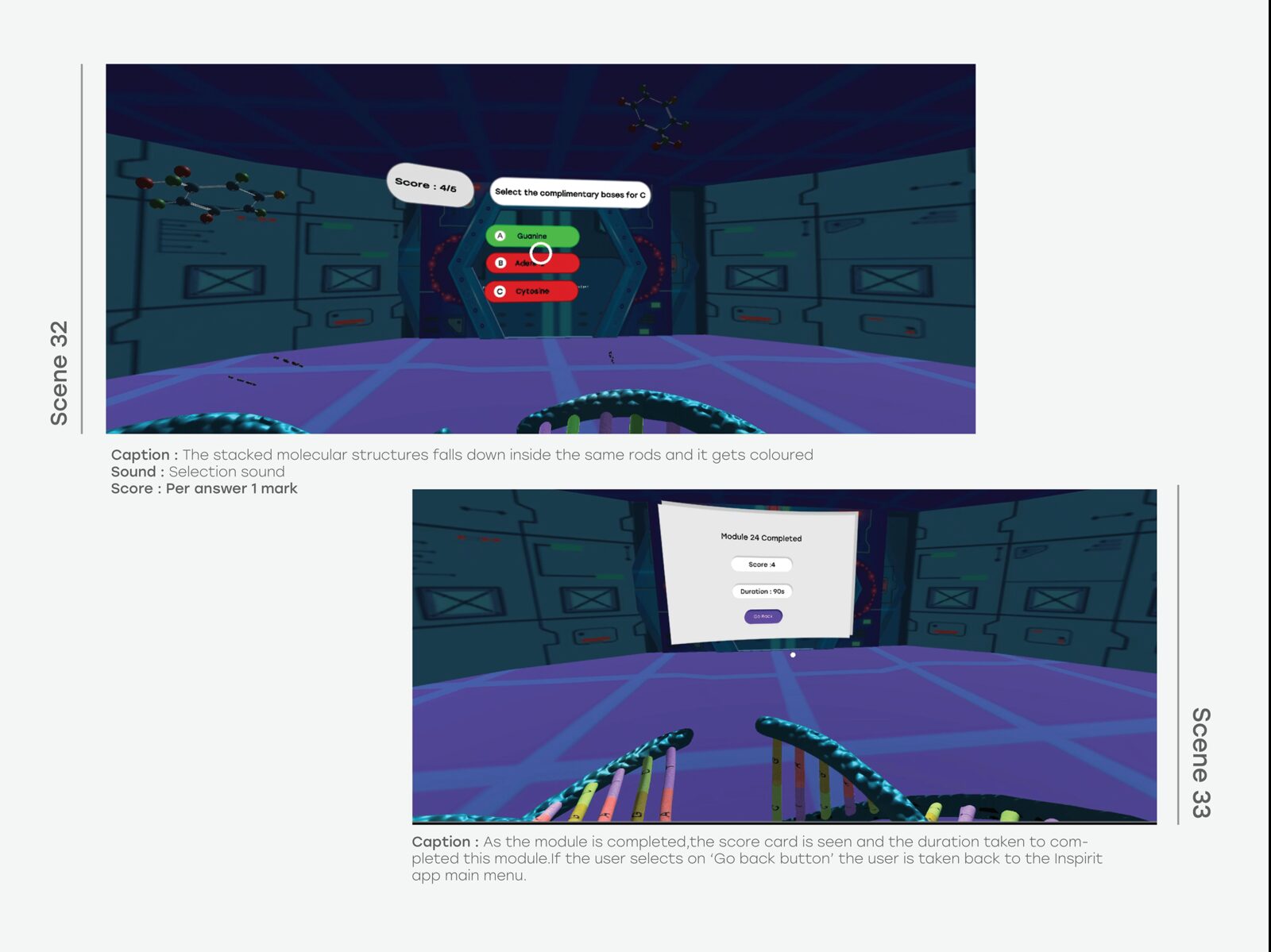
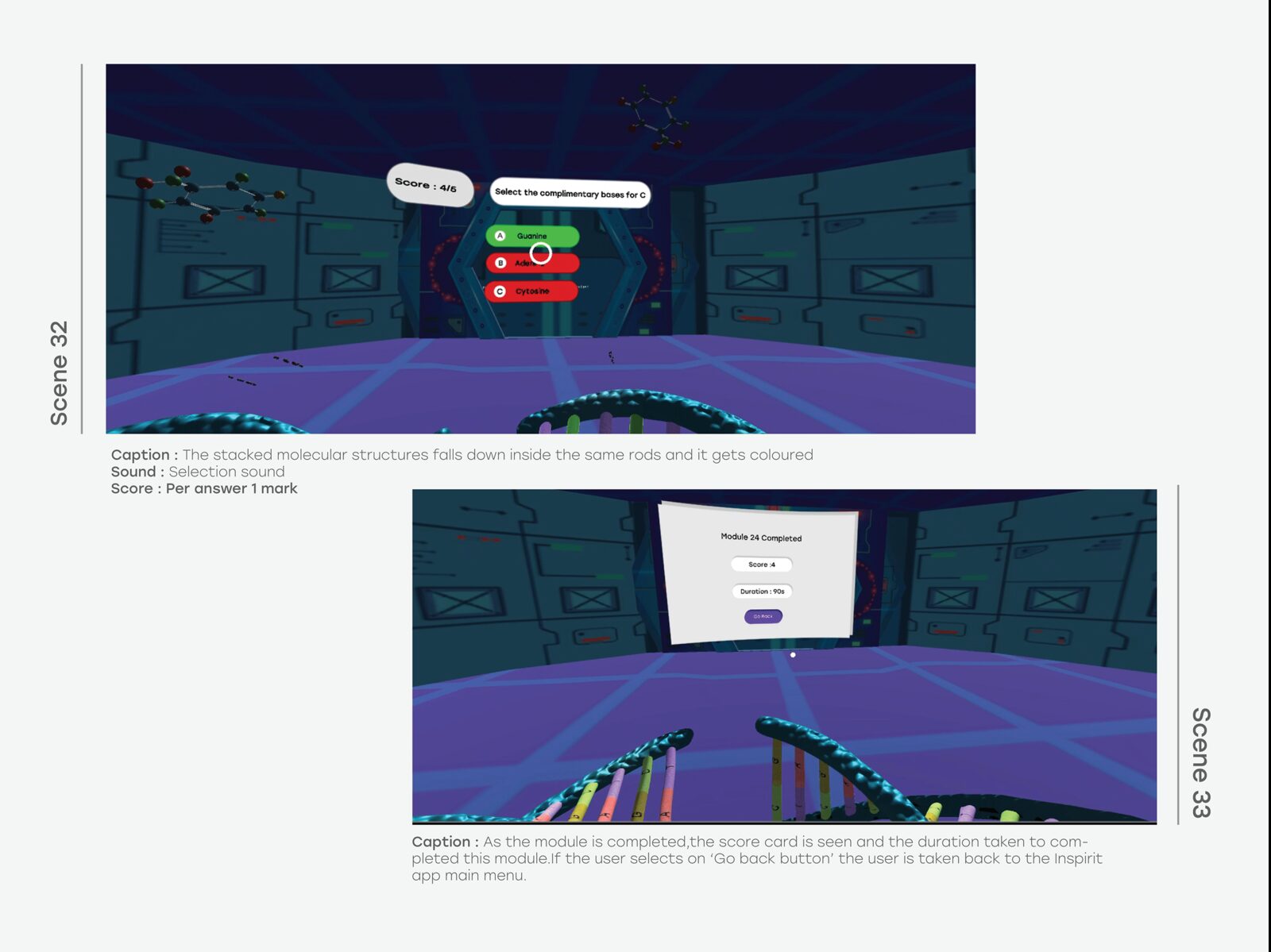
Colorless DNA floats around the learner. Each base appears with its molecular structure and a question asks for its complementary pair. Every right answer colors a base, until the learner has painted the entire DNA.
Microinteractions
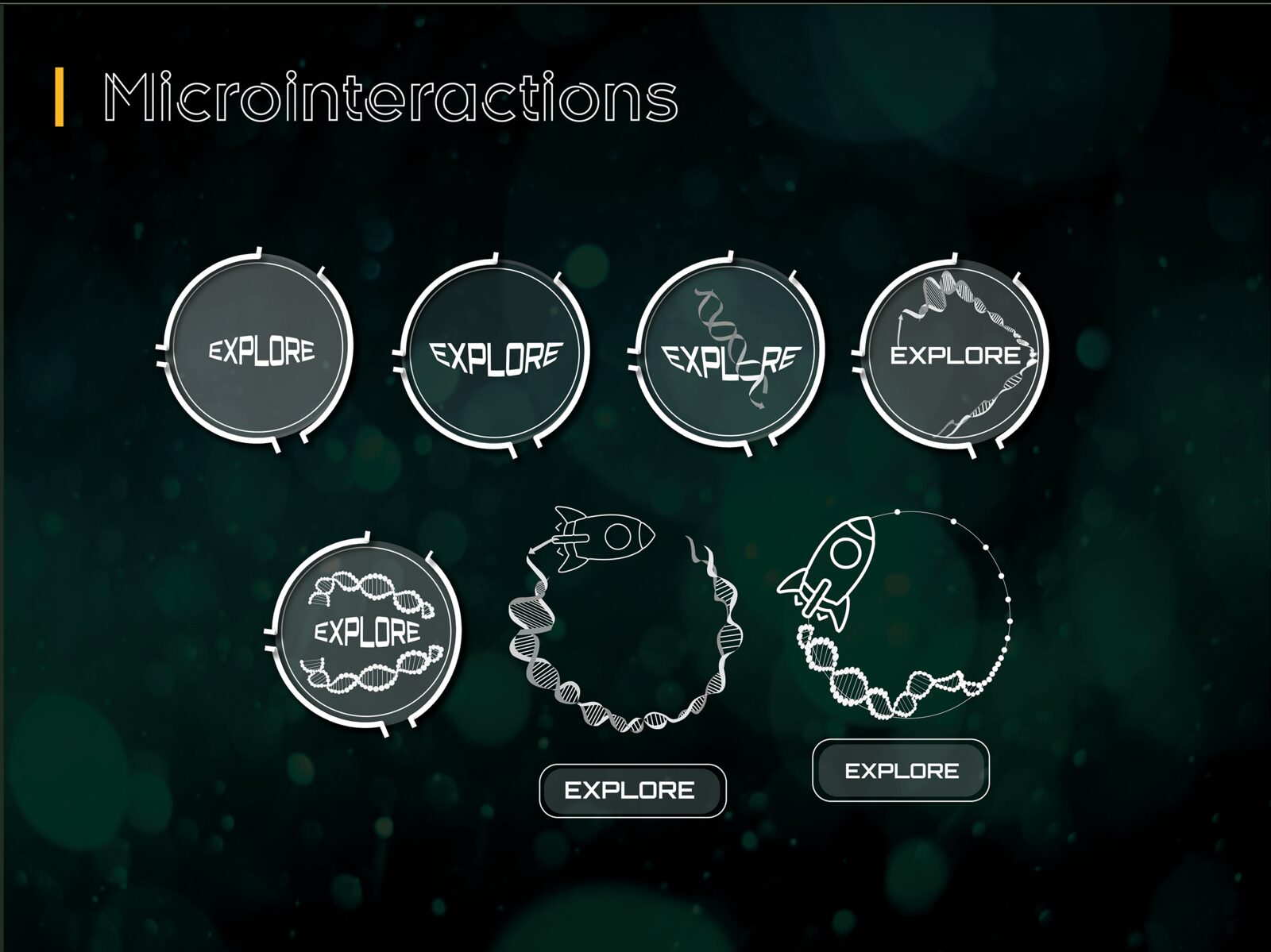
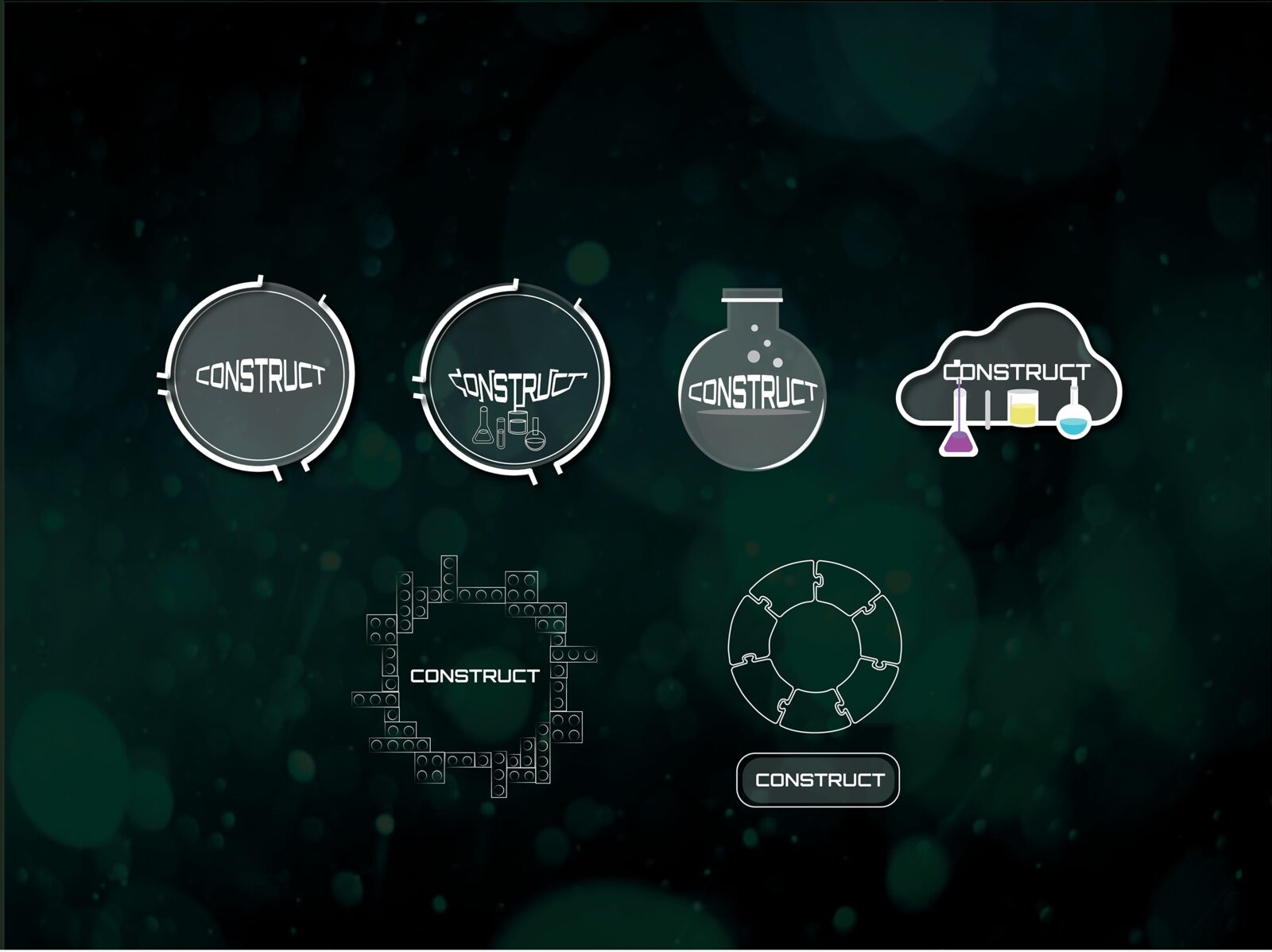
Modelling & development
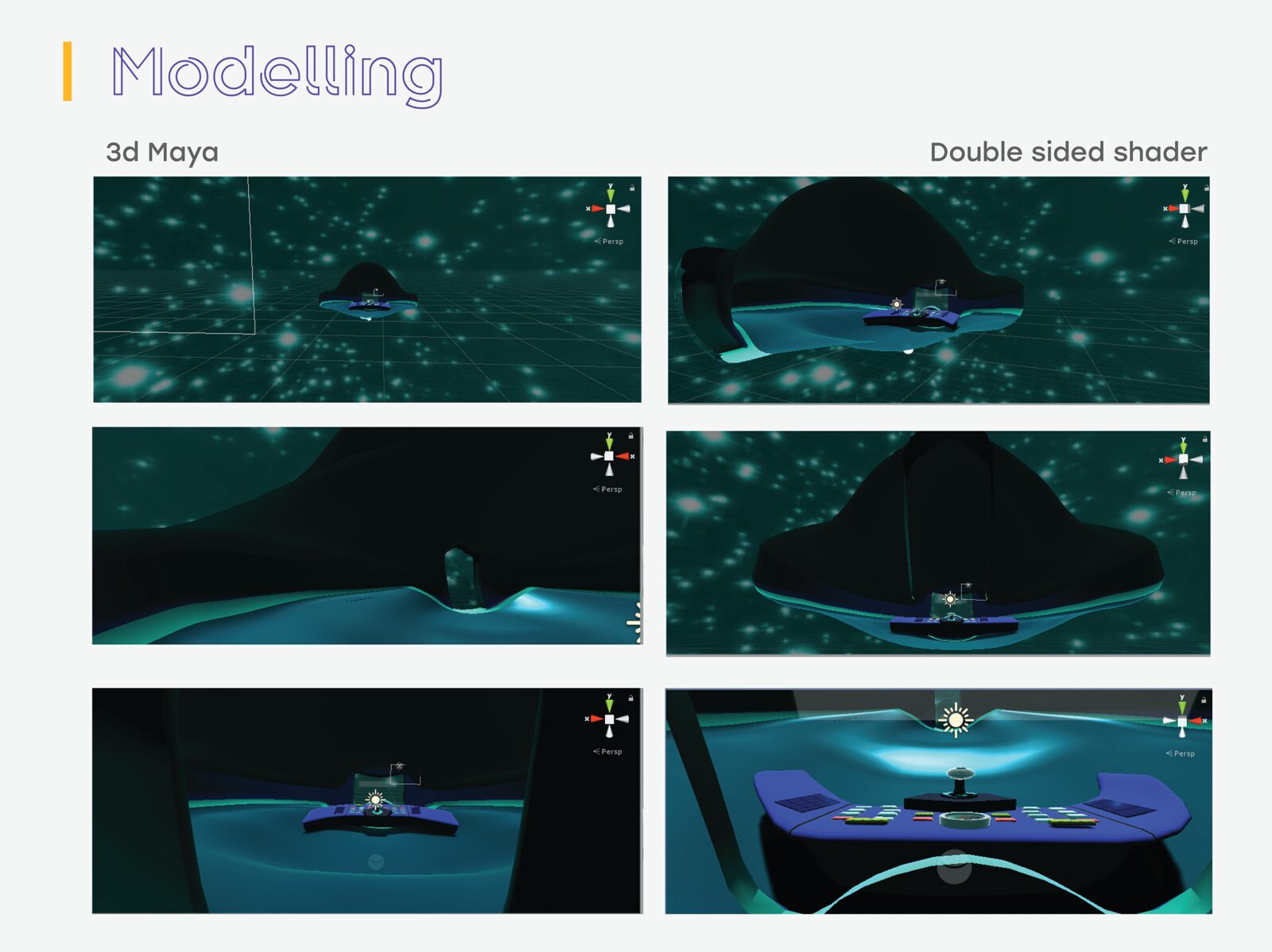
Designed in 2D, modelled in Maya, built in Unity
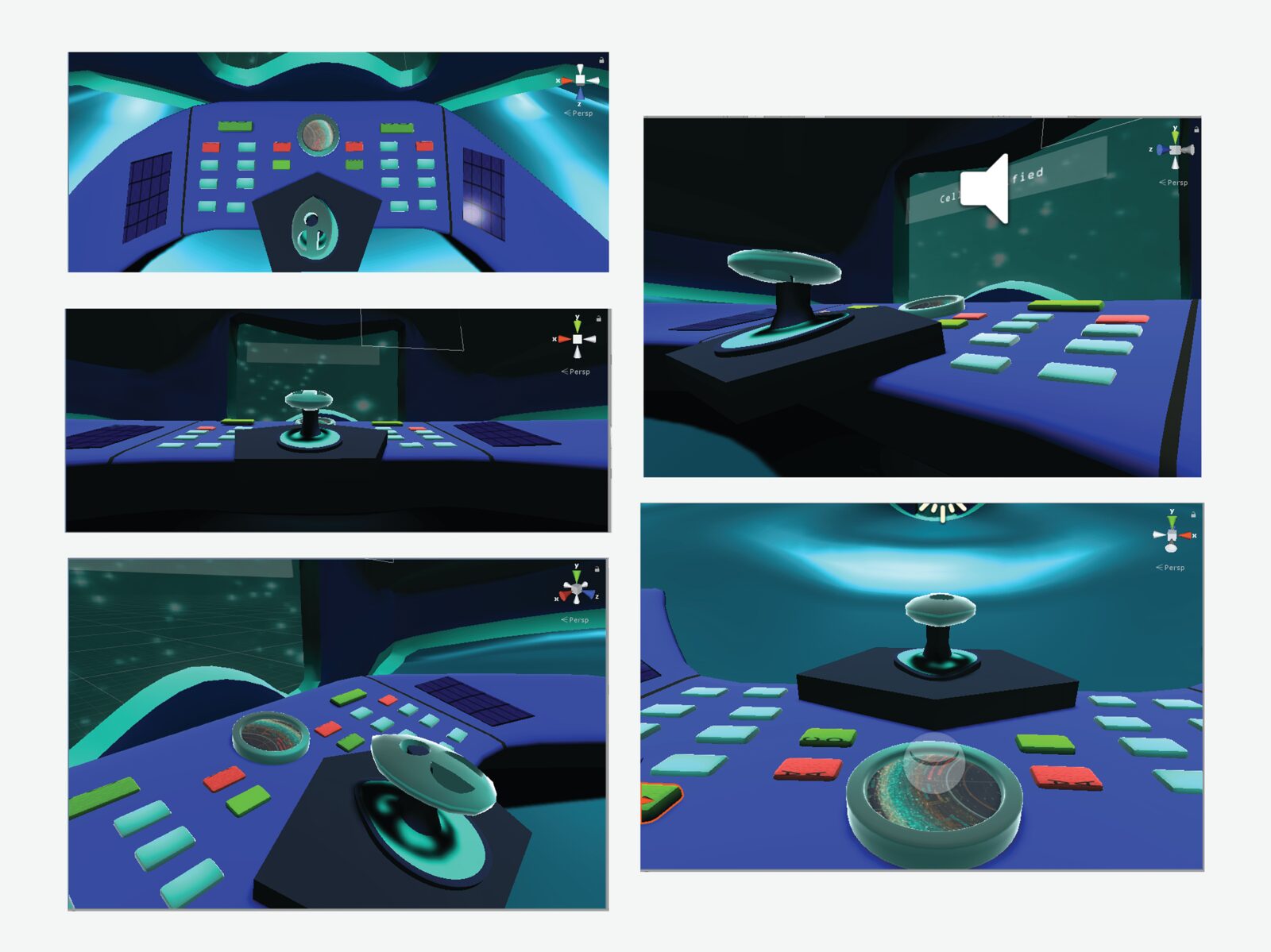
A double-sided shader for the spaceship hull, and a Fresnel glow shader to highlight each part of DNA.
Scene by scene
Every scene specified for caption, sound, animation and effect
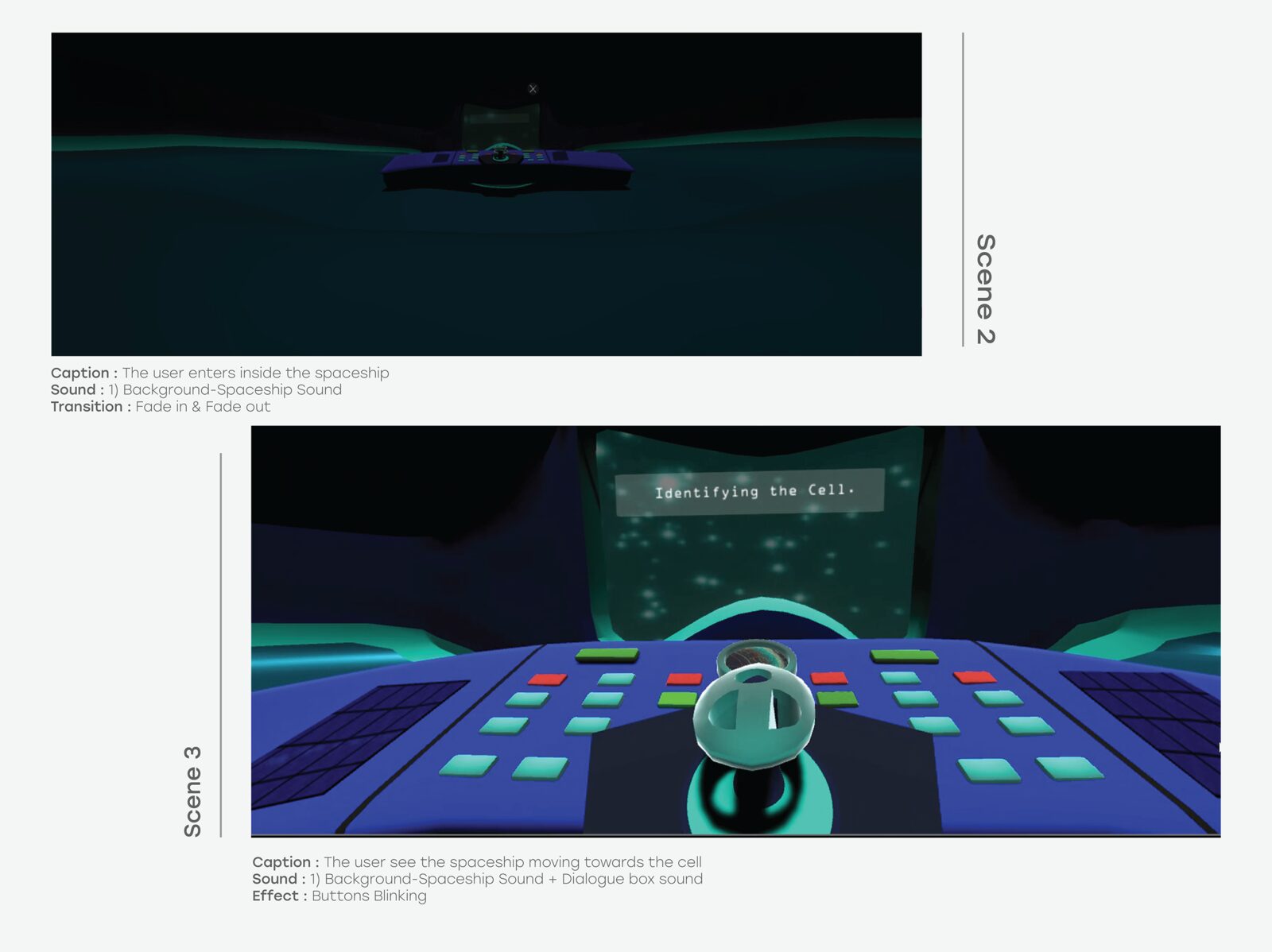
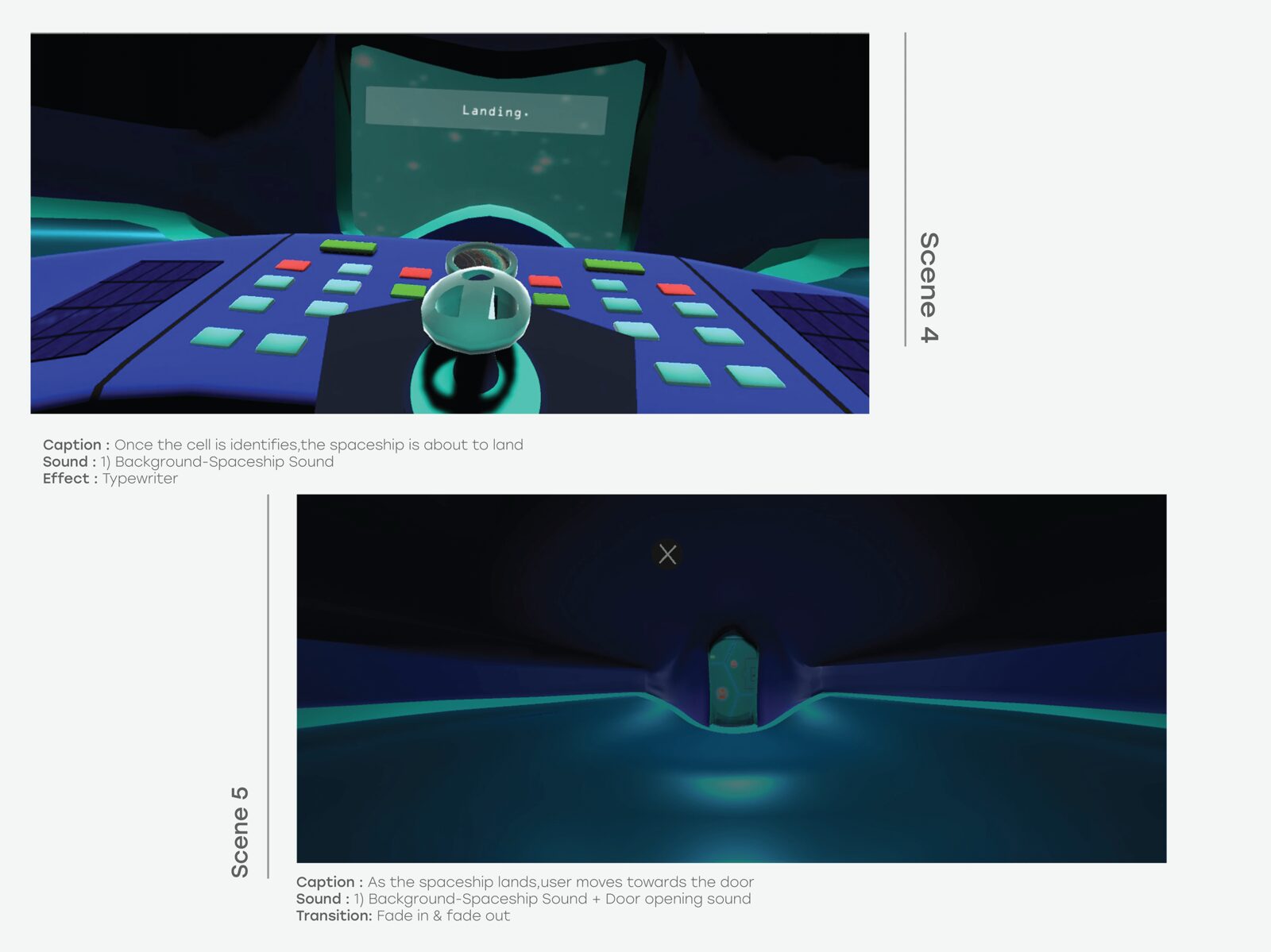
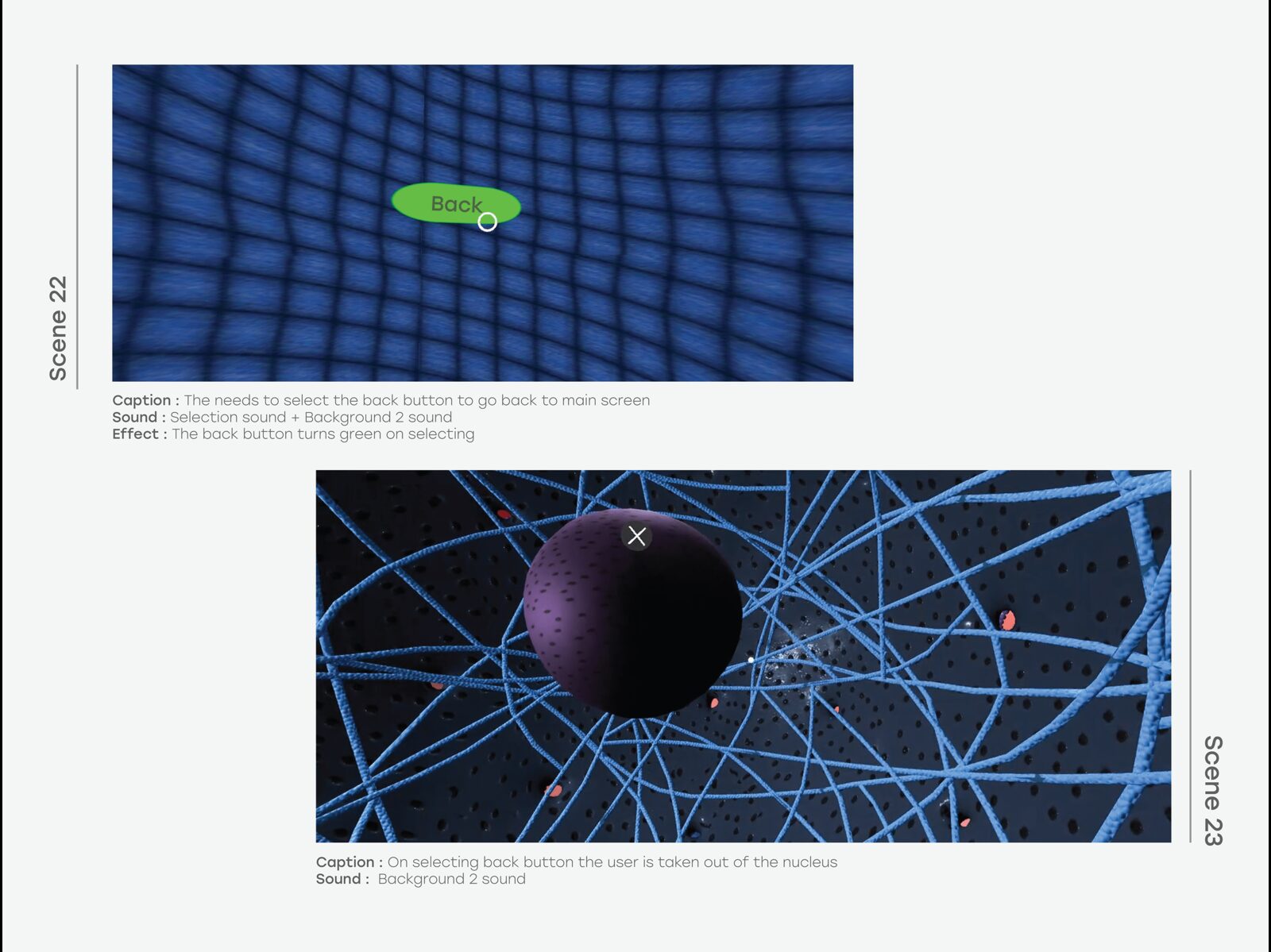
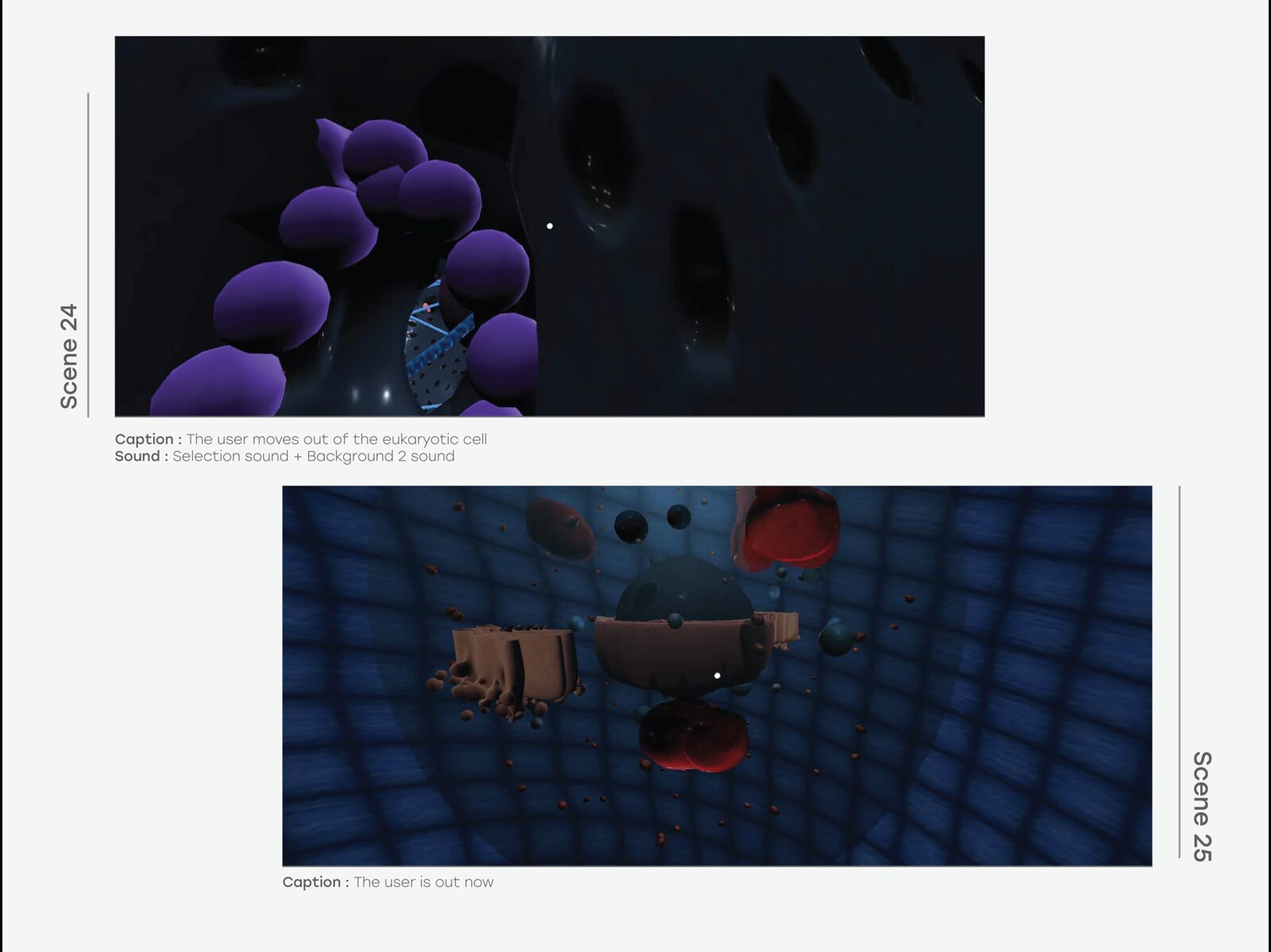
All 33 scenes were specified with caption, sound, animation and effect. In order:
Learning assessment
Questions inside the world, and a score at the end
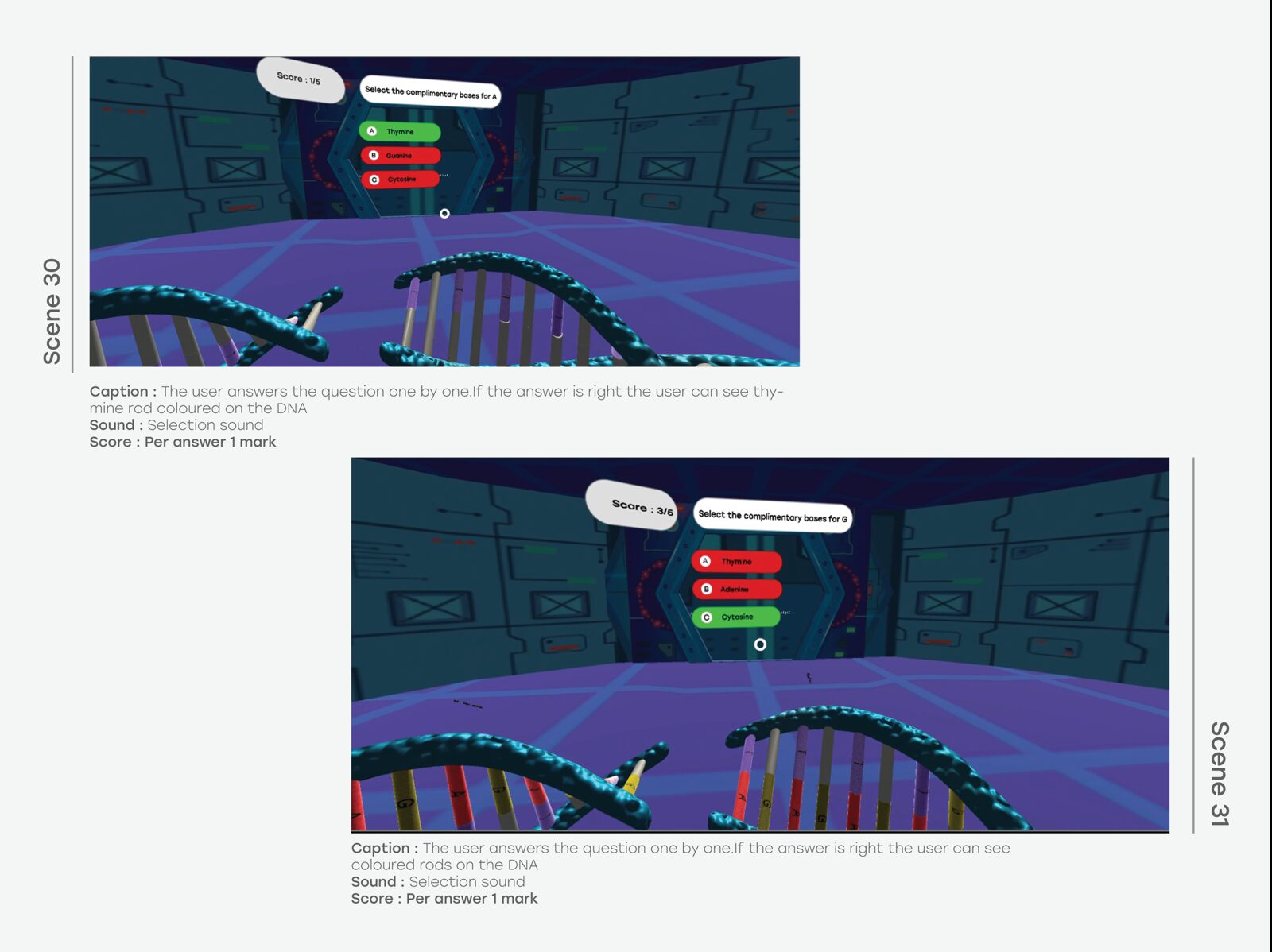
In-world questions
Questions appear at key moments, like “Where do you find DNA in the cell?” as the learner enters the cell.
Right and wrong feedback
Distinct sounds, and green or red answers, confirm each choice instantly.
A score card to finish
“Module completed” shows the score and time taken, then returns to the Inspirit main menu.
INDUSTRY MENTORS
Aditya Vishwanath and Amrutha Vasan, co-founders of Inspirit VR
ACADEMIC MENTOR
Prof. Shakti Banerjee, HOD, Immersive Media Design
Graduation internship project at Inspirit VR (December 2019, 4 weeks). This page shows my role and contributions.
MORE PROJECTS
All work