
VisaGenie · AI visa assistant · 2025
Empowering transparent visa journeys
An AI chatbot that gives free, professional-quality visa guidance, flags illegal employer charges, and explains why an application was rejected.
Lead UX Researcher & Designer
Research, personas, prioritization, IA, UI and testing · 12 weeks


Heads up: employers can't legally charge most visa fees. If yours is asking for money upfront, open the fraud guide.

ROLE
Lead UX Researcher & Designer

RESEARCH
47 interviews · 312 surveys · 9 experts

STACK
GPT-4 · LangChain · Pinecone · Flask

DURATION
12 weeks, discovery to validated prototype
95%
conversion to first message, up from 20% with onboarding
2 min
average time from landing to answer
92%
task success: users got what they needed
3.2
questions per session
Measured in flow testing of the validated prototype.
The problem
Visa applications aren’t just confusing. They’re systematically exploitative.
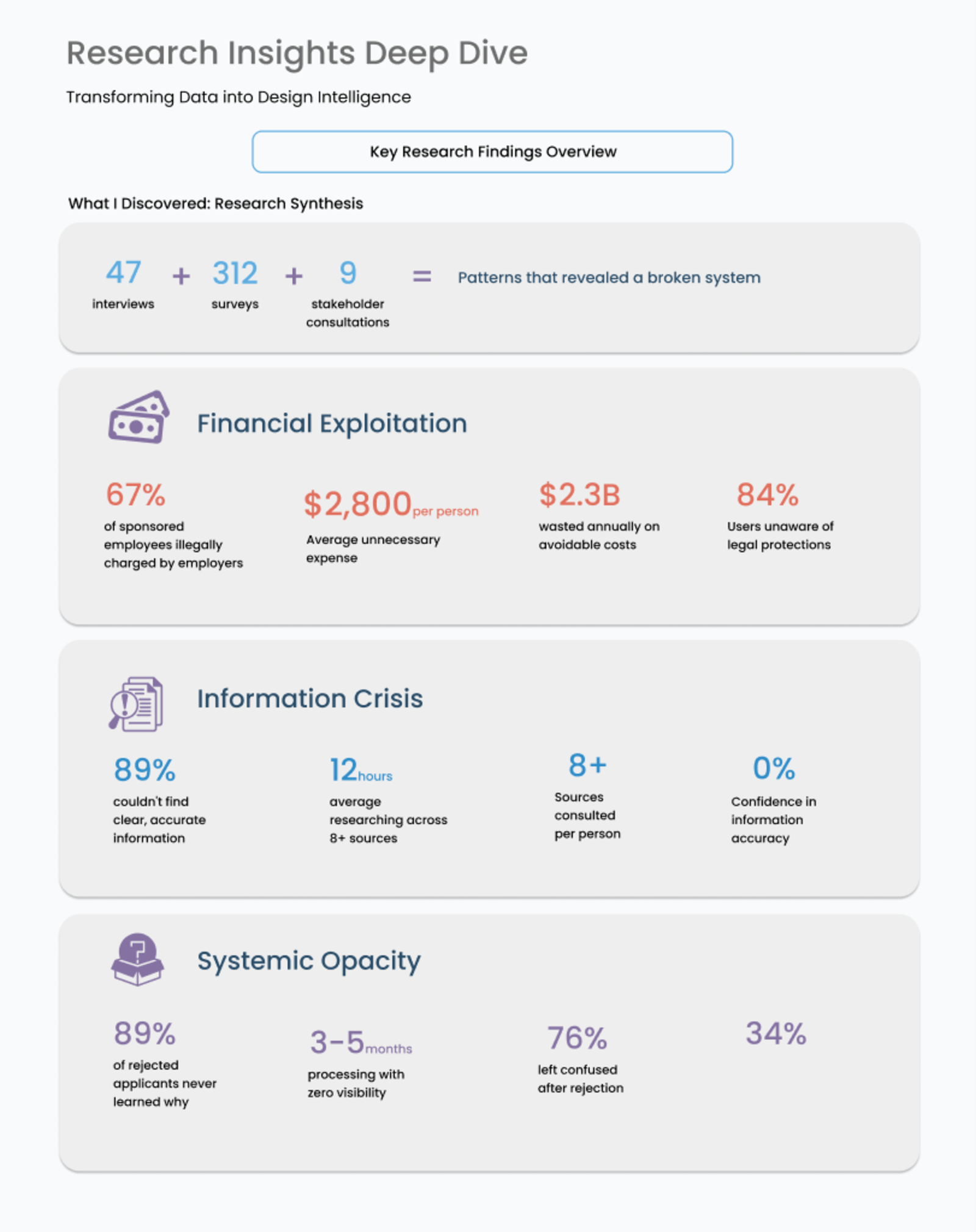
From 47 interviews and 312 survey responses: a $2.3B problem hiding in plain sight.

Financial exploitation
67%
of sponsored employees illegally charged by employers
$2.3B
wasted annually on unnecessary fees
84%
don’t know sponsors’ legal responsibilities

Information crisis
89%
can’t find clear, accurate information
12+ hrs
researching across 8+ sources
$500–5k
paid to agents for basic guidance

Systemic opacity
89%
of rejected applicants never learn why
34%
reapply without improvements and fail again
3–6 mo
of processing with zero visibility
Chris, research participant
Research methodology
Mixed methods across five countries
Four weeks of discovery across the US, Canada, UK, Australia and Germany, with consent protocols and secure data storage.
47
User interviews
45–60 minutes each, with current applicants and recent completers: pain points, costs, employer experiences.
312+
Survey responses
Quantitative validation of interview findings, plus cost analysis and rejection-rate data.
9
Stakeholder interviews
3 immigration lawyers, 2 former visa agents and 4 HR professionals who handle sponsorship.
Personas
Three people, 89% of the pain points
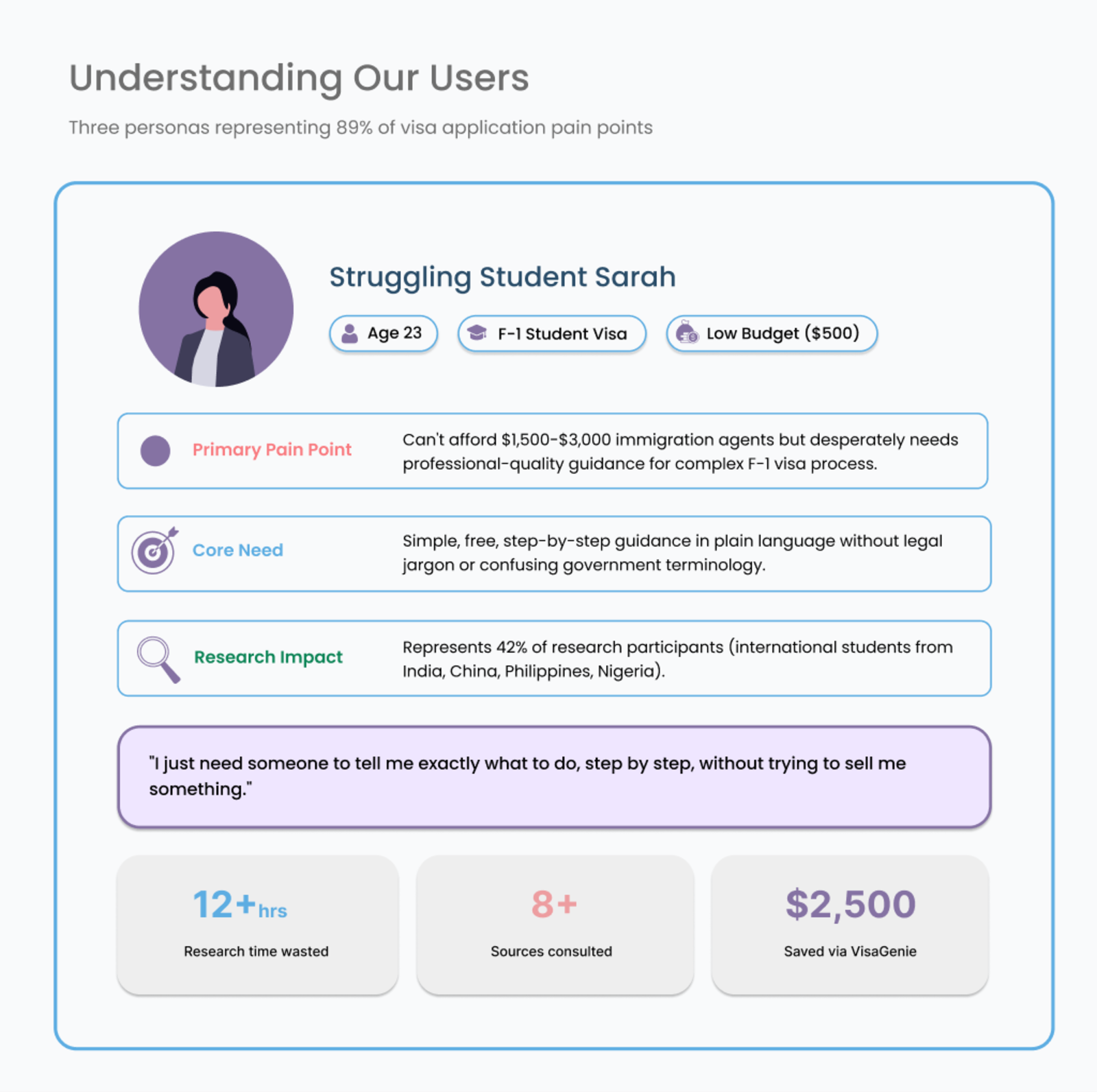
Struggling Student Sarah
23 · F-1 student visa · $500 budget
“I just need someone to tell me exactly what to do, step by step, without trying to sell me something.”
PRIMARY PAIN
Can’t afford $1,500–3,000 agents but needs professional-quality guidance.
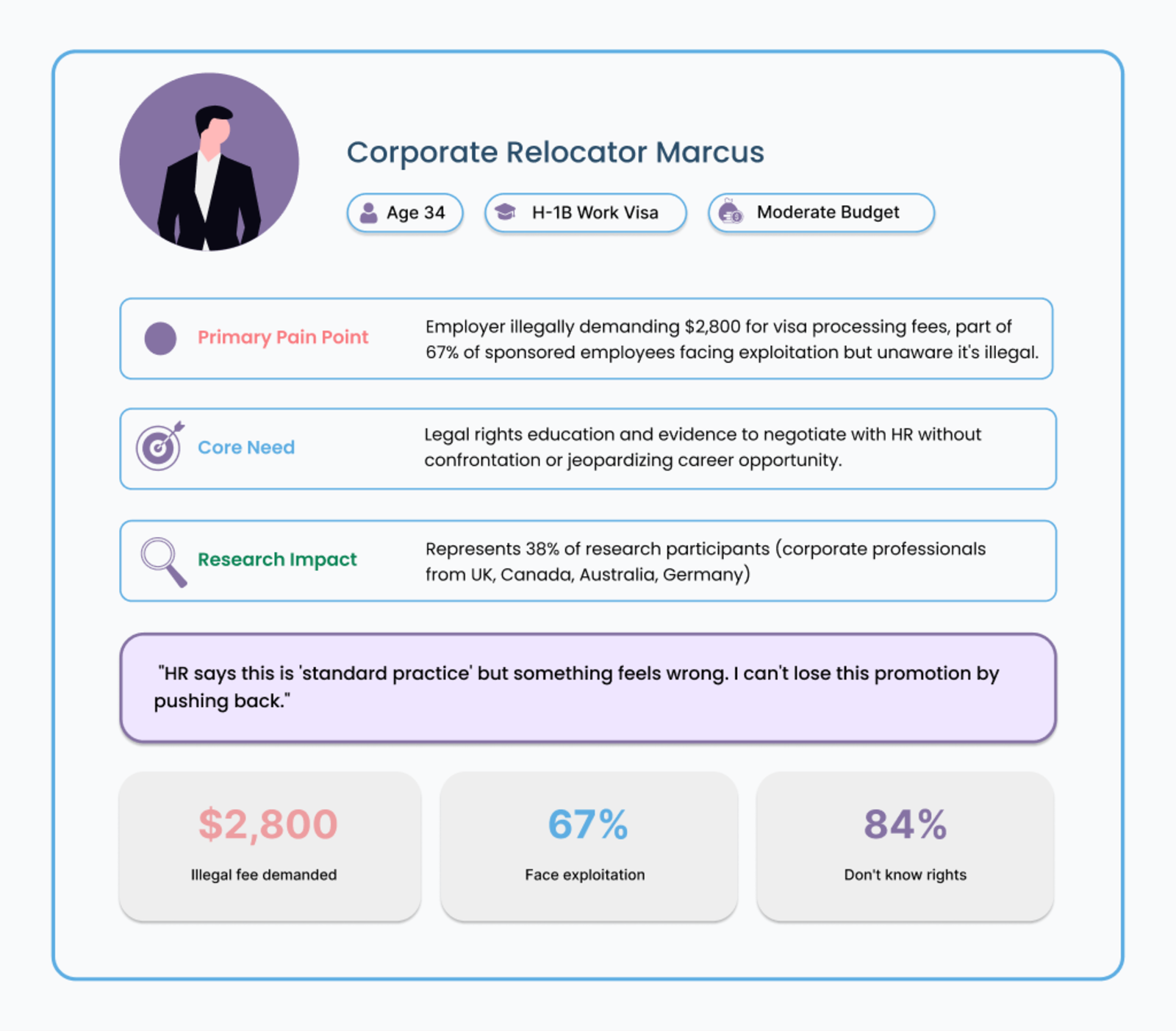
Corporate Relocator Marcus
34 · H-1B work visa
“HR says this is ‘standard practice’ but something feels wrong. I can’t lose this promotion by pushing back.”
PRIMARY PAIN
Employer illegally demanding $2,800 in visa fees, unaware it’s illegal.
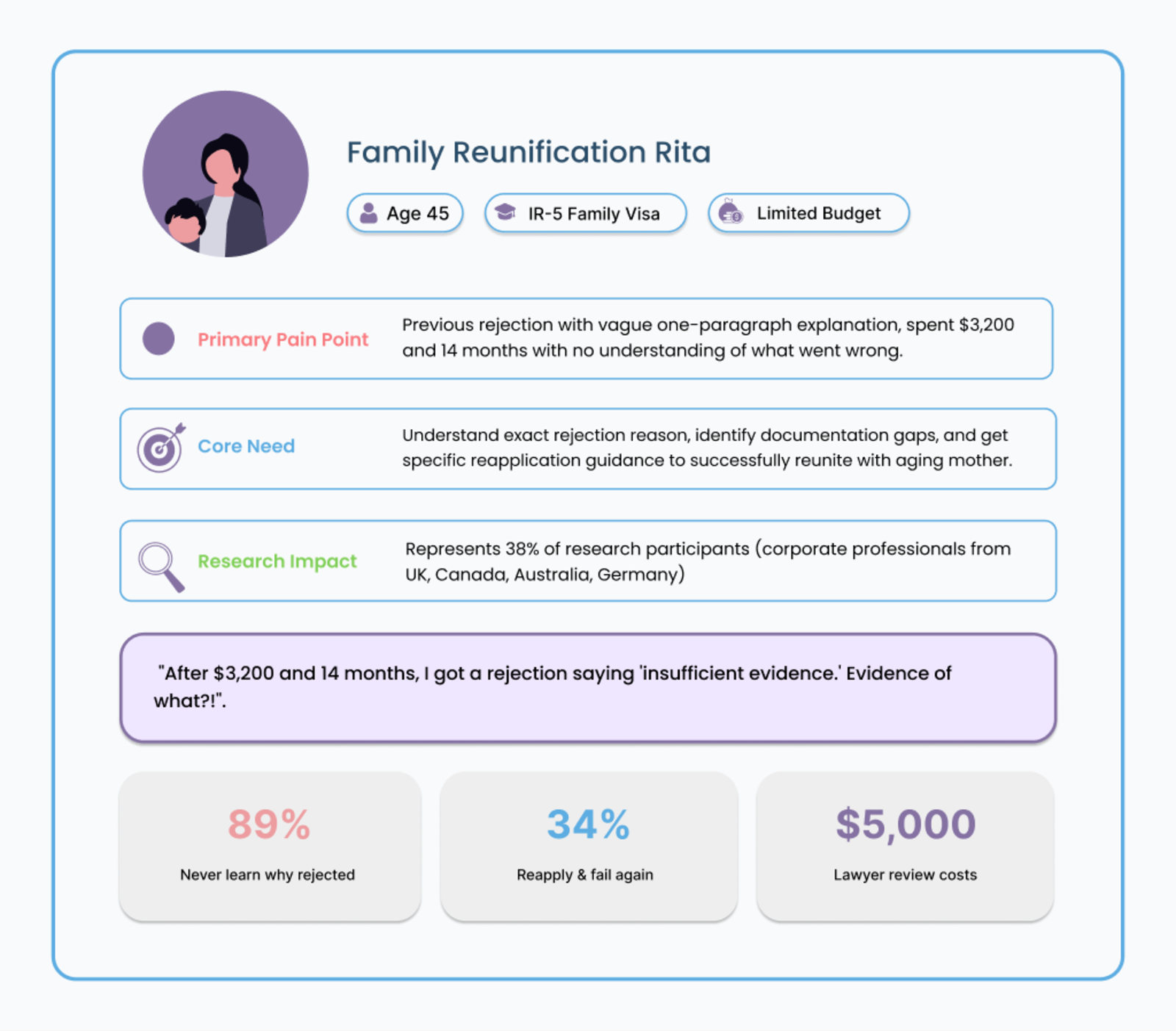
Family Reunification Rita
45 · IR-5 family visa
“After $3,200 and 14 months, I got a rejection saying ‘insufficient evidence.’ Evidence of what?!”
PRIMARY PAIN
Rejected with a one-paragraph explanation and no idea what went wrong.
How might we
12 design challenges from 359 data points
Each theme became HMW statements before any feature was chosen. Six of the twelve:
FINANCIAL EXPLOITATION
How might we protect users from illegal employer practices without requiring legal expertise?
FINANCIAL EXPLOITATION
How might we eliminate the need for expensive agents for basic applications?
INFORMATION CRISIS
How might we centralize fragmented visa information without overwhelming users?
INFORMATION CRISIS
How might we ensure users trust the information they receive?
SYSTEMIC OPACITY
How might we help rejected applicants understand what went wrong?
SYSTEMIC OPACITY
How might we improve reapplication success after rejection?
Feature prioritization
Impact vs effort, then a decision matrix
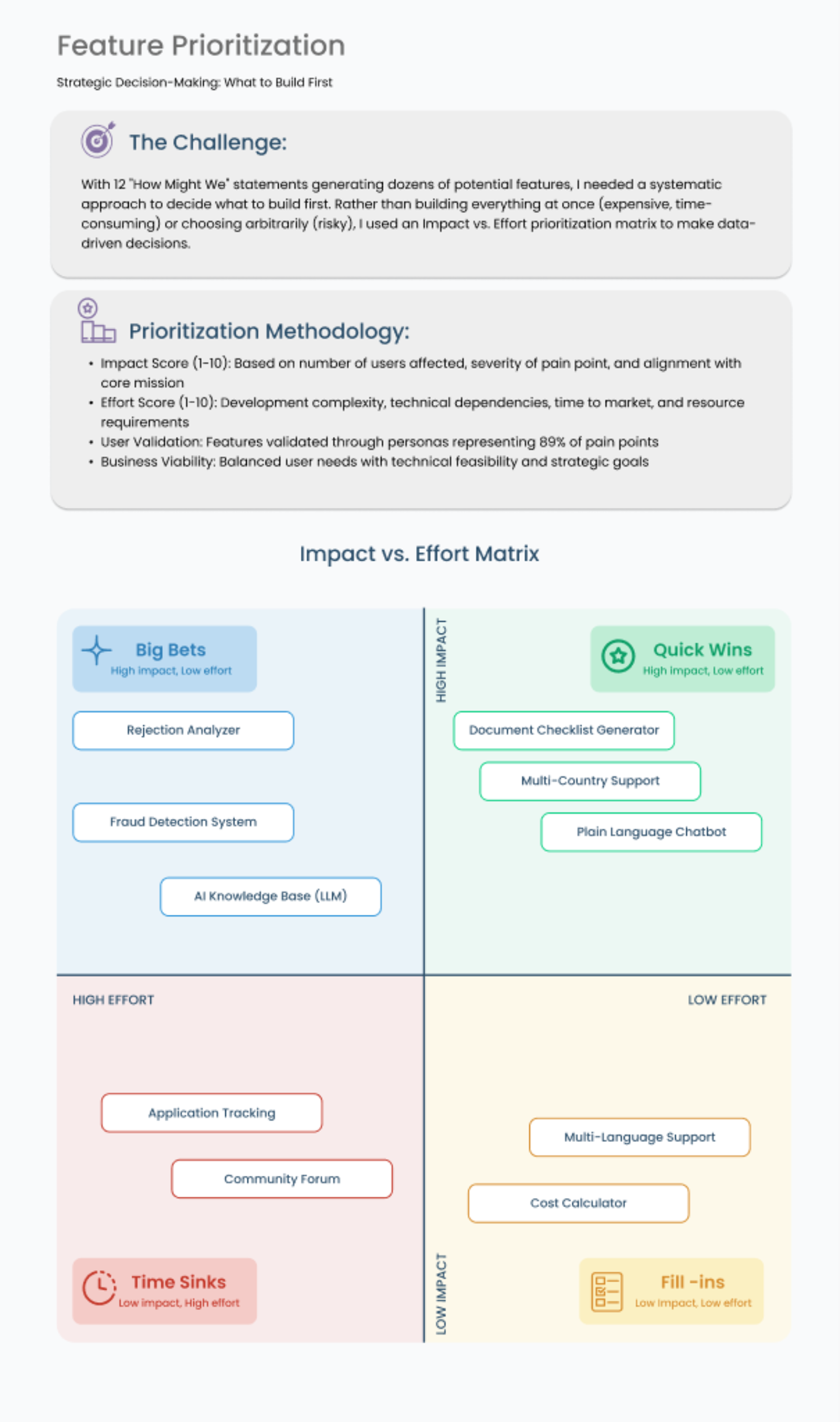
An impact/effort matrix chose what to build first; six solution types were scored against five criteria.
SOLUTION SCORES · OUT OF 50
AI chatbot
44
Traditional website
40
Community forum
35
Native mobile app
34
Email / form service
32
Human expert chat
23
Why the AI chatbot won
It combines instant access, personalized guidance, infinite scale and free use, the exact failures of existing options.
RAG over verified immigration data, with source citations on every answer, keeps GPT-4 grounded and limits hallucination.
PHASE 1 · MVP, 12 WEEKS
AI chatbot, document checklist, multi-country support, LLM knowledge base
PHASE 2
Fraud detection, rejection analyzer, cost calculator
PHASE 3
Multi-language, community features, application tracking
Competitive landscape
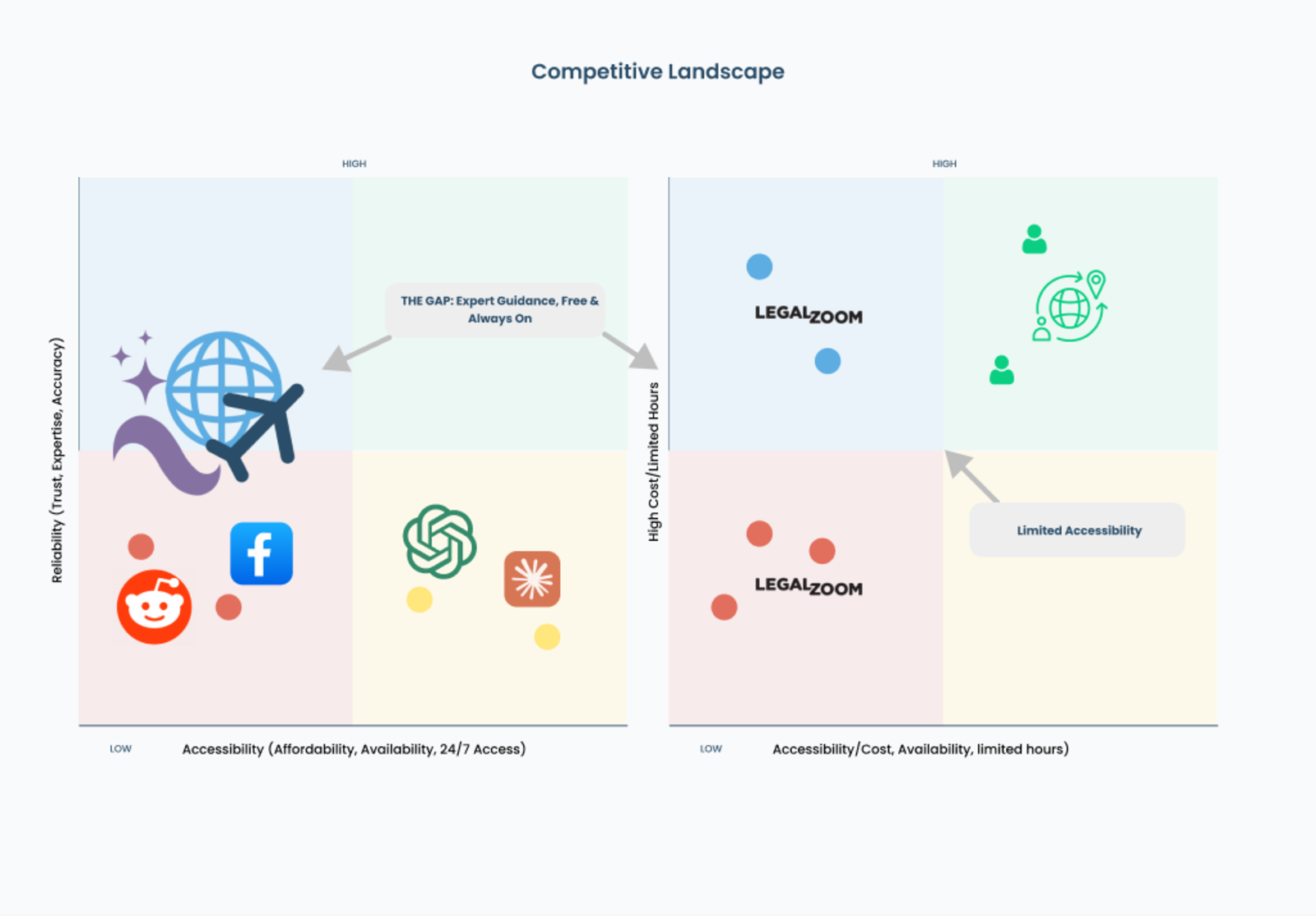
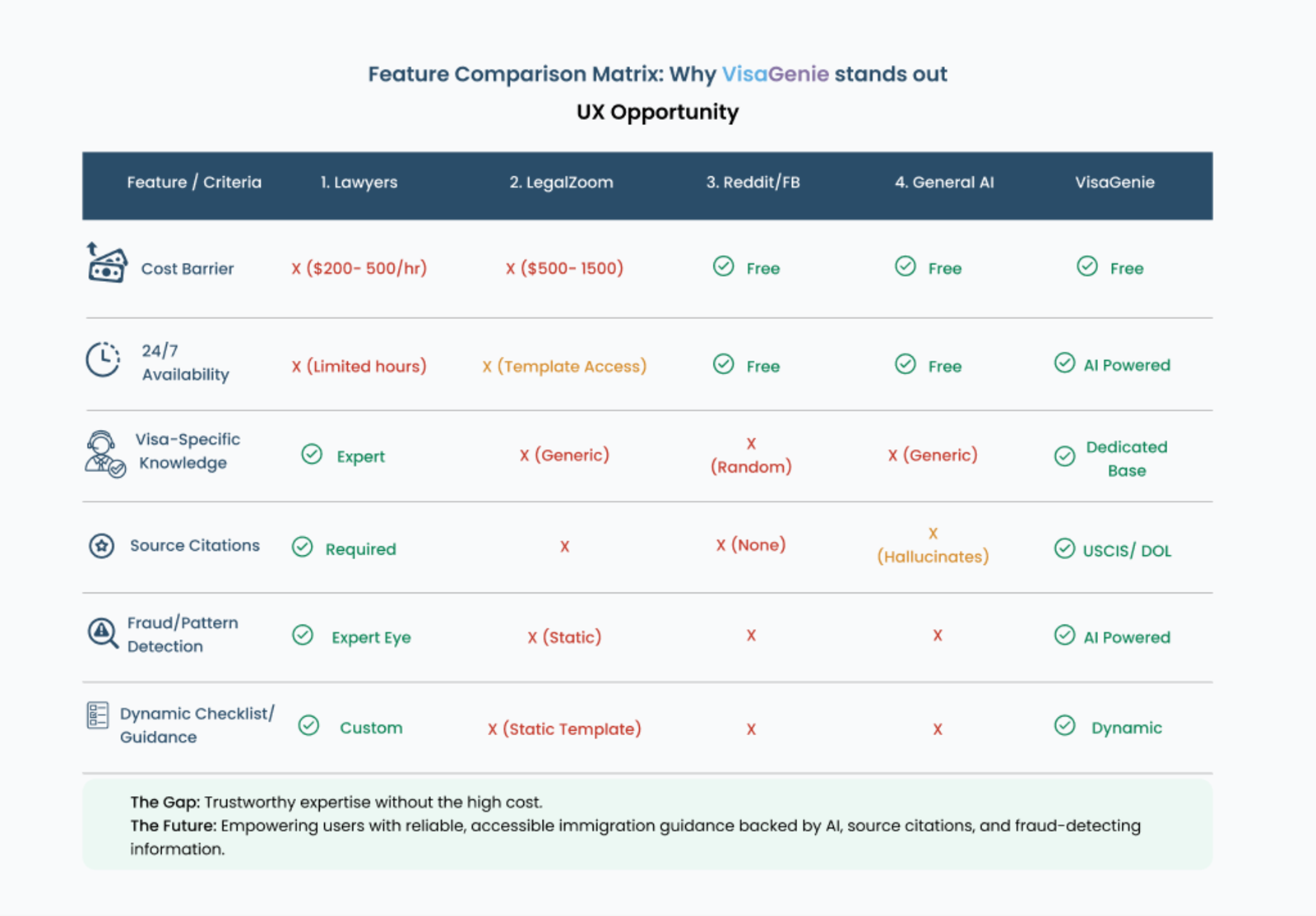
The gap: expert guidance, free and always on
Lawyers are reliable but costly; forums and general AI are free but unreliable. VisaGenie aims for both.
Information architecture & user flow
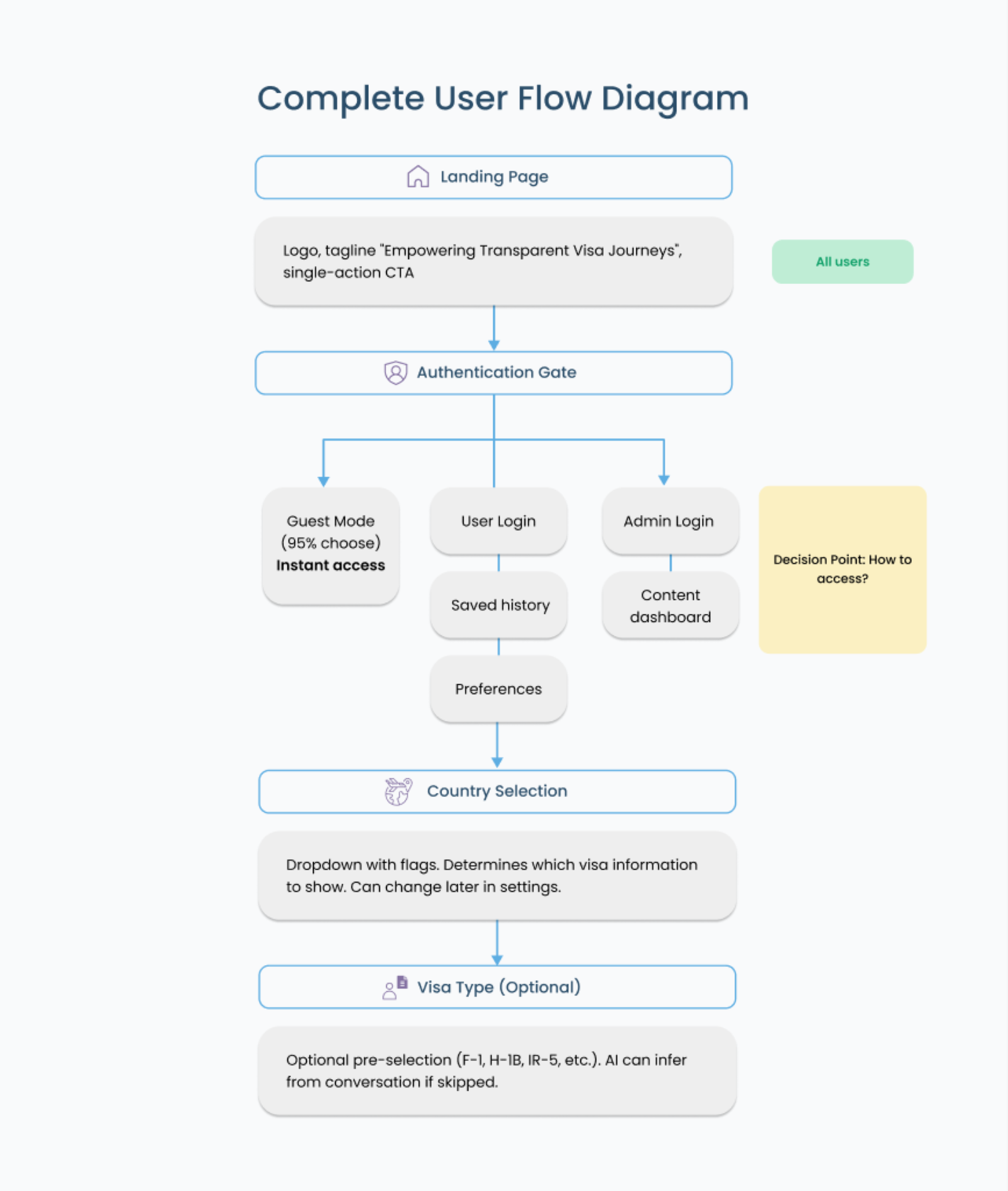
Get to value fast, whoever you are
Three decisions balanced speed, flexibility and guidance.
DECISION 01 · SPEED
Guest-first access
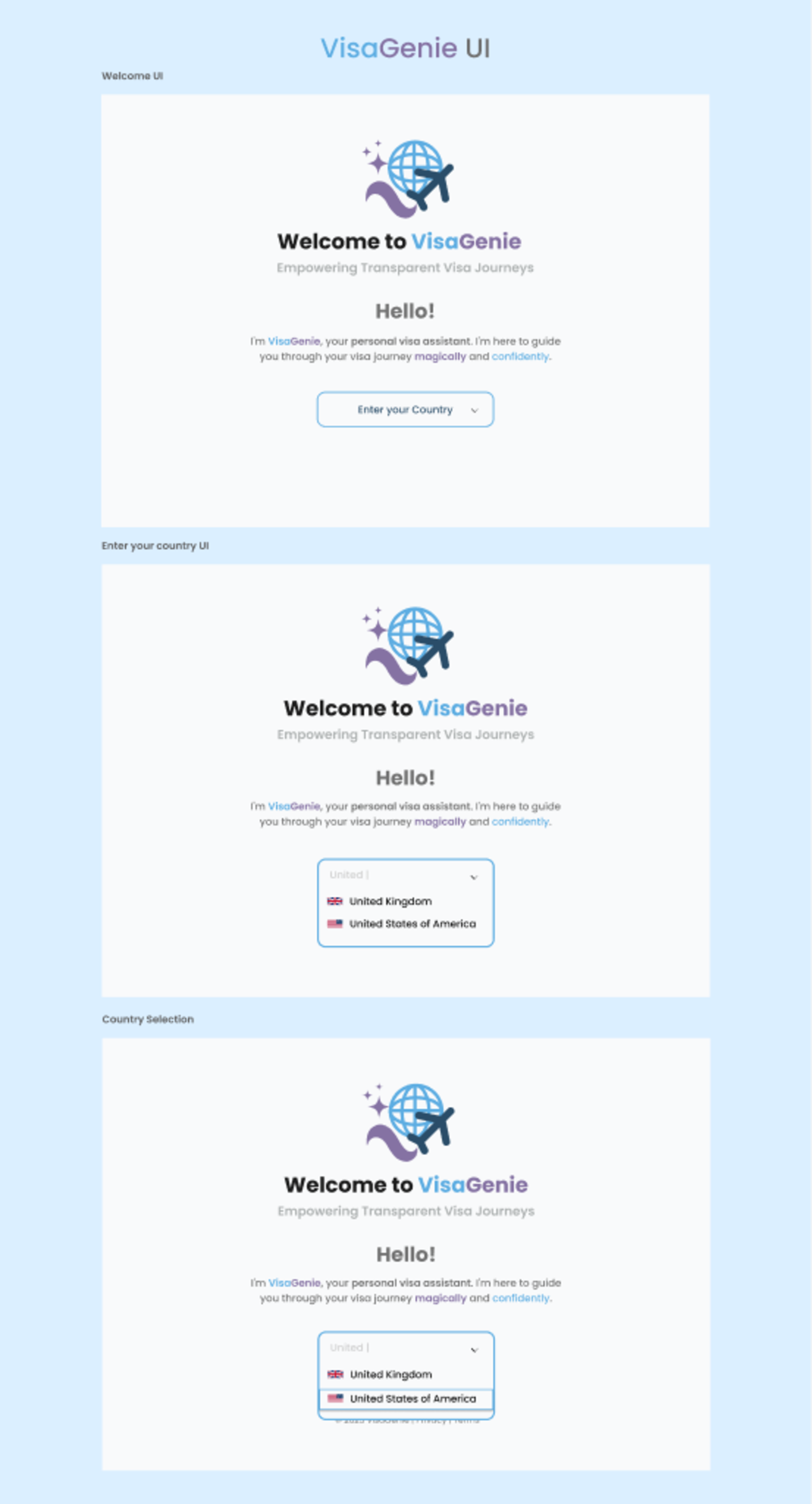
Skip onboarding and start chatting with just a country selection. 95% of users choose guest mode.
DECISION 02 · FLEXIBILITY
Three entry paths
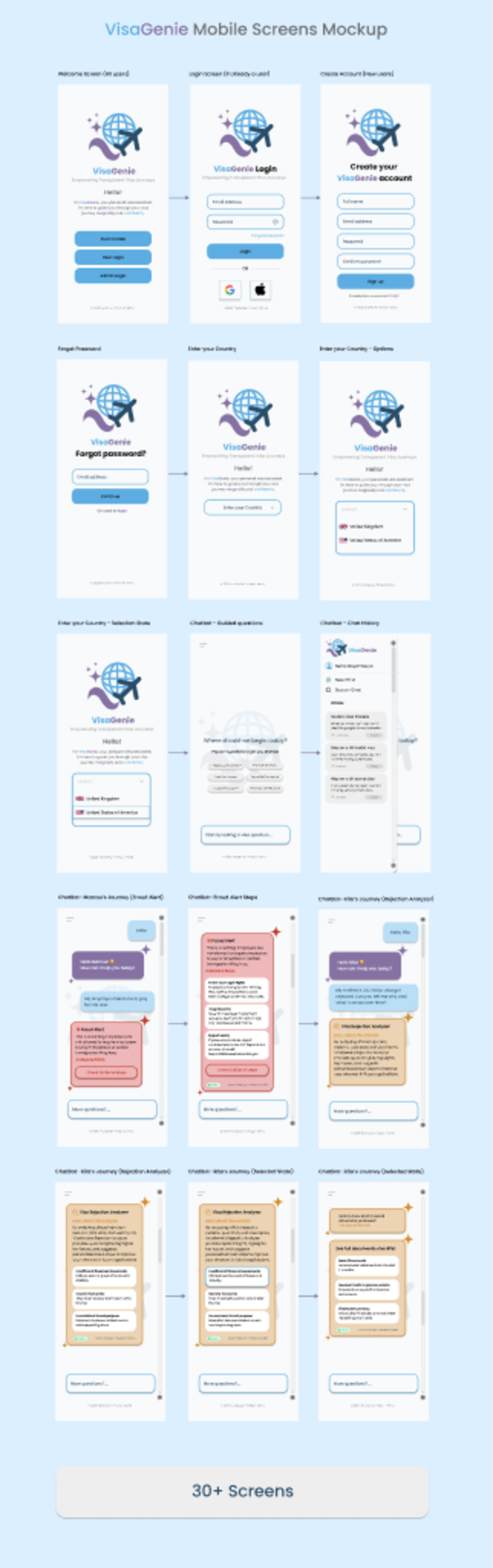
Guest, user login and admin login all converge on the same high-value chatbot.
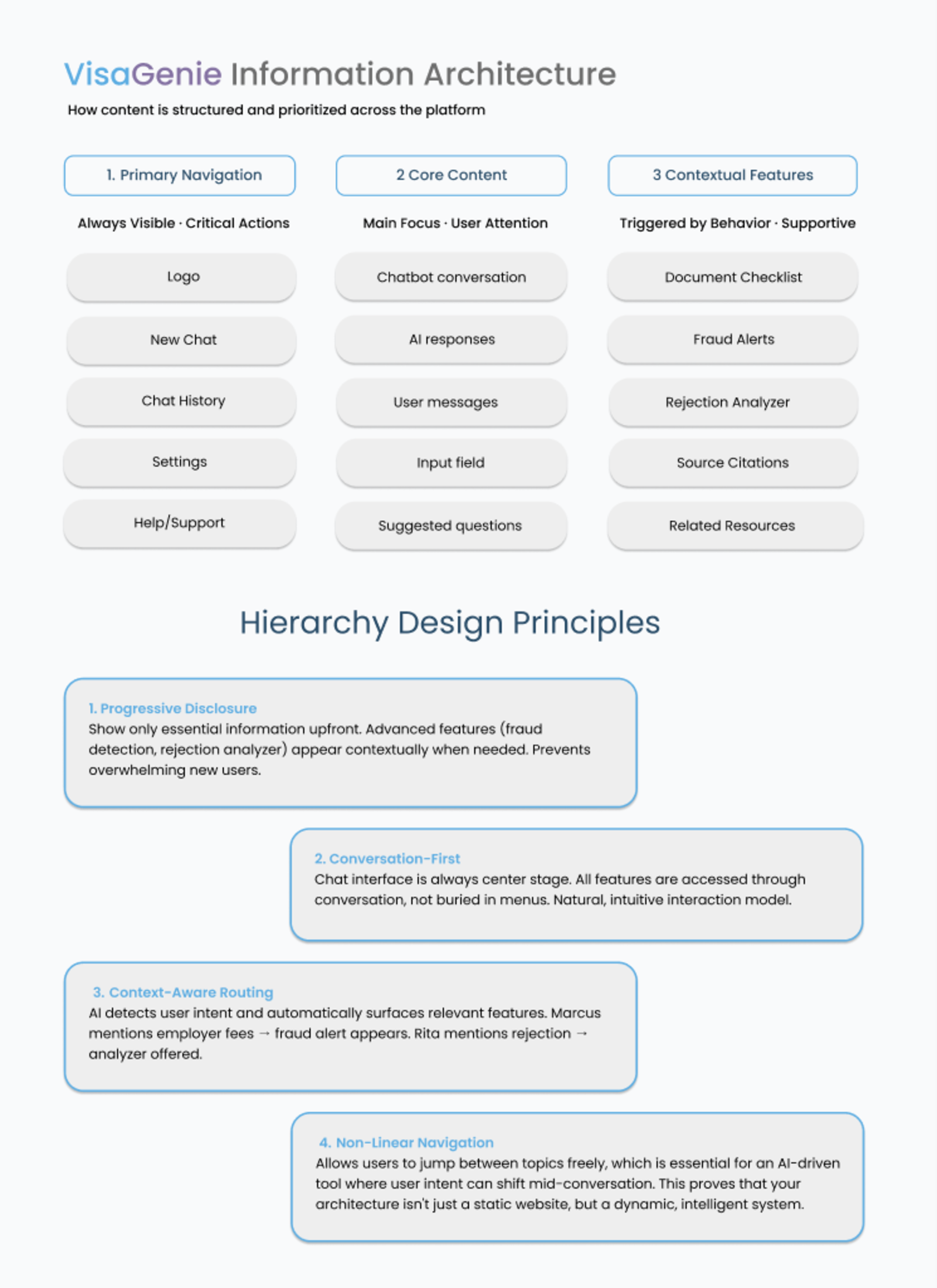
DECISION 03 · GUIDANCE
Context-aware routing
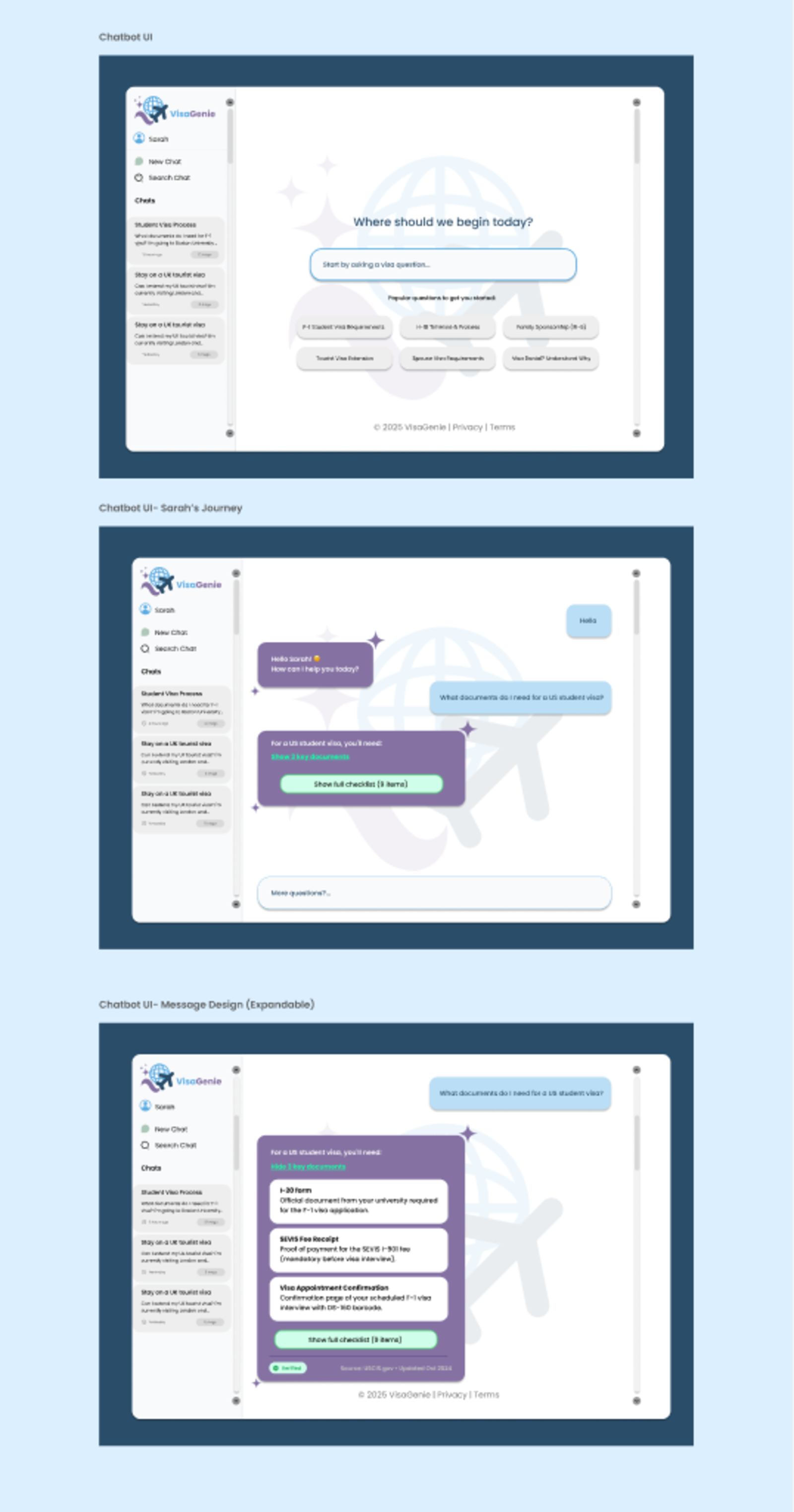
Mention employer fees and a fraud alert appears; mention a rejection and the analyzer is offered.
High-fidelity UI
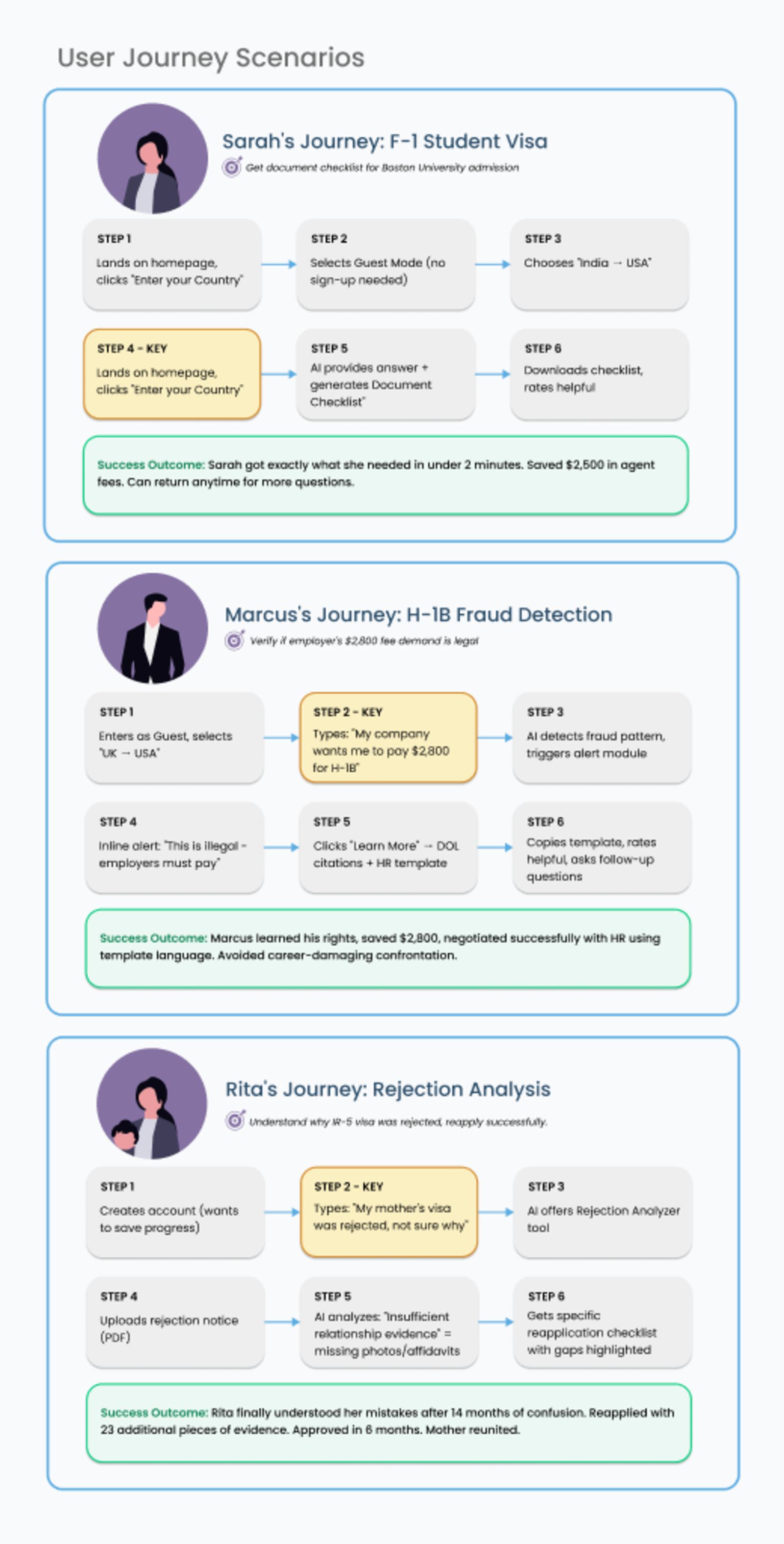
One chat, three journeys
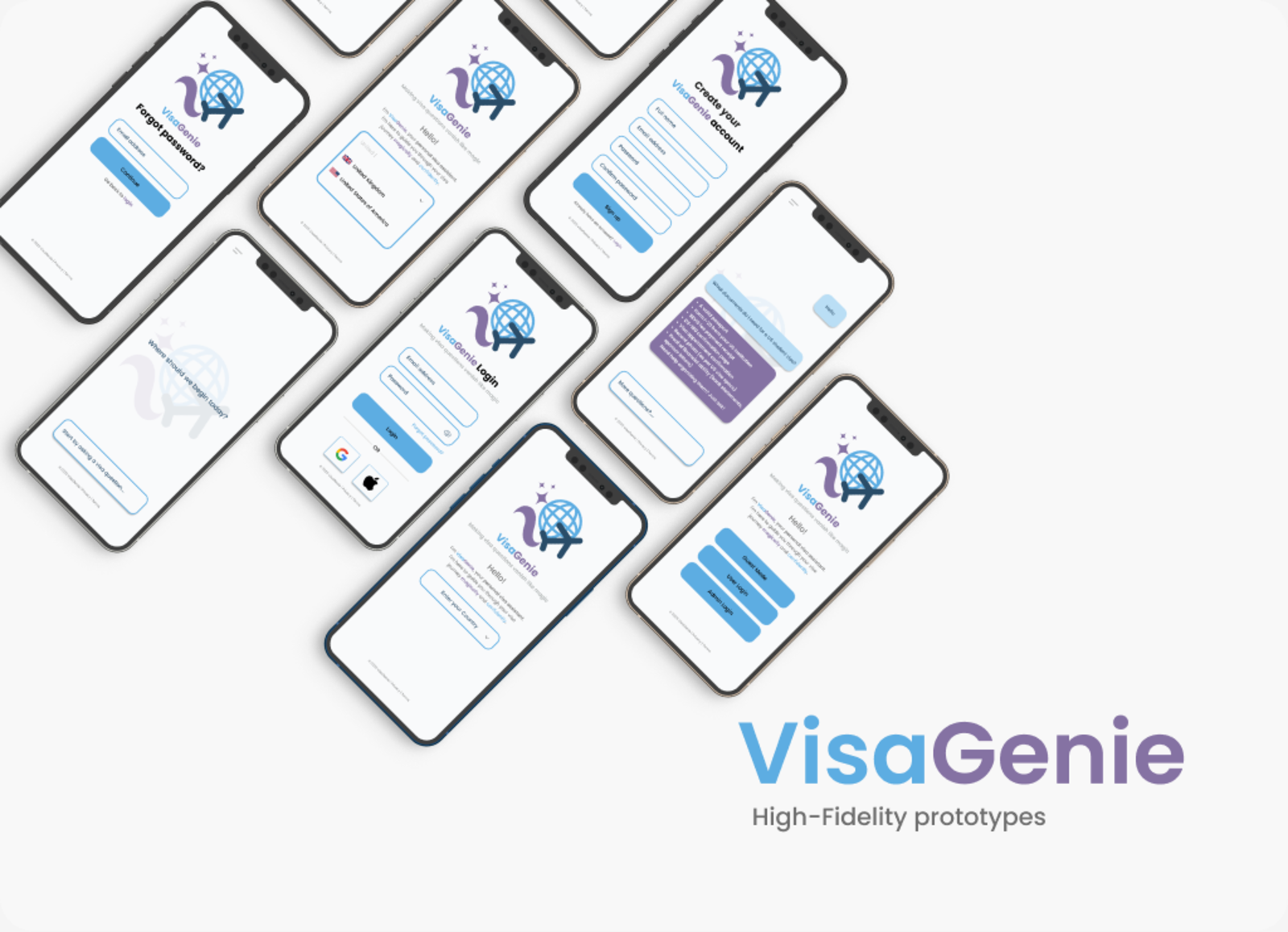
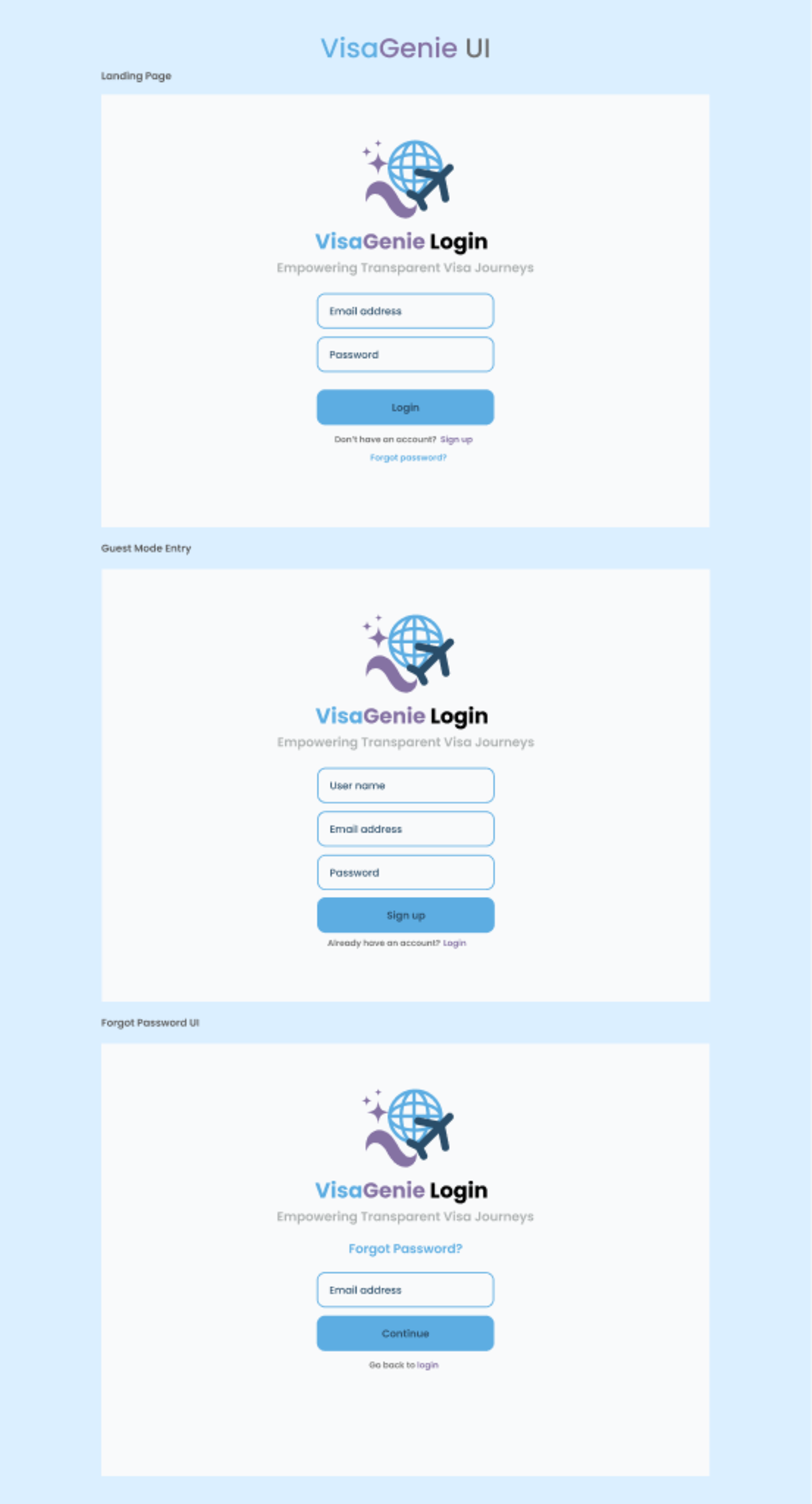
30+ screens across web, tablet and mobile, with the fraud alert and rejection analyzer surfacing in context.
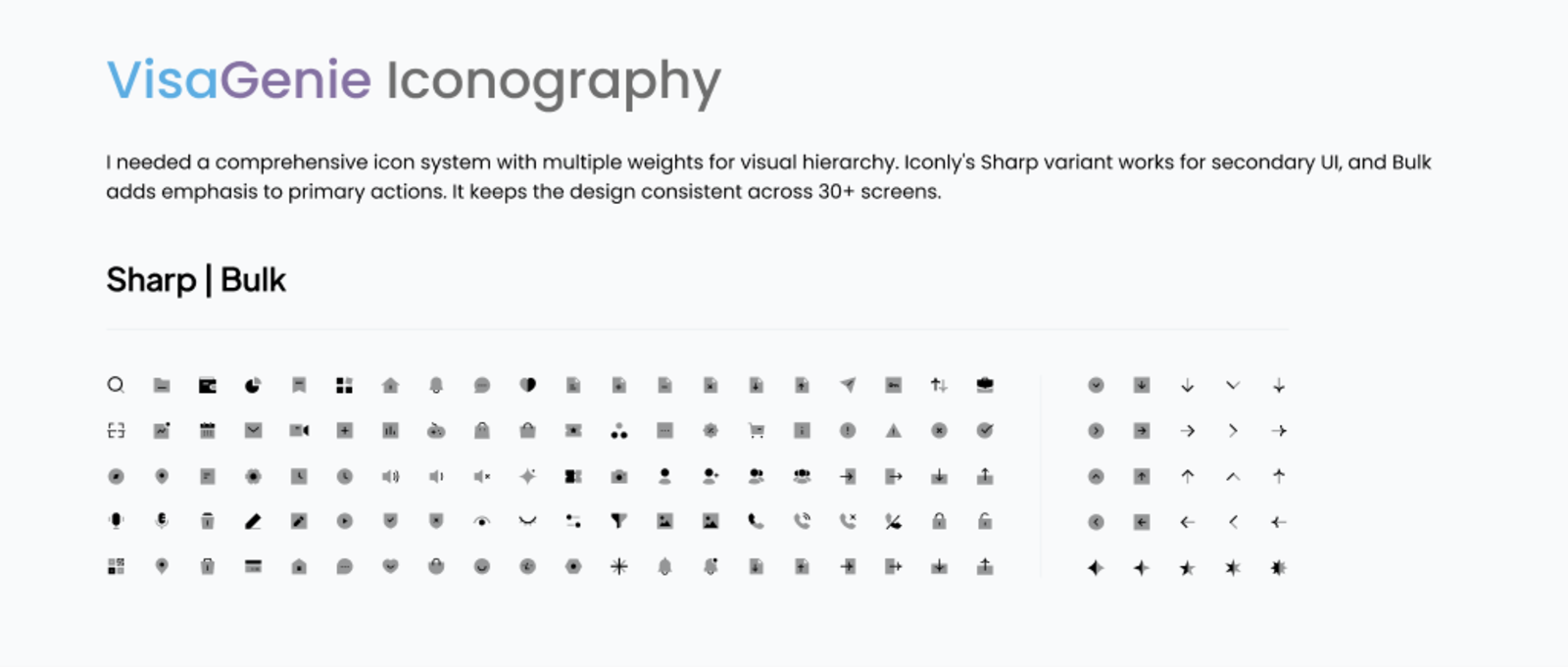
Brand & visual design
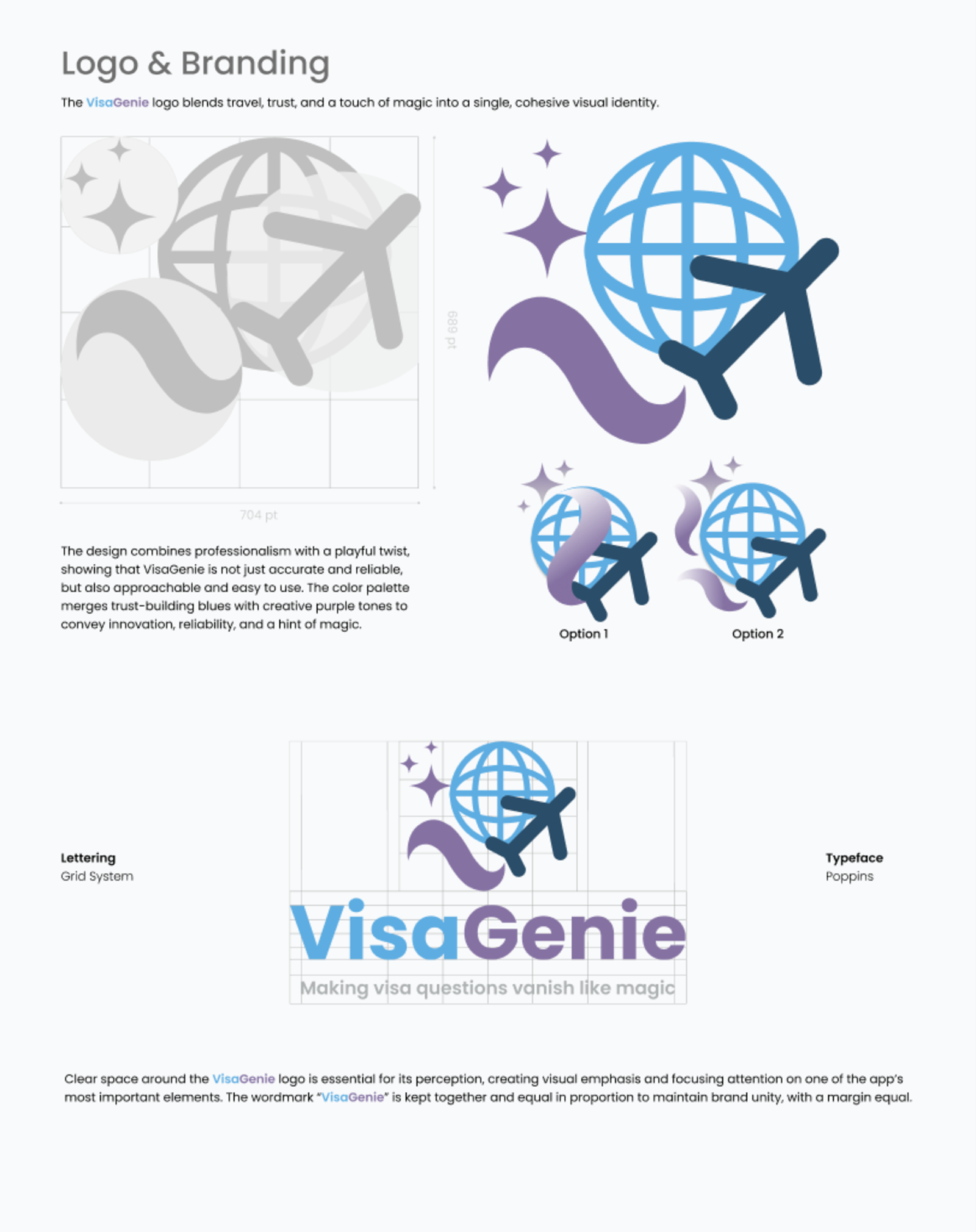
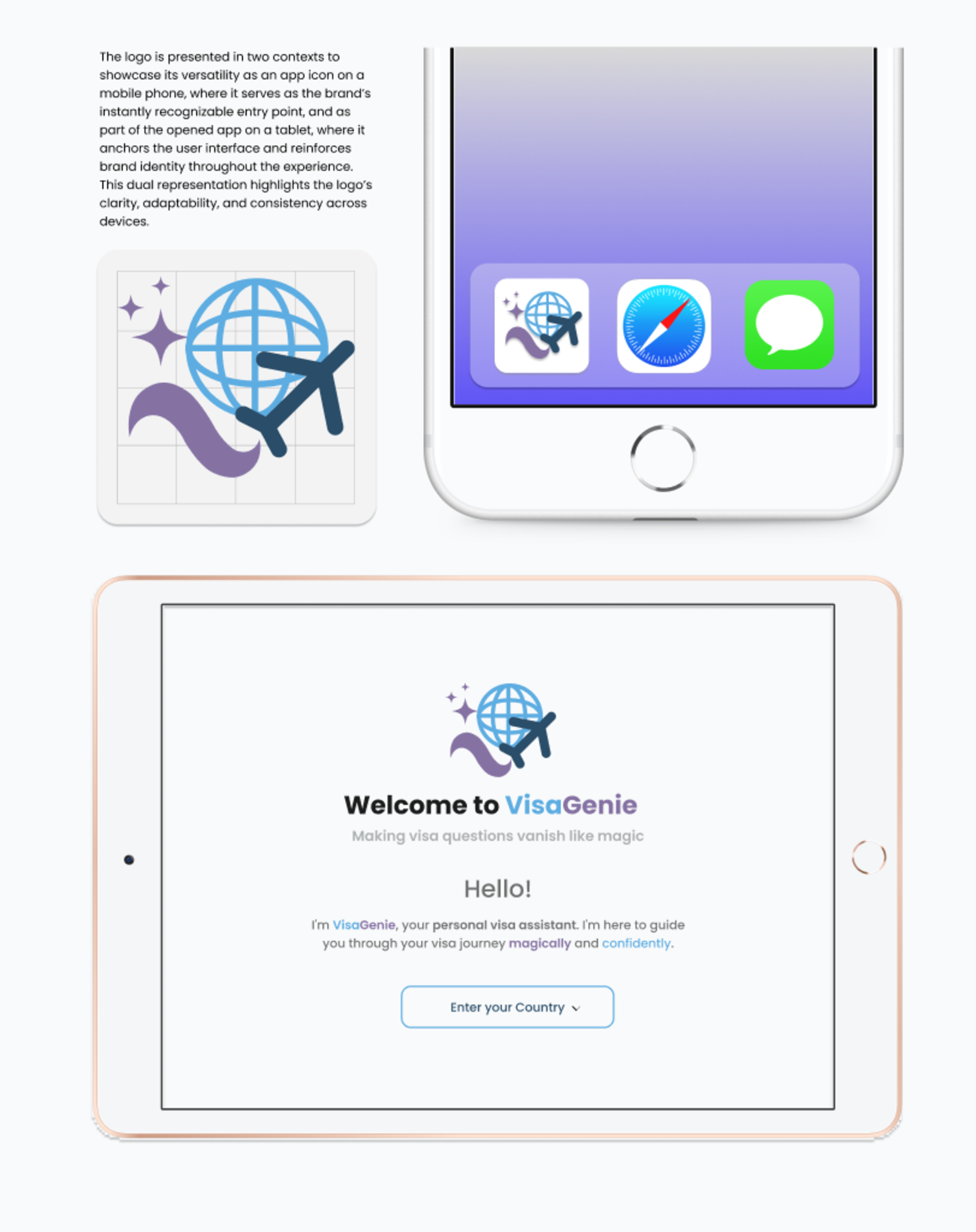
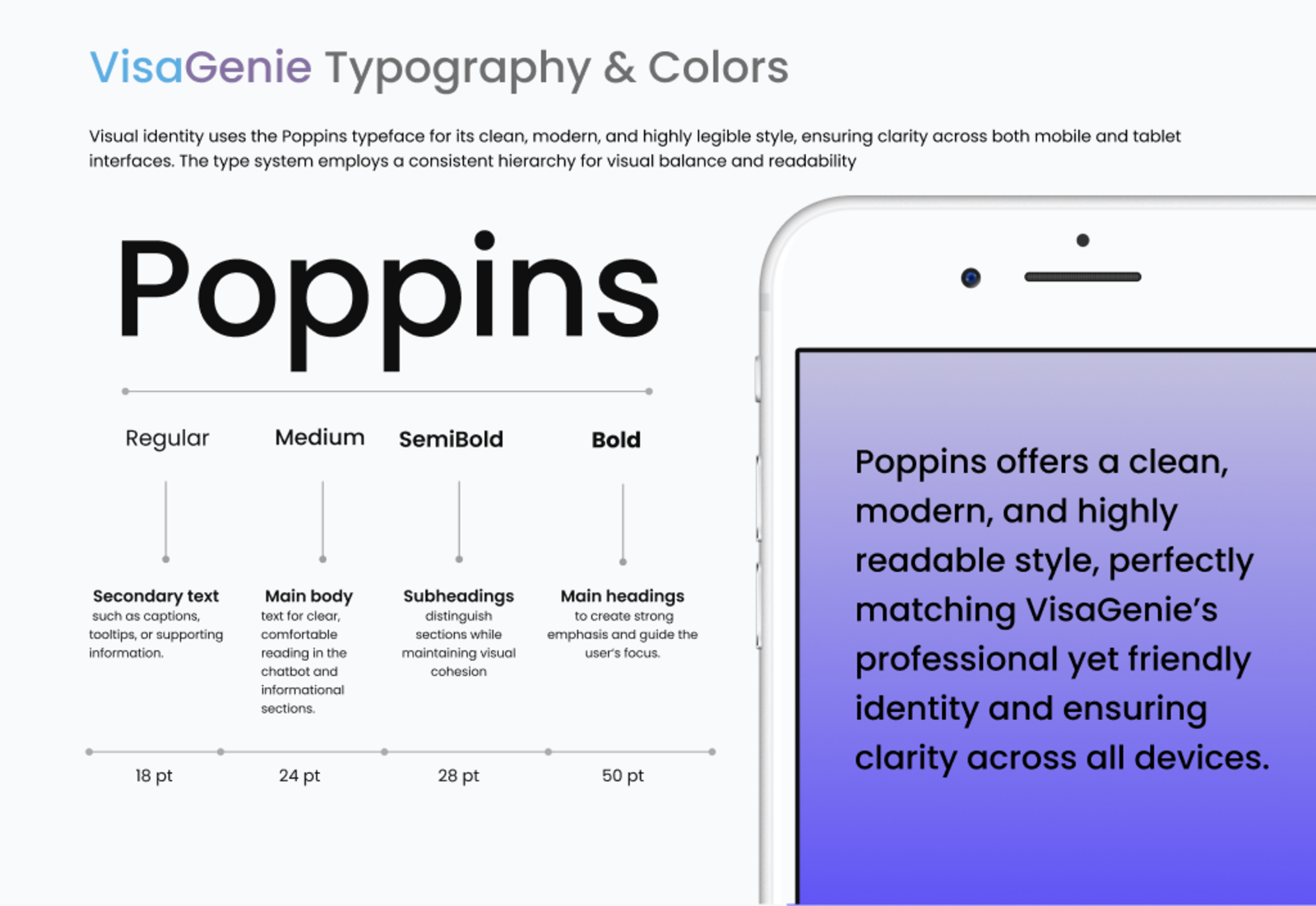
Trust with a touch of magic
Calm blues build trust; lavender and green add warmth and signal actions and status.
Deep Slate Blue
#2A4D69
Soft Sky Blue
#5DADE2
Muted Lavender
#8572A3
Pastel Green
#A9DFBF
Dark Charcoal
#333333
Cool Light Gray
#D5DBDB
Off-White
#FDFDFD
Pure Black
#000000
Flow testing
Removing onboarding took conversion from 20% to 95%
KEY INSIGHT
The single biggest improvement came from removing the multi-step onboarding (name, email, country, visa type). Instant guest access with just a country selection lifted conversion from 20% to 95%.
EDGE CASES DESIGNED
AI can’t answer: official links and a lawyer referral
Unsupported country: friendly message and email signup
High traffic: wait estimate, then cached FAQ answers
Returning users: skip country selection, restore context
BUILT WITH
GPT-4LangChainPineconePythonFlaskReactJavaScriptHTML/CSSFigmaResearch figures come from my own interviews and surveys. The $2.3B figure is my research estimate. This page shows my role as lead UX researcher and designer.
MORE PROJECTS
All work